

The complete guide
How to hang wooden gym rings and set the right height
Why wooden rings
Rings move, and that is the point. A fixed bar holds itself still for you. Rings make your own shoulders, arms and core do that work, so every pull up, dip and row trains the small stabilising muscles as well as the big ones.
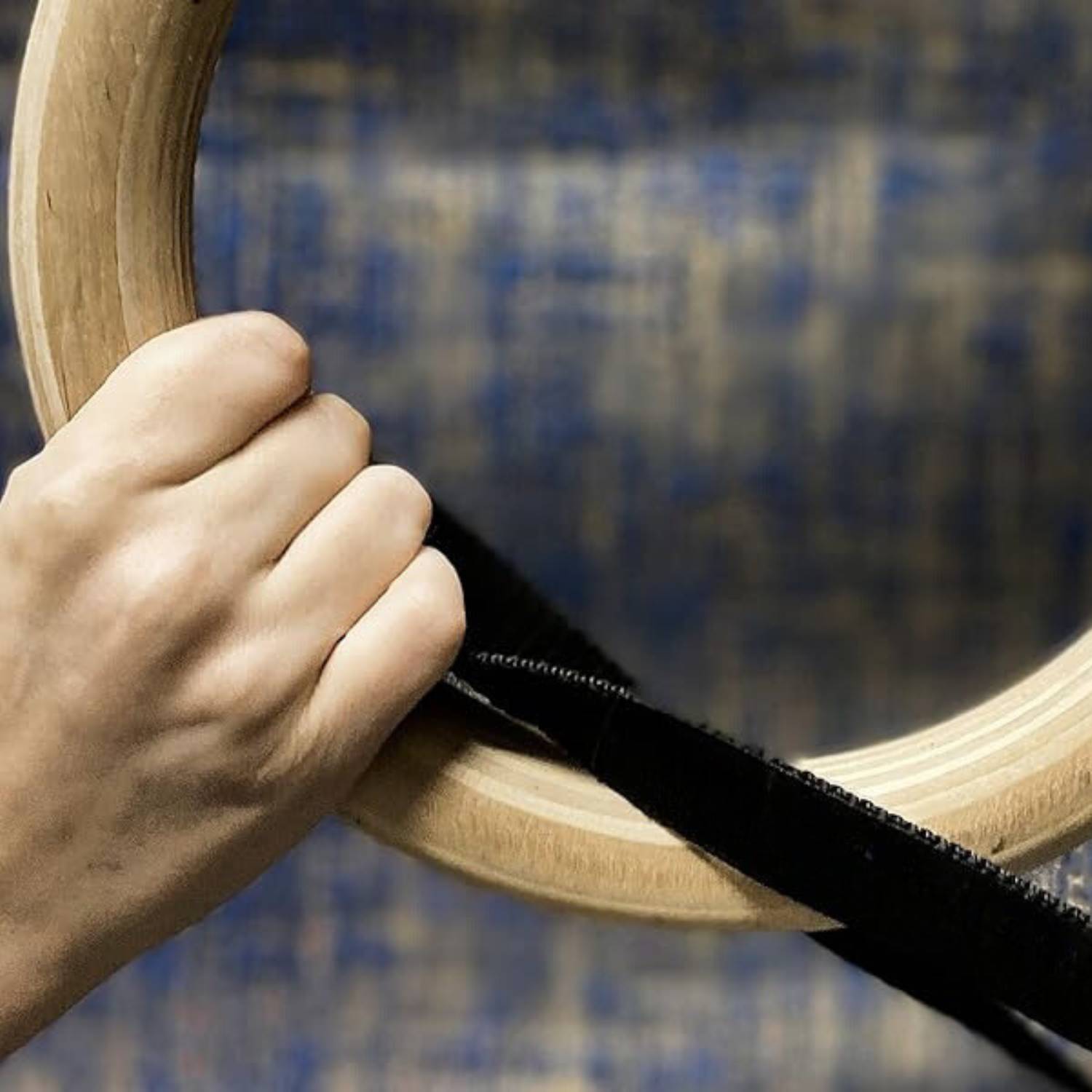
Wood is the traditional choice for the grip. It stays grippy when hands get warm and damp, where metal turns slippery and plastic can feel tacky. Many people find they need little or no chalk on wood.
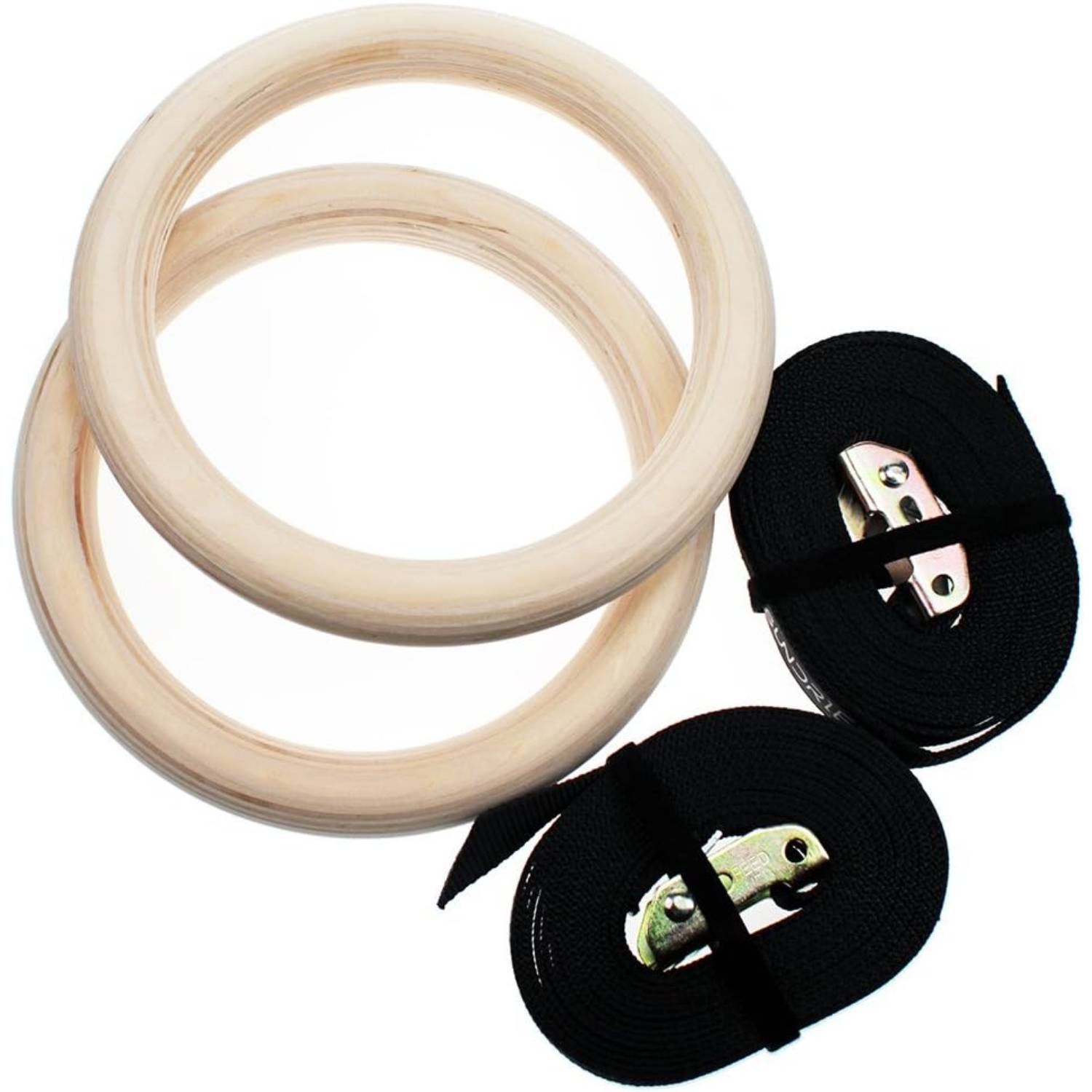
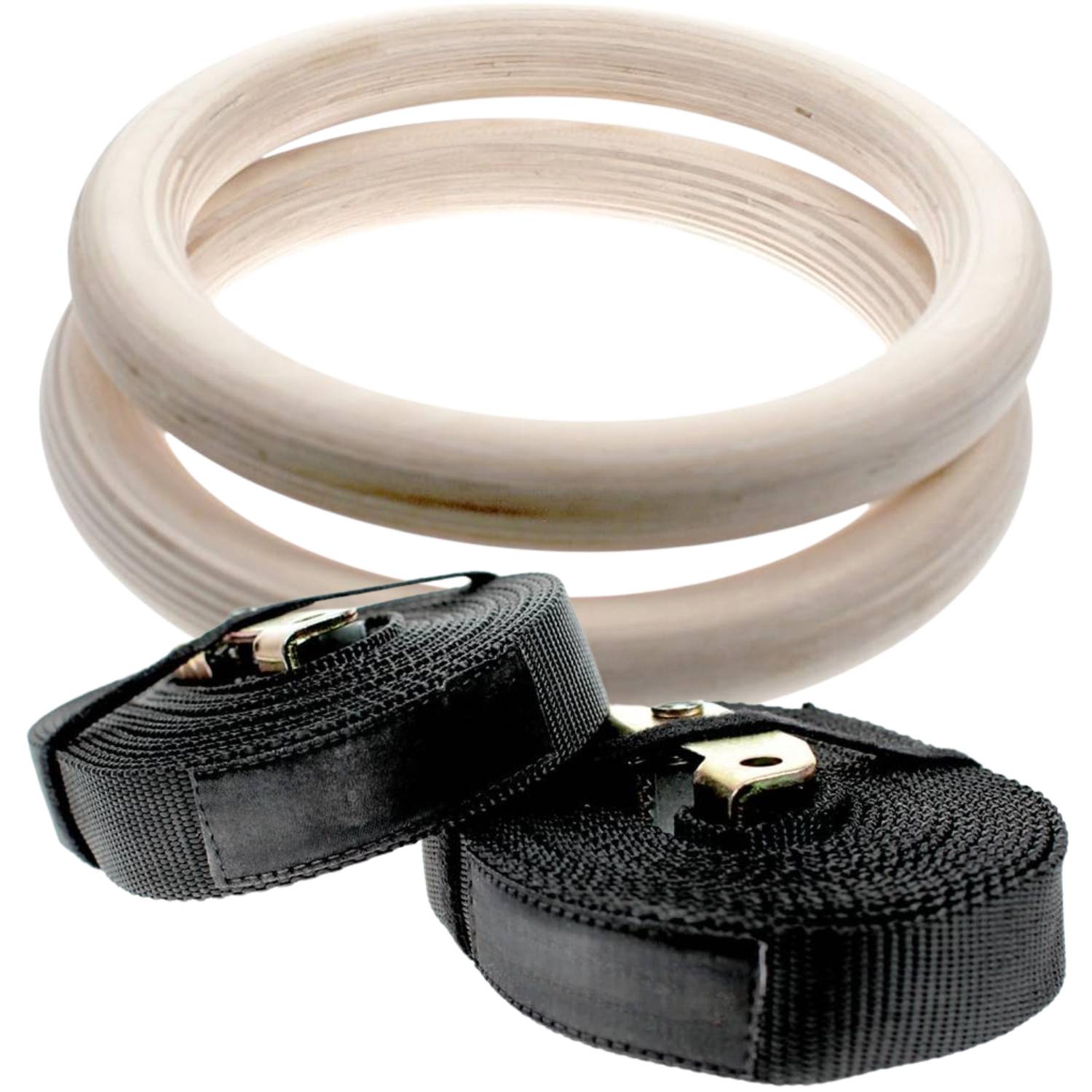
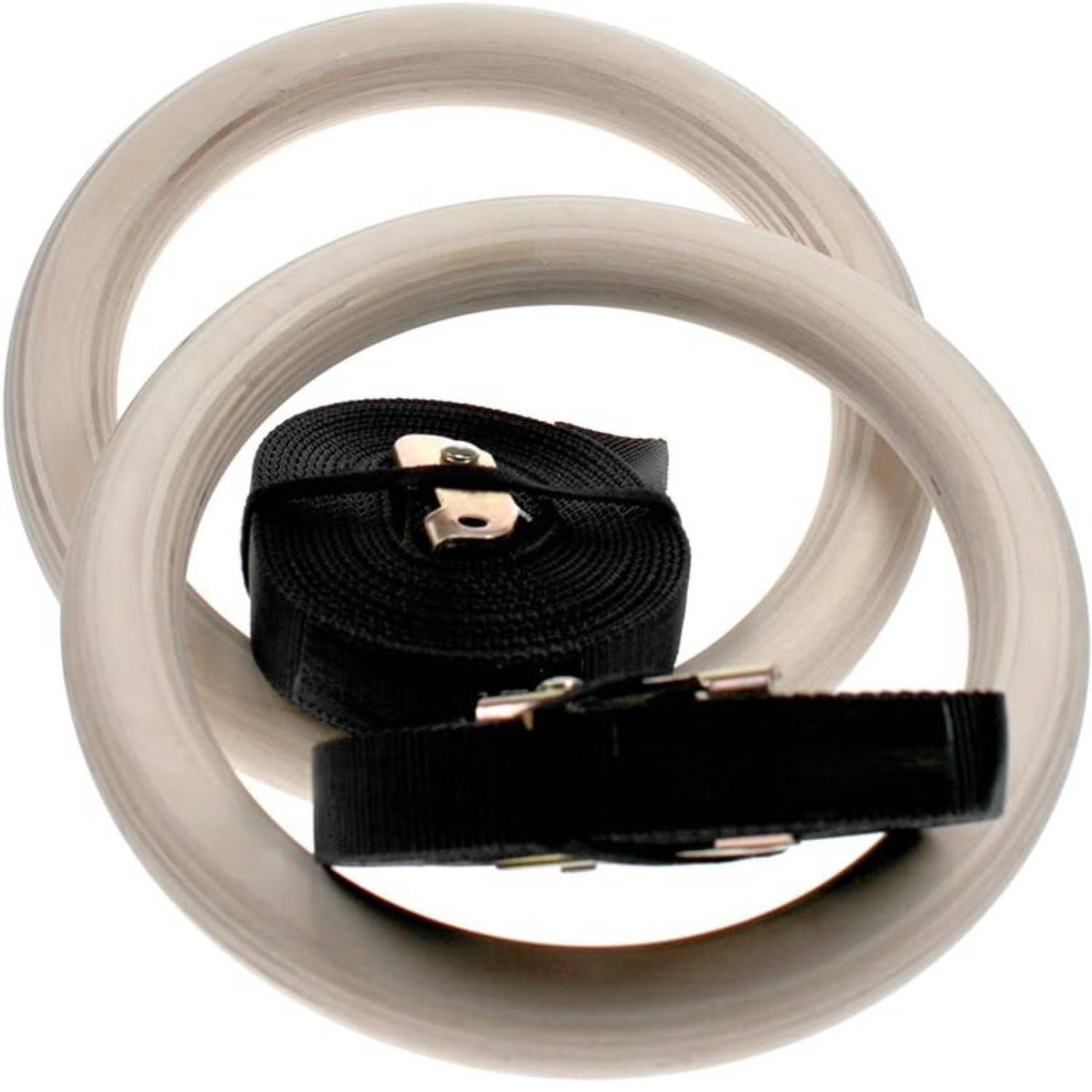
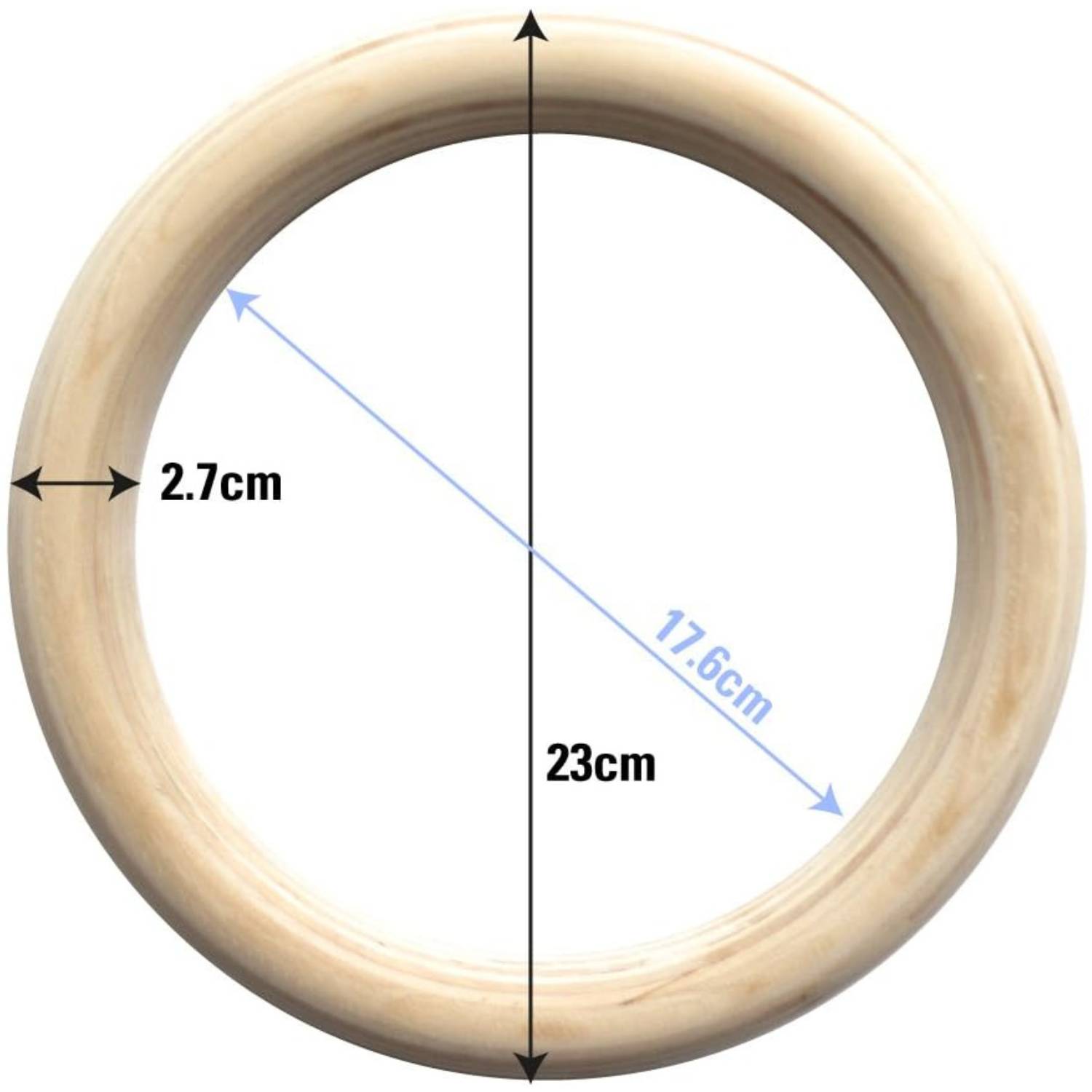
This pair has 23cm rings with a 27mm thick grip. Every ring has a dedicated nylon strap, 4.3m long and 2.5cm wide, fitted with a quick locking buckle.
The anchor carries the load
Each ring is rated to 225kg. The rings are rarely the weak point. Whatever you hang them from usually is.
A person swinging or dropping into a hold puts far more than their standing weight through the anchor, so check it before the first session.
Beams and rafters. Use a structural beam, such as a garage rafter or a solid timber beam. A decorative beam fixed to a ceiling is not an anchor.
Pull up bars and racks. Only if they are rated for swinging, dynamic loads. A door frame bar that is fine for pull ups may not be fine for rings.
Tree branches. Live, thick and sound, and checked every time. A dead branch can snap with no warning. Wrap something soft under the strap on rough bark.
If you are unsure about a beam or branch, do not hang rings from it.
Setting the height
The height decides the exercise. With 4.3m of strap per ring, there is enough length for a high garage beam or branch, with plenty left over to adjust.
Low, around knee height. Ring push ups, rows with feet planted, and getting used to holding the rings still.
Hip height. Support holds, assisted dips and tucks, where you can step down onto your feet at any point.
Overhead. Hangs, pull ups, leg raises, and later the harder work towards muscle ups and levers.
The quick locking buckles change the height in seconds, so one session can move through all three.
Hang the rings about shoulder width apart for most work. Wider suits some hold positions.
Starting out
Set the rings lower than feels necessary when you try something new. The shake you feel at first is normal, and it settles with practice.
At the top of a support hold or a dip, turn the rings slightly outwards. That small rotation is the cue that settles the wobble.
To make an exercise harder, change your body angle rather than adding load. Walk your feet forward for a tougher row, or drop the rings for a harder push up. That covers most of the first few months.
Children and rings
Children can use rings with the straps set low and an adult supervising. Set them so a child can stand up out of any position, and keep a mat underneath.
Swinging, inverted positions and skills from a height are coached work for the club.
Checking straps and wood
Straps are the part that wears. Check them before each session, and it takes ten seconds.
- Check the bend. Where the strap folds over the beam, it rubs. Replace the straps once that part looks fluffy, frayed or badly faded.
- Pull the strap snug first. The buckle grips under tension, so take up any slack before you hang.
- Protect paintwork. Fold a cloth under the strap on painted or soft timber so the nylon does not mark it.
- Keep the rings dry. Store them indoors. Damp in the wood roughens the surface, and fine sandpaper smooths it again.
Wooden rings are fine for a session in the garden. Irish weather is hard on wood left out, so bring them in afterwards.
Clubs, schools and gyms
Rings are a simple way to add bodyweight training to a club or school without a large frame. For several sets, ask for a quote on our wholesale page.