
The complete guide
How to set up and use a junior gymnastics bar at home
What a home bar is for
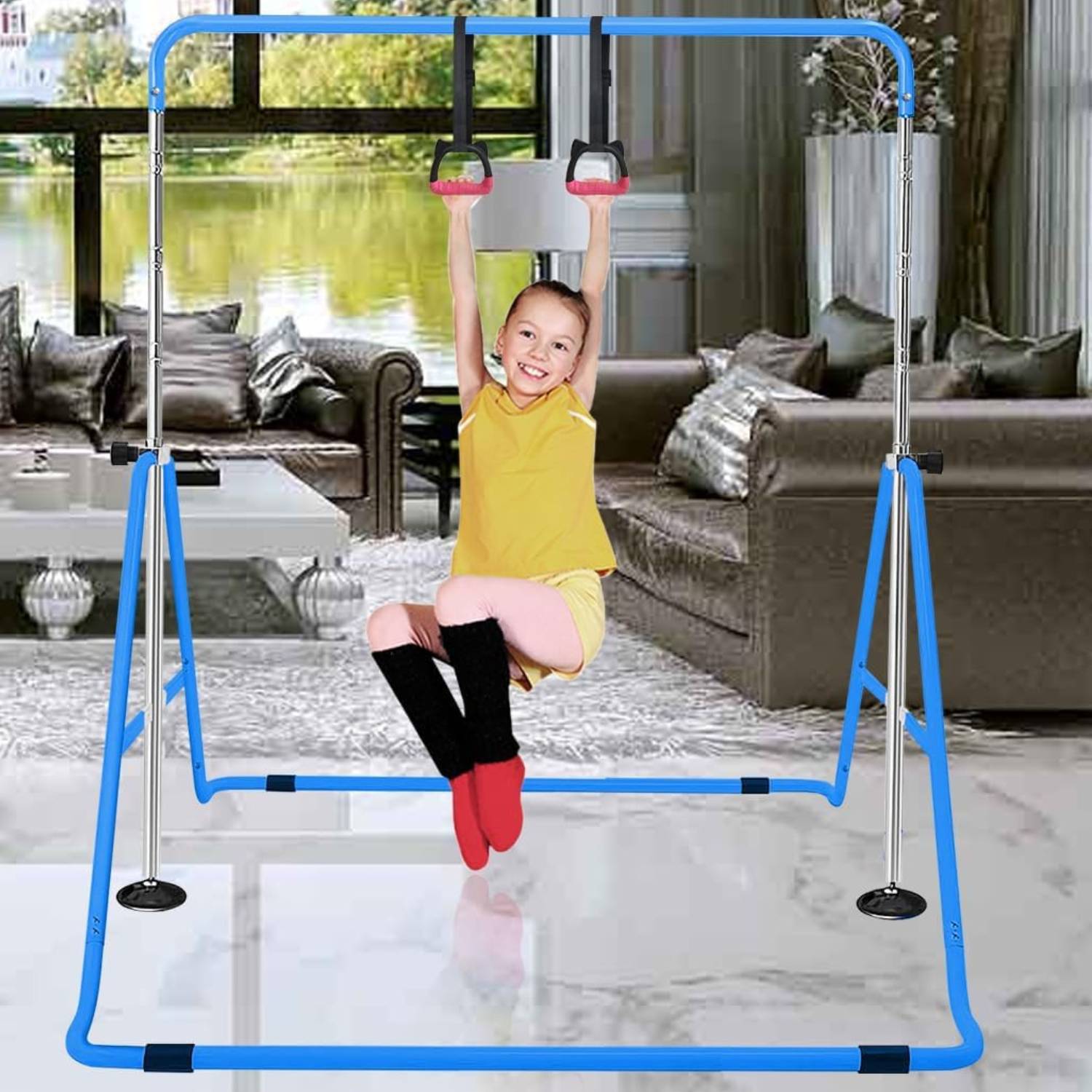
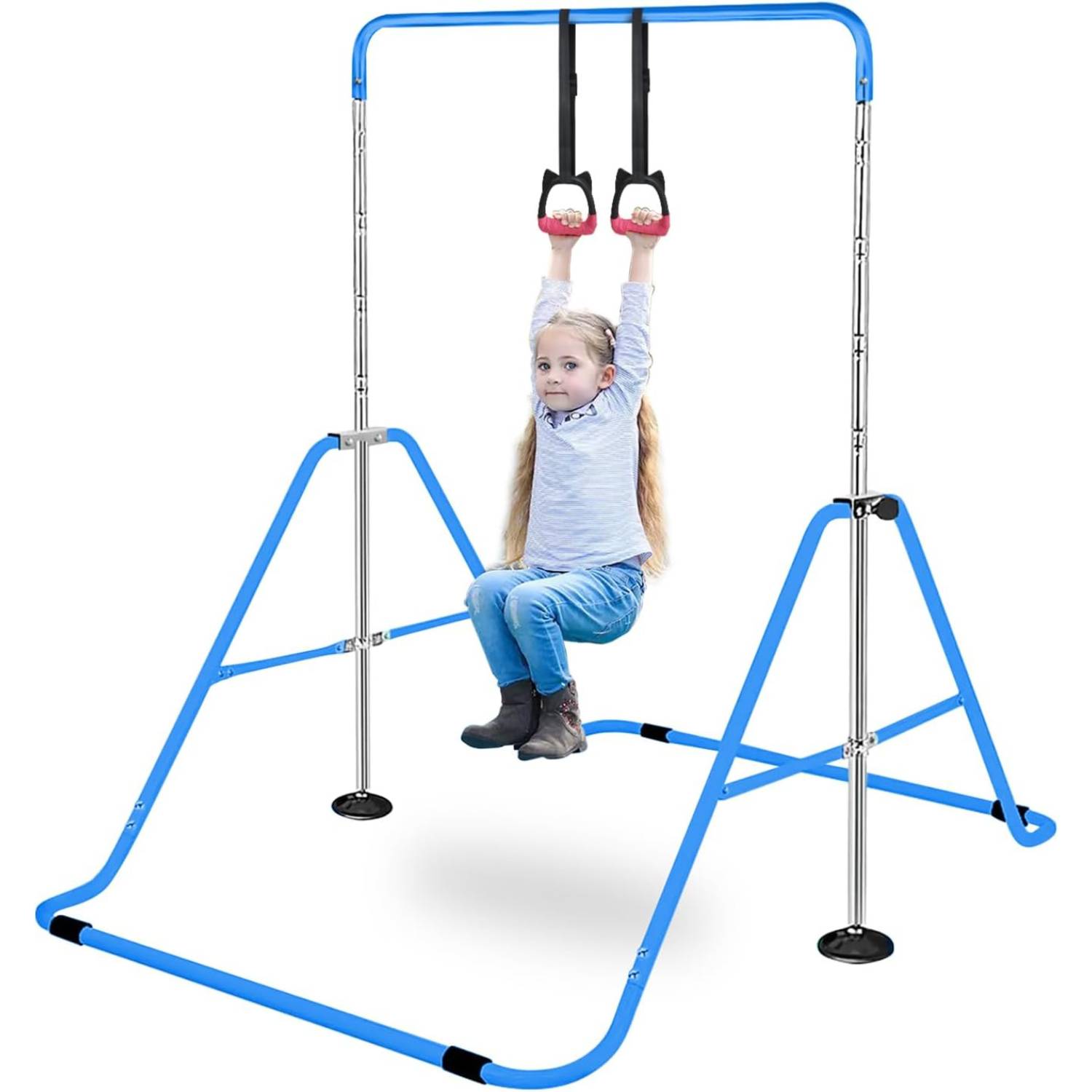
A junior gymnastics bar gives a child somewhere to practise the bar skills their coach sets, on the days between club sessions. Hangs, swings, tuck holds and pullovers build grip, upper body strength, core strength and body control. All of them improve with short, regular practice.
It is useful for basic conditioning too. Supervised hangs, leg lifts and assisted pull ups are fair work for a child within the weight rating.
It is not a competition apparatus. Competition bars stand on fixed, tensioned frames and are used for big swings, releases and dismounts with a coach beside the gymnast. A home bar is for the basics, done well and done often.
Read the 60kg rating first
This bar supports up to 60kg. Read that as a plain statement of who it is for: children.
That is not a weakness. A bar rated for junior use can fold and move around a house, which is what makes it workable in a family home. Adults wanting their own bar should look at a pull up station instead.
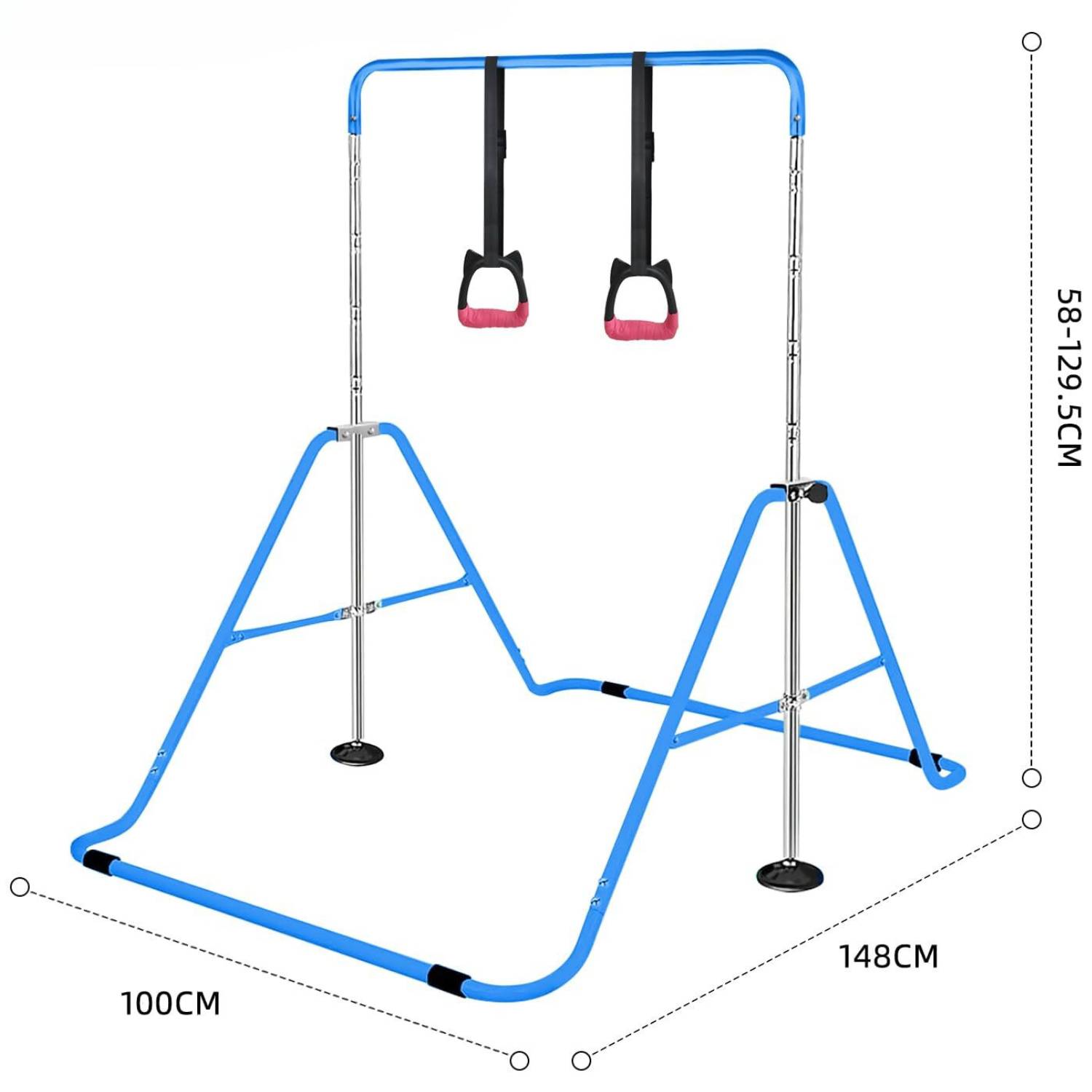
Four heights, set properly
A bar at the wrong height gets in the way. Too high and a small child cannot reach it with their feet on the floor. Too low and there is no room to swing underneath.
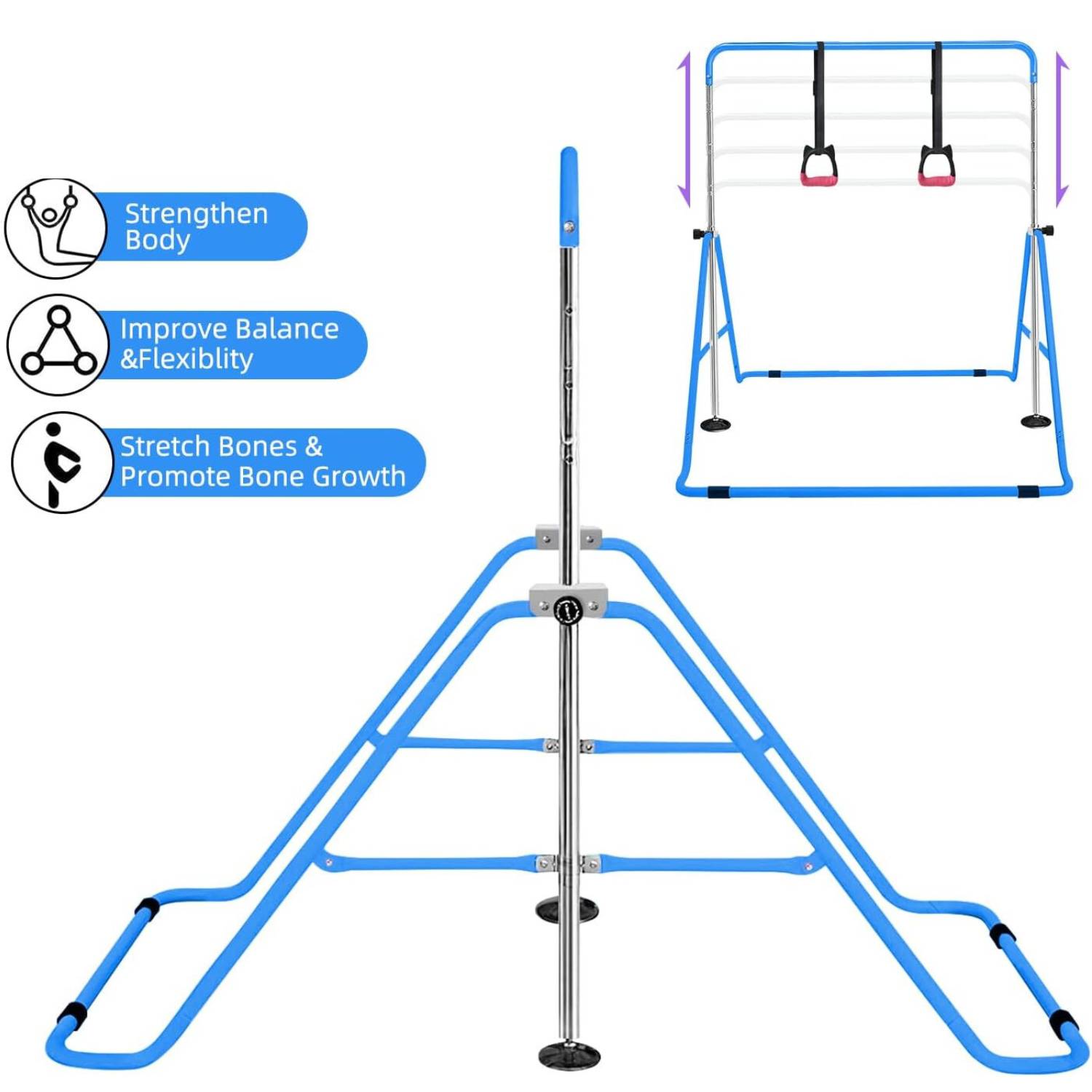
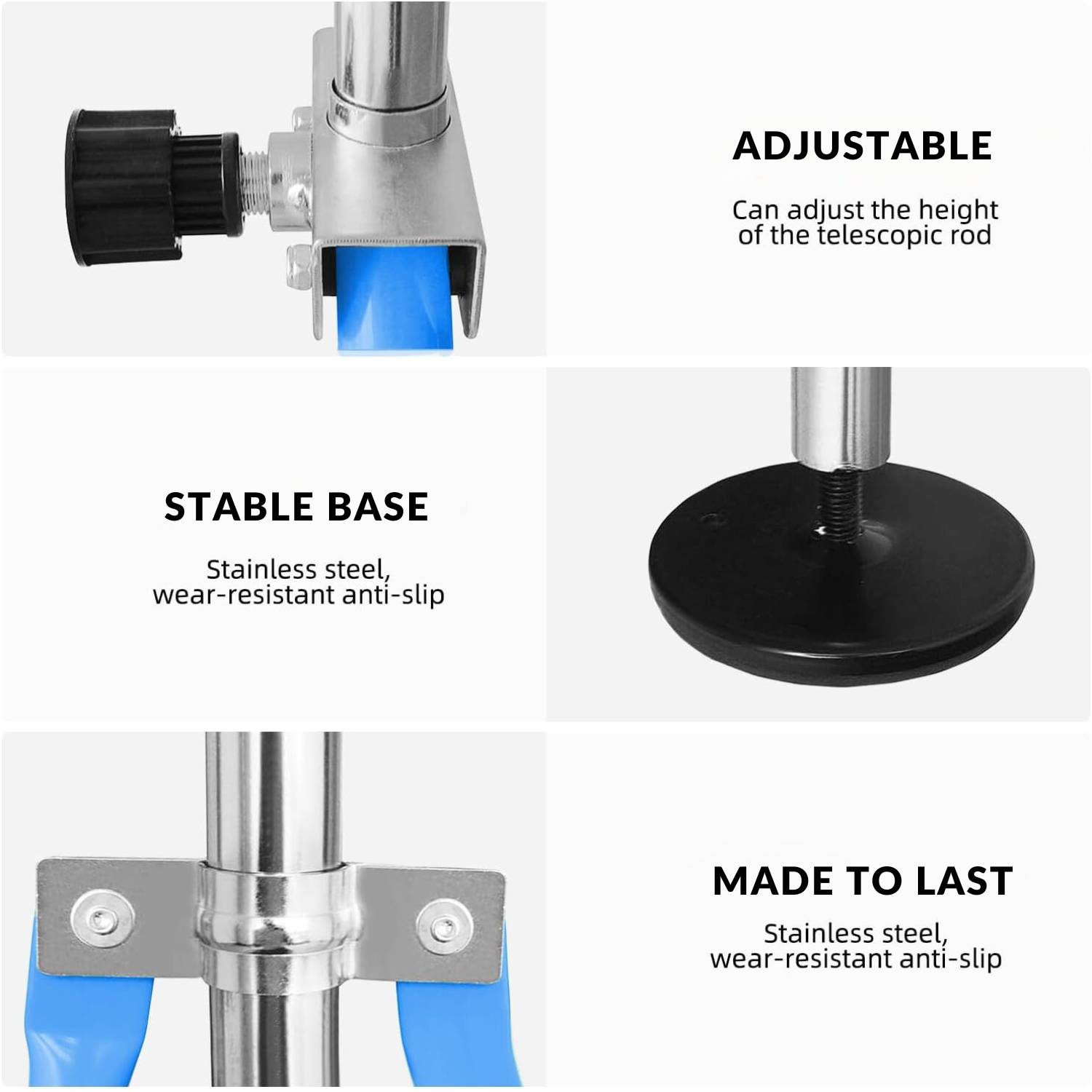
With four settings, one frame can start low for a small child's first hangs and move up as they grow into skills that need clearance. A rotary lock holds the crossbar, with a quick adjustment knob on each side.
Two rules every time you change it:
- Set both sides to the same height.
- Tighten both knobs fully before anyone goes on the bar.
Get those right and most wobble disappears.
Where to put it
Floor
Choose a flat, level floor. The non slip rubber sleeves on the base grip laminate, wood and tiles, which helps keep the frame where you put it during a swing.
Space
Leave clear space in front of and behind the bar, at least the child's full height each way. Swinging needs room, and that room should be free of furniture, radiators and toys.
A mat underneath
Lay a gymnastics mat below the bar and past it on both sides. Falls are part of learning bar work, and a mat softens contact with the floor. It does not make a skill safe, but it takes the sting out of the small mistakes.
What to practise, and what to leave for the club
Good work for a home bar:
- Hangs and tuck holds
- Small swings with a controlled finish
- Pullovers
- Front support and small casts
- Leg lifts for the core
Leave kips, big swings, giants and any release move to the club. Those need a full size bar, proper landing mats and a coach.
Supervision
The bar is made for children, and children on a bar need an adult watching. That applies at home just as it does in a club.
Supervision means being in the room and paying attention, not listening from the kitchen. It also means checking the knobs before each session, and stopping when the frame moves or the child is tired.
Folding and storage
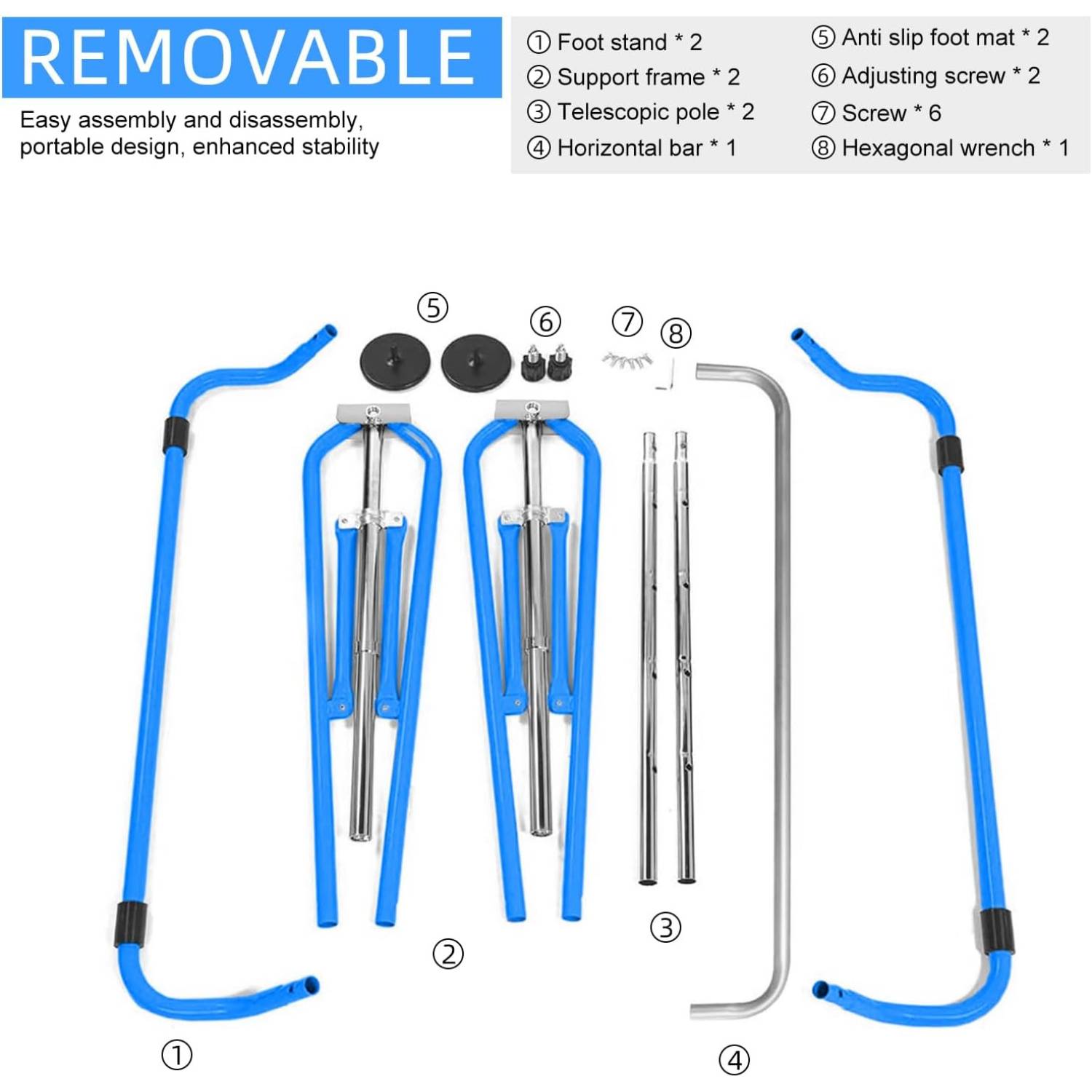
The pull up connecting rods on each side fold the bar down in seconds, and the instructions in the box show the steps. Folded, it can be tucked into a small corner until the next session.
Store it indoors. The powder coating protects the steel, but a damp shed or garage all winter is hard on any metal frame, and the adjustment threads are where rust starts.
Looking after it
- Check both knobs are tight before every session.
- Check the rubber sleeves are still seated on the feet.
- Wipe the bar after use so it stays easy to grip.
- Look for bends, cracks or loose fittings, and stop using it if you find any.
Clubs and schools
Buying several bars for a club, a school or a summer camp? Our wholesale page is the place to ask for a quote.