
The complete guide
How to choose and use a rugby tackle bag
What a tackle bag is for
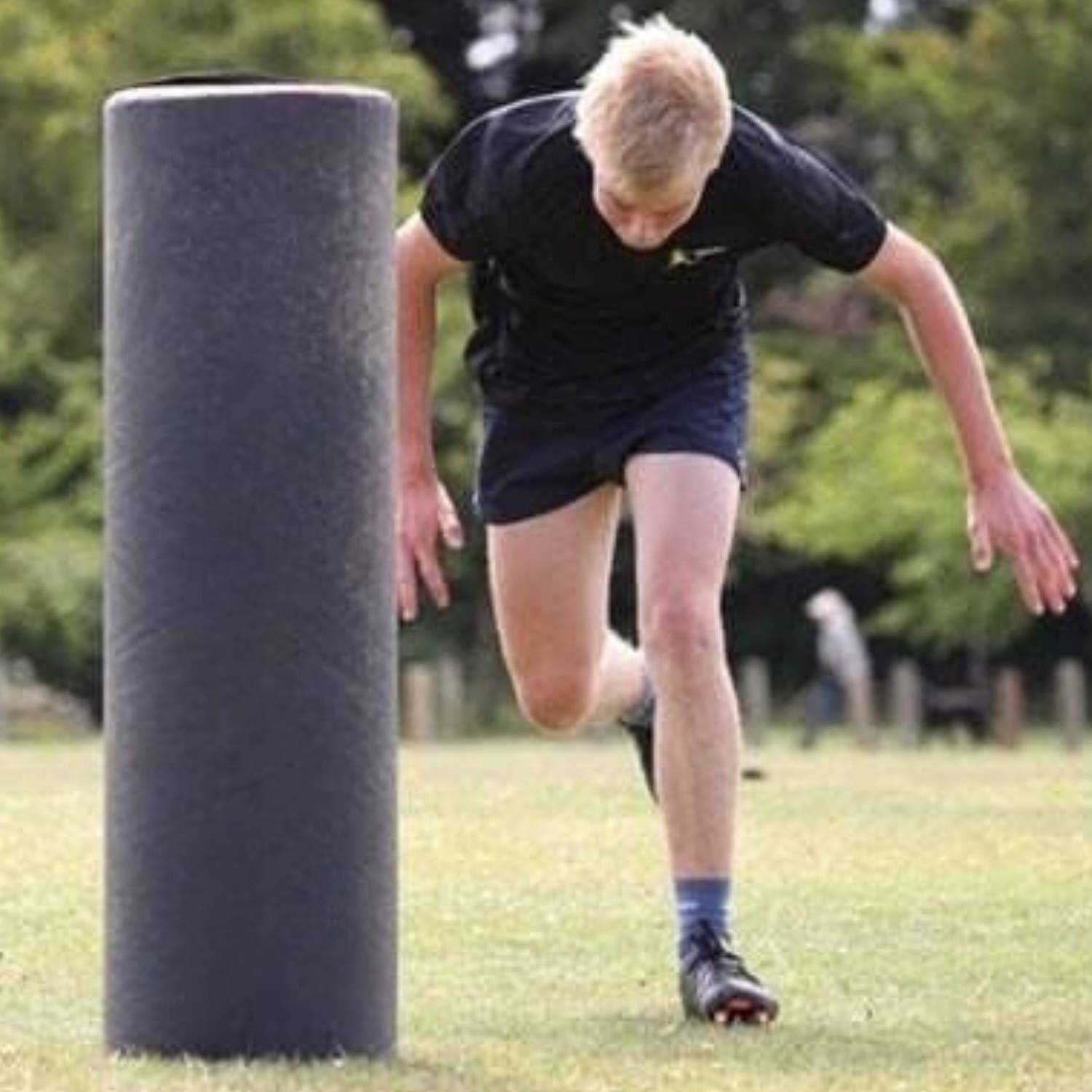
A tackle bag gives players something to hit that does not get hurt and does not move in odd ways. That lets a coach work on the parts of the tackle that matter most: head position, shoulder contact, footwork and driving with the legs.
It does not replace coached contact between players. It is where good habits get built first.
Choosing the weight
The weight of the bag decides what it teaches.
Too heavy, and a young player bounces off and learns to go into contact half-hearted. That habit causes trouble later in a match.
Too light, and the bag moves before the player has done anything right, so poor technique gets rewarded.
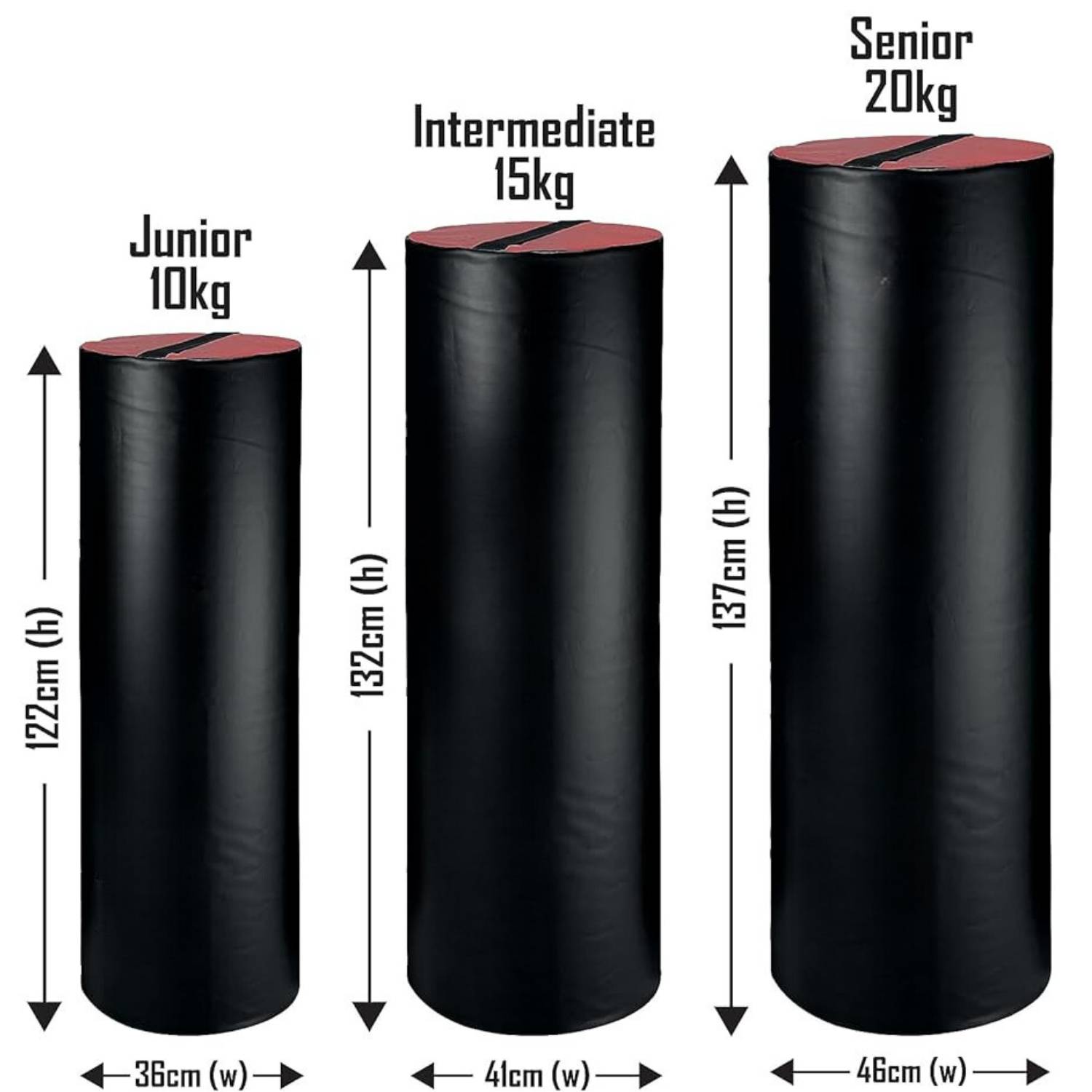
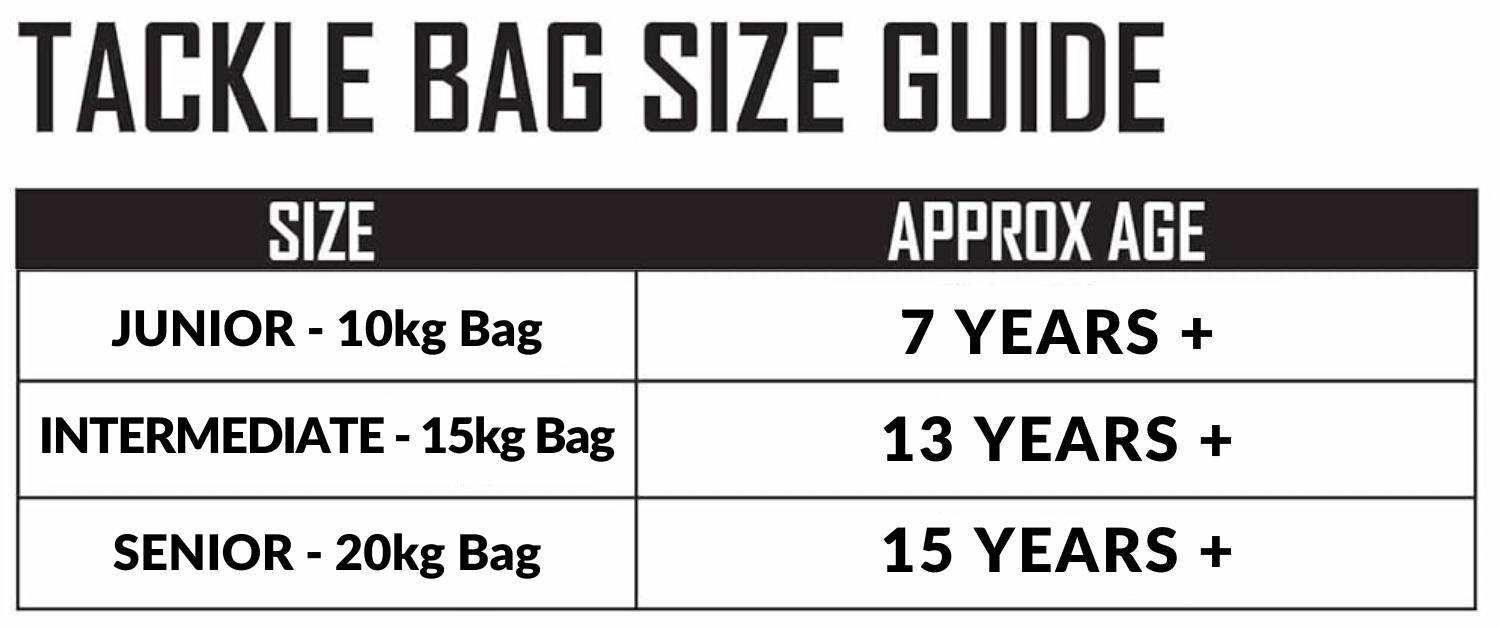
Junior 10kg, from about 7
For young players learning the basics: head to the side, shoulder into contact, feet moving through. The bag should give way when the tackle is done well.
Intermediate 15kg, from about 13
For bigger, stronger players. There is more drive in the tackle and more work on leg power.
Senior 20kg, from about 15
For older teens and adults who need a bag that pushes back, with repeated contact and conditioning work.
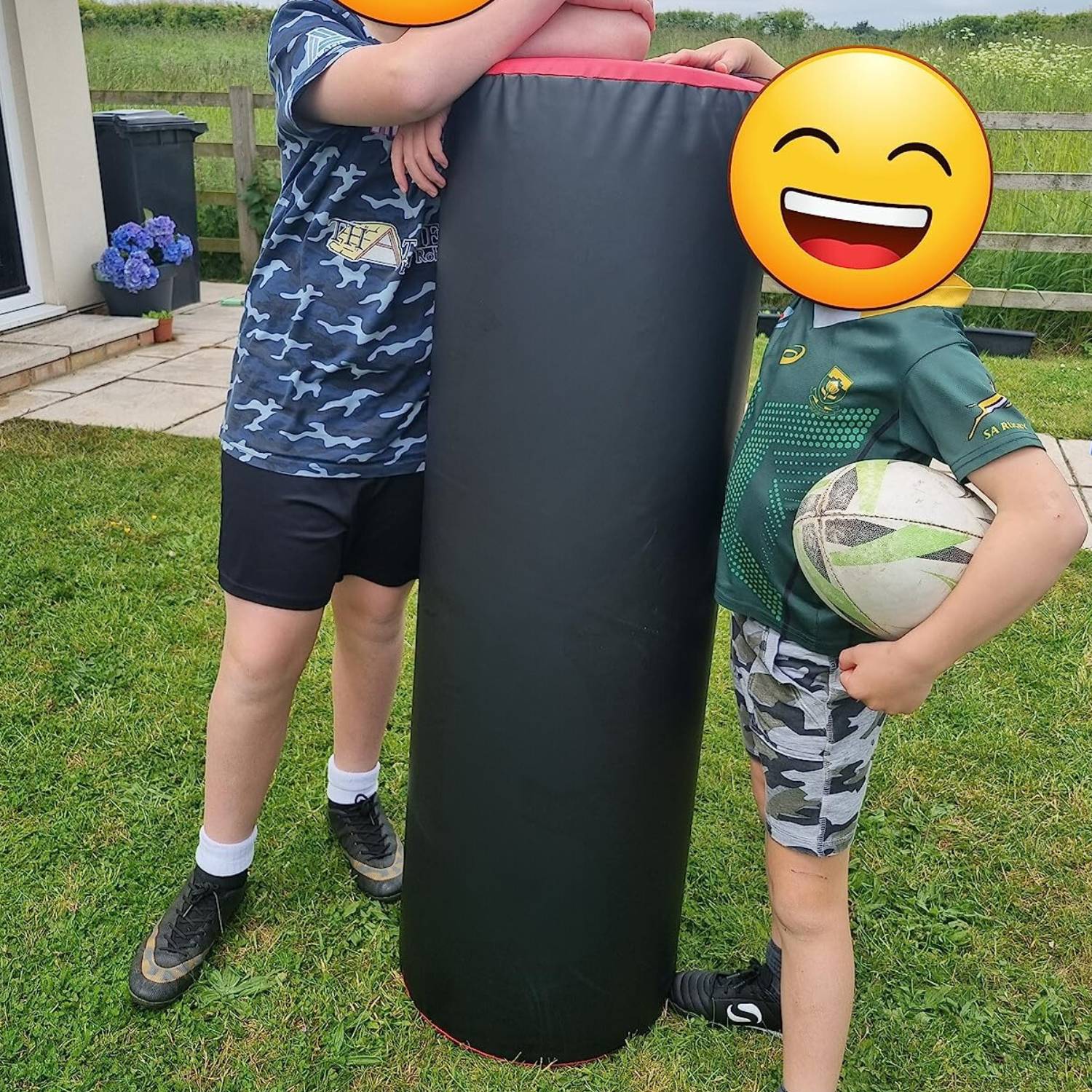
The ages are a guide. A big 13 year old and a small 15 year old may be better on each other's bag, and the coach who knows the players should make the call.
What to look for in a bag
Shell and seams
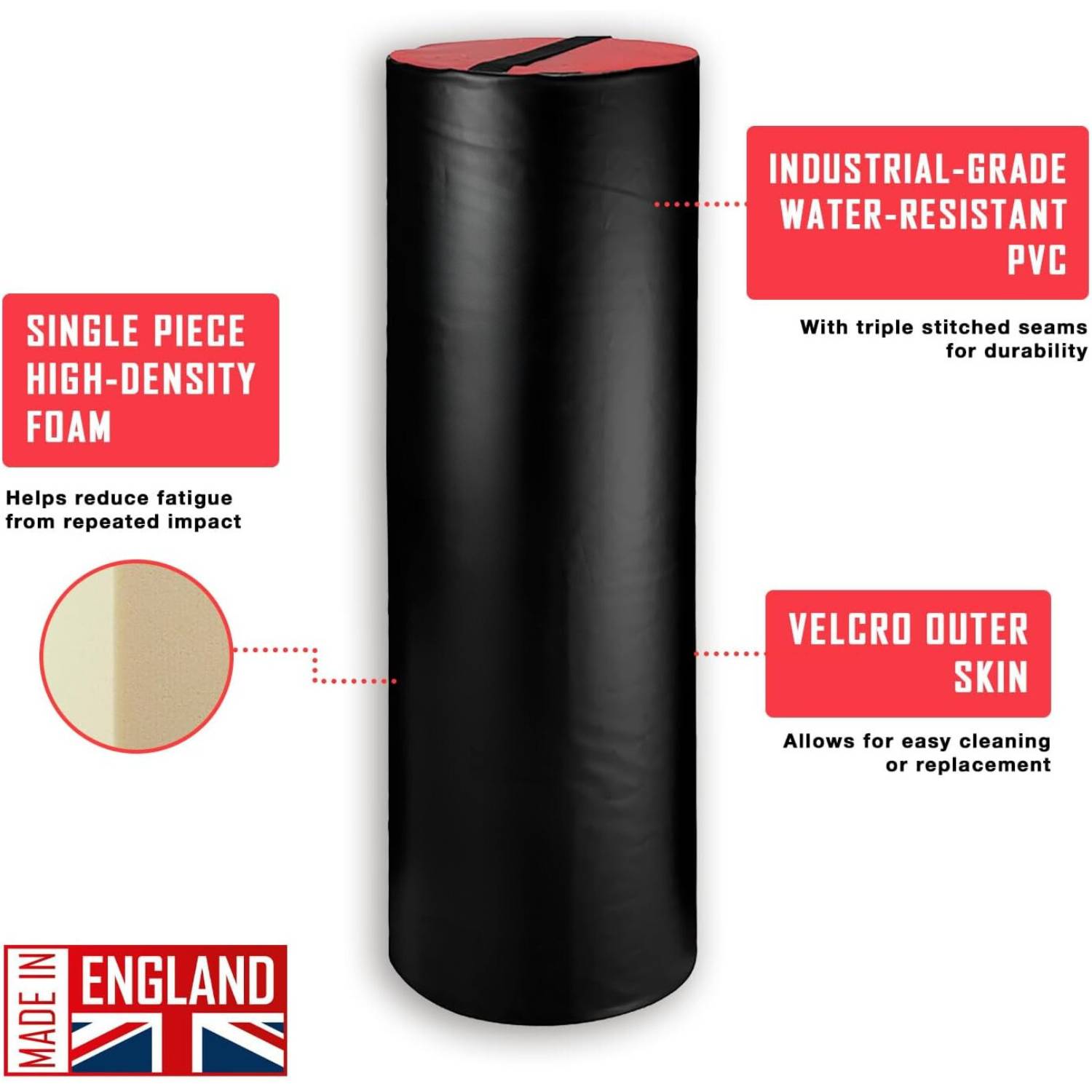
This bag uses industrial-grade PVC that resists water, with triple-stitched seams. Seams take the strain on a contact bag, so that is where build quality shows over a full season.
Core
A high-density foam core takes repeated hits through a session.
Carrying straps
Straps at the top and bottom mean the bag gets carried to the pitch. Dragging a bag across a car park or a gravel path wears the base faster than any tackle.
Removable outer skin
The outer skin fastens with hook-and-loop, so it can come off for cleaning and be replaced when it wears.
Holding the bag
The holder is half the drill, and often gets the least coaching.
- Stand with feet staggered, not square, or you will be driven straight back.
- Brace, then give a little on contact. A rigid hold turns the bag into a wall.
- Hold the bag low enough. Most bags are held too high, which teaches players to hit upwards.
- Swap holders often. A tired holder is an unpredictable one.
Drills that work
Moving target
One player holds the bag and moves across a channel. The tackler has to adjust their feet and hit at the right height.
Hit and drive
Make contact, then keep the legs driving for a few steps. This is the drill that carries over into matches.
Channel work
Stand two bags side by side to make a narrow channel for ball-carrying and handling drills.
Jump work
Lay bags on their sides and use them as low hurdles for jump training, like stepping over players on the ground.
The bags also suit soccer training drills, where a coach wants a solid target or a marker players have to work around.
Coaching and supervision
Contact work at any age should be coached and supervised. Match the bag weight to the player, teach technique before force, and stop a drill when players are too tired to hold good form.
The bag helps players learn to tackle. It does not make contact free of risk.
Making it last
- Use it on grass or soft turf. Concrete and rough surfaces wear PVC quickly.
- Hose or sponge off mud with mild soap and water.
- Let it dry fully, standing up, before you store it.
- Store it indoors, out of direct sun.
- Check the seams and straps every few weeks. Small seam damage caught early can often be stitched.
Buying for a club or school
Many clubs and schools buy a mix of weights to cover their age groups. For several bags in one order, ask for a quote through our wholesale page.