
The complete guide
How to choose, hold and look after boxing pads
What pads are for
Pad work is where technique gets built. A bag stands still and takes whatever you throw at it. A pad holder moves, calls the shots and shows you straight away when a punch lands short, late or off line.
That makes pads useful at every level of a club. A new member learns a clean jab and cross on them. An experienced boxer uses them to sharpen timing, distance and combinations before a bout.
They also train defence. A good holder feeds back a hook or a jab now and then, so the puncher has to slip, block or roll before firing the next shot.
Choosing a set of pads
A few things decide whether a set of pads lasts a season of shared use.
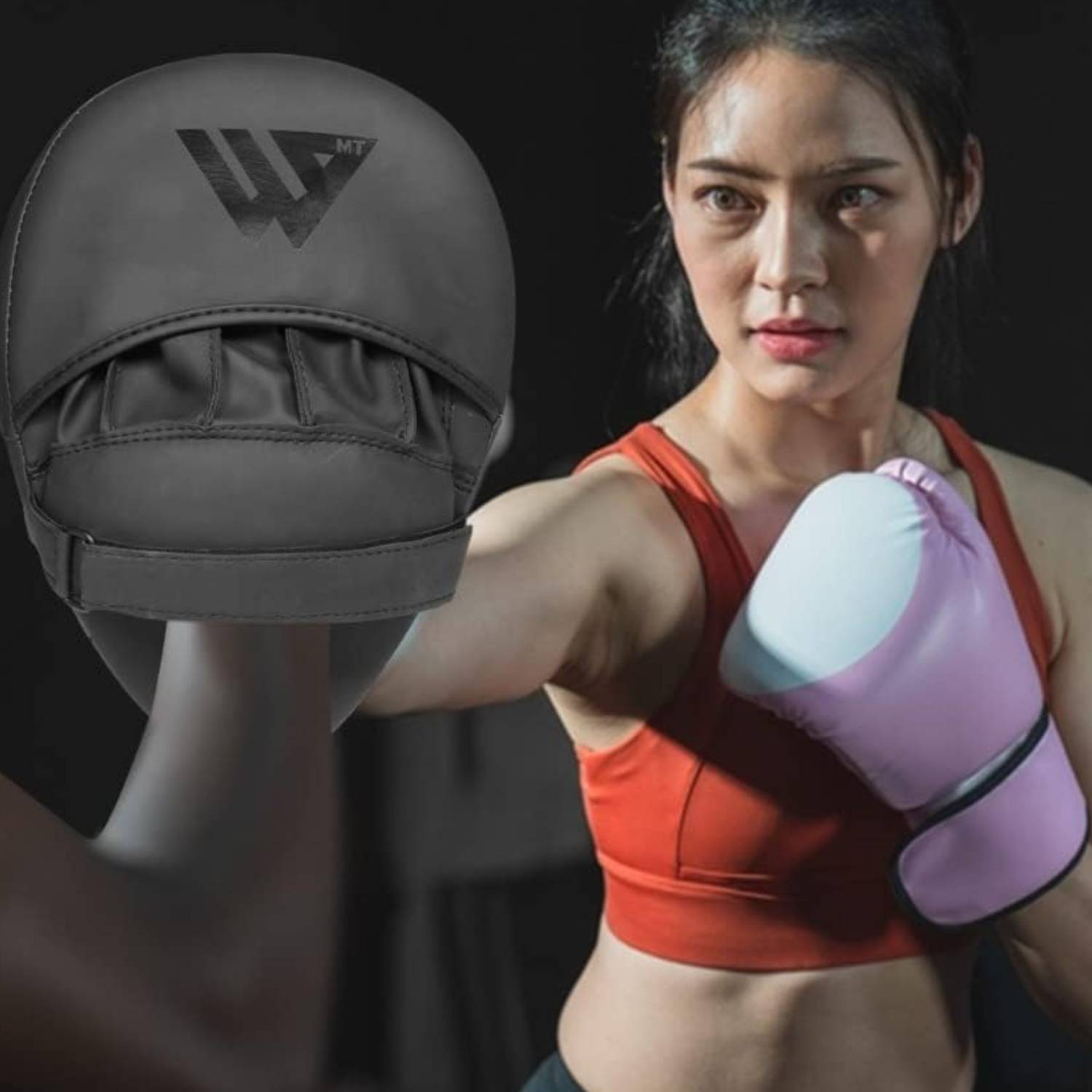
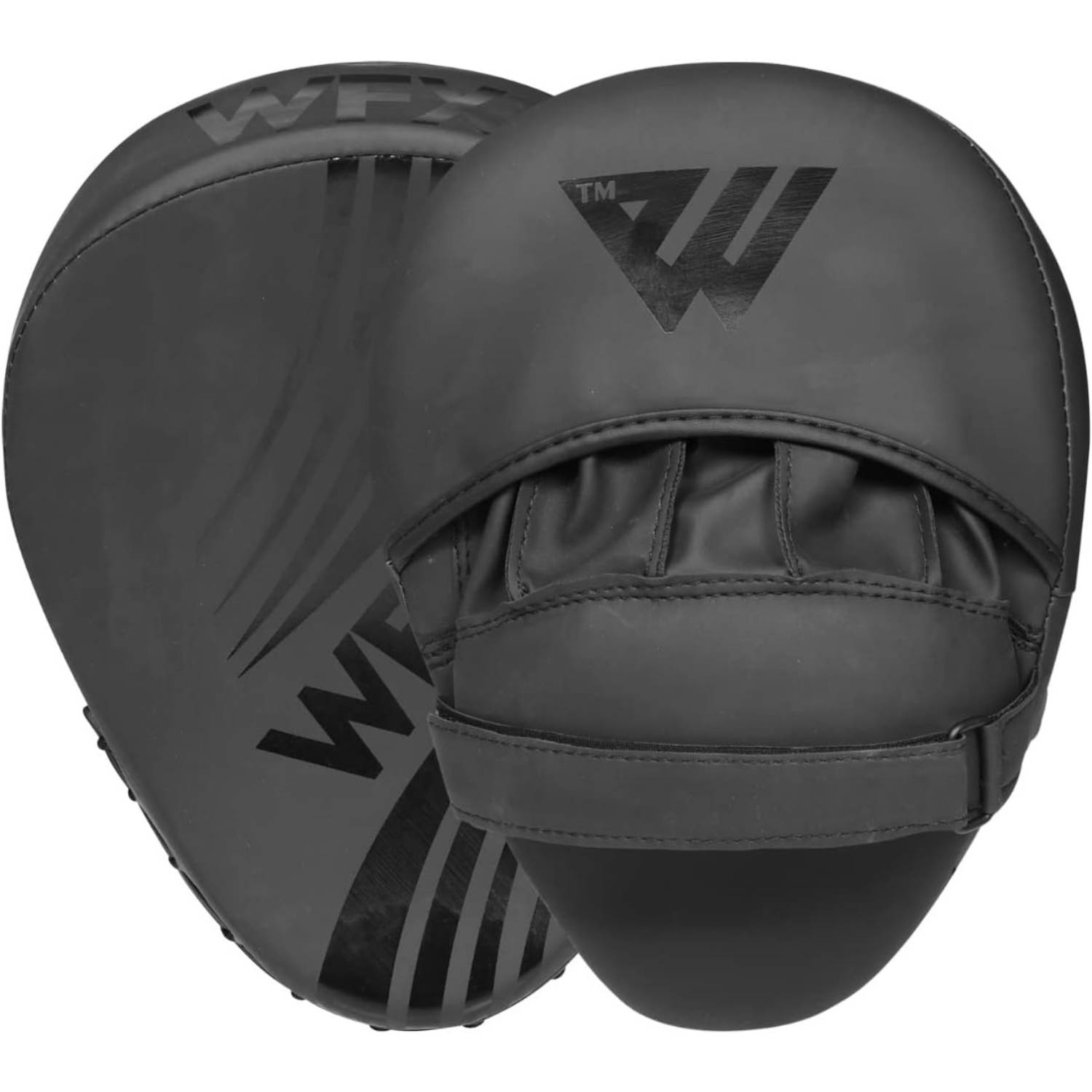
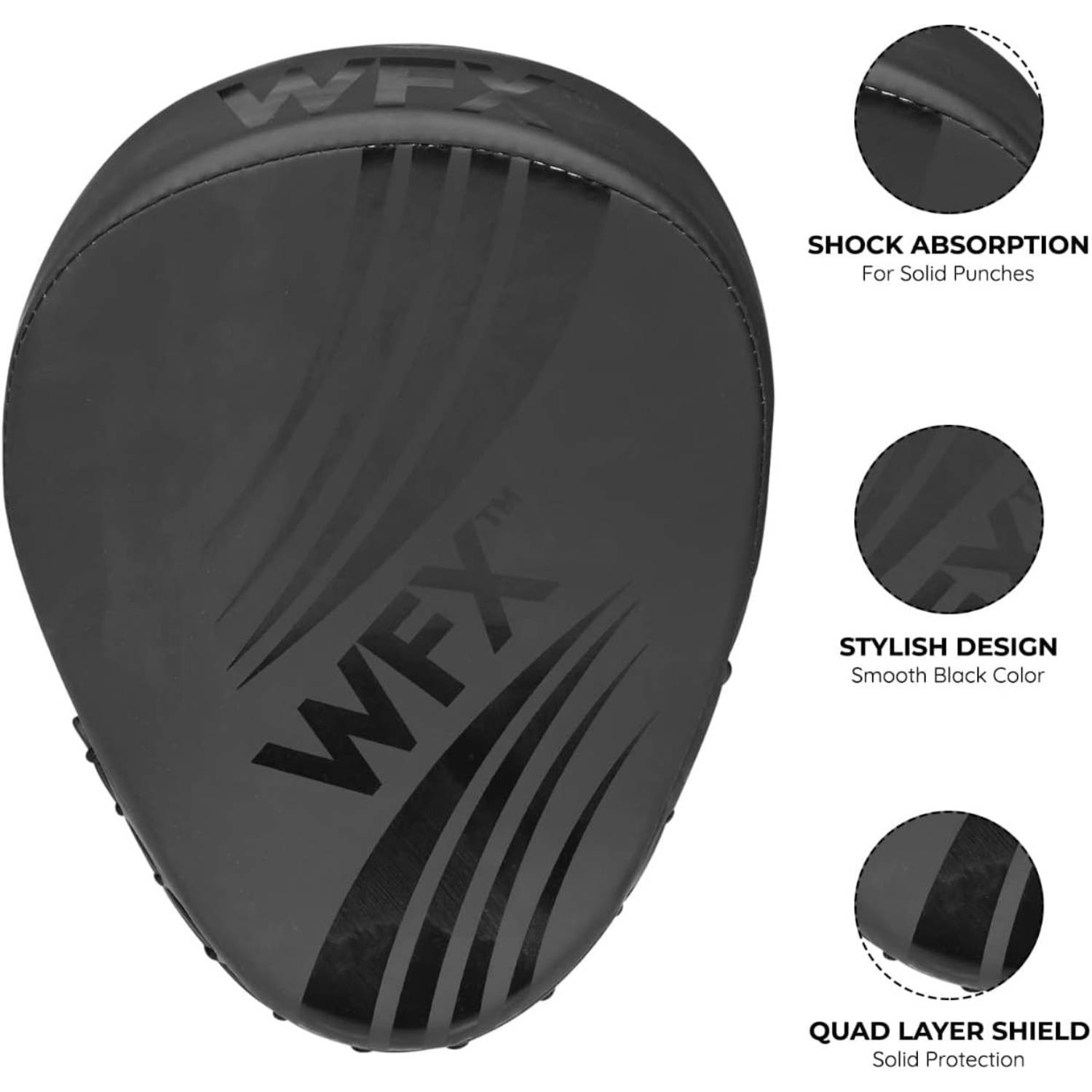
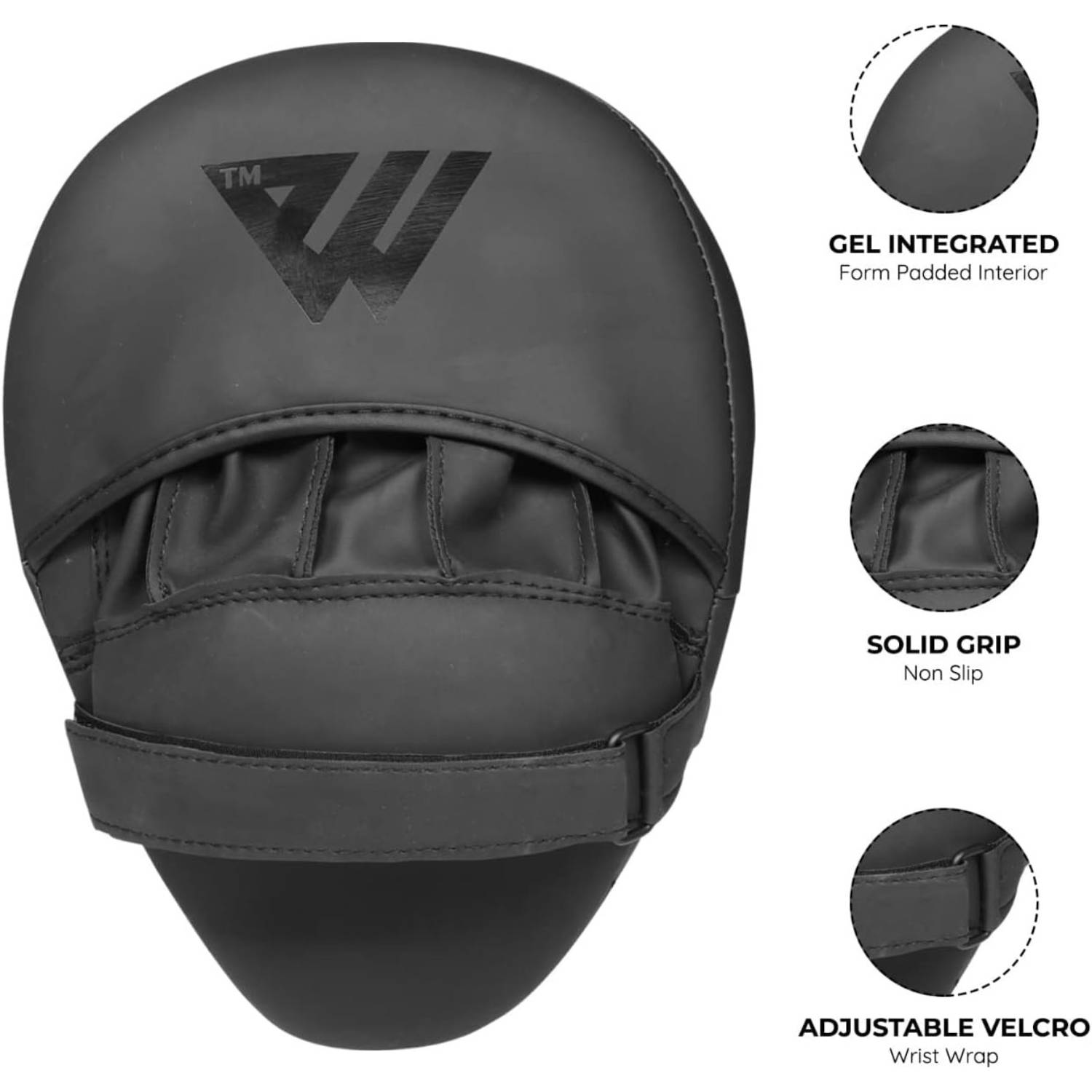
The outer. PU leather, like the matte black face on these, wipes clean and takes repeated strikes. It needs drying after every session, which is covered below.
The padding. The inner layer protects the holder more than the puncher. Pads with thin or cheap padding send each punch straight into the holder's palm, wrist, elbow and shoulder.
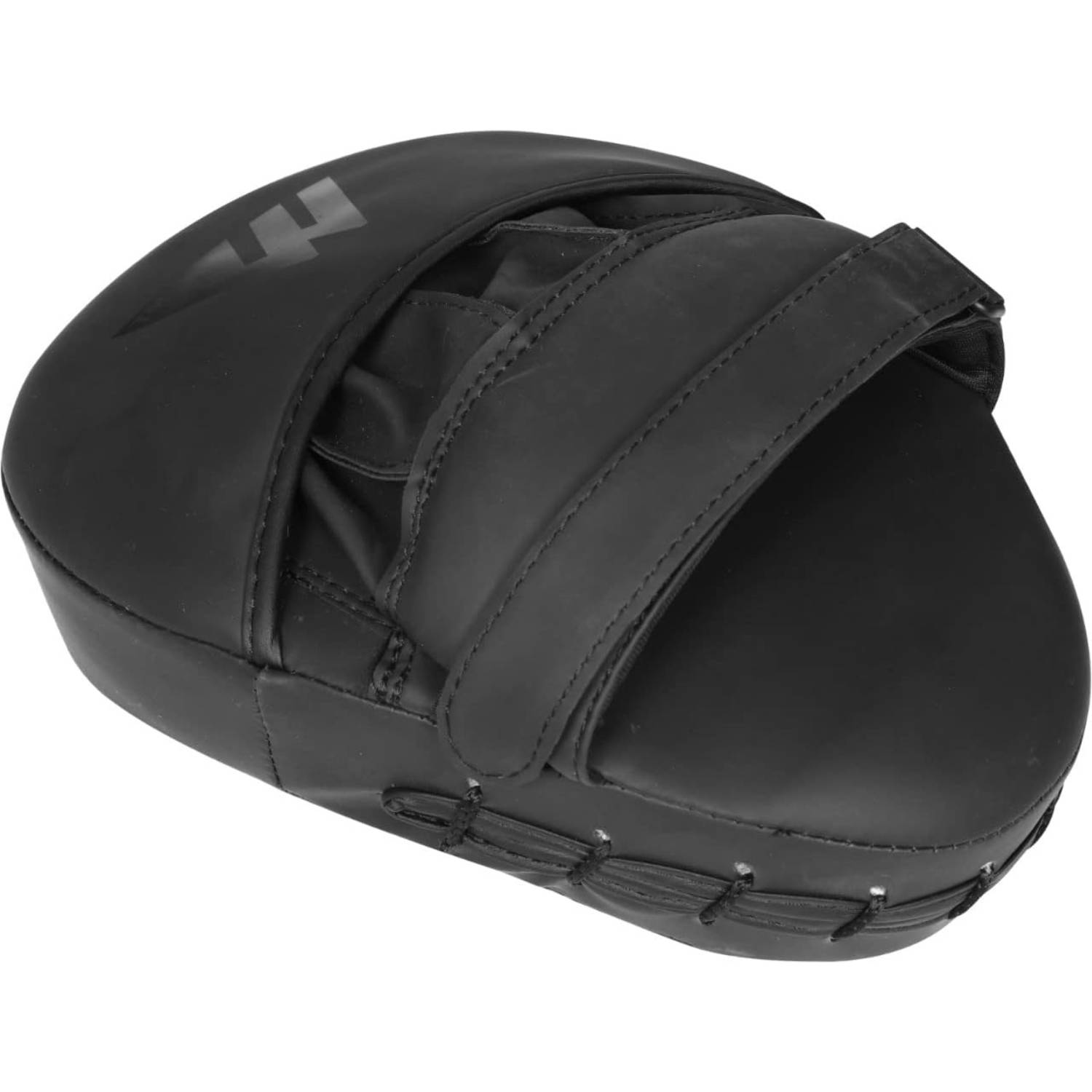
The stitching. Seams and strap anchors are where pads usually give out first. These have double-reinforced stitching at the points that take the strain.
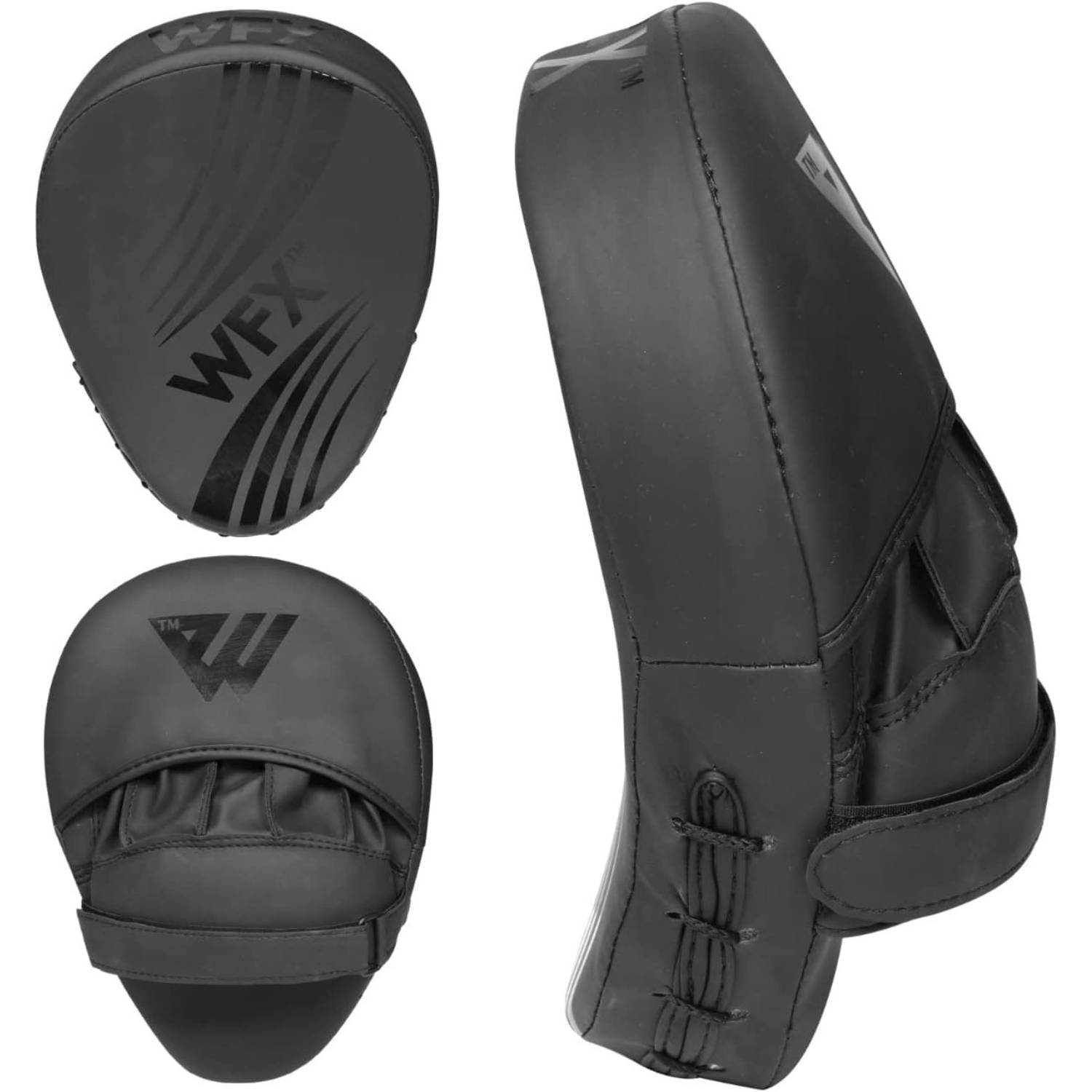
The shape. A contoured, curved face catches a punch more naturally than a flat one and lets the holder present the pad square without twisting the wrist.
The fit. Adjustable hook and loop straps and a finger sleeve keep the pad snug on the hand, so it does not slip or spin when a heavy shot lands.
Holding pads well
The holder runs the session, so holding is a skill worth learning properly.
Meet the punch
Push the pad slightly into the incoming shot. A pad held loosely lets the full force travel back into your joints.
Keep your elbows in
An arm held wide acts like a lever on the shoulder. Keep the elbows tucked and the pads close to where a real opponent's head and body would be.
Present the pad square
A pad held at an angle sends the force sideways across the wrist. The contoured face is there so you can square up without bending your wrist to do it.
Call it before you hold it
Name each combination before it is thrown. Surprises are how holders get caught.
Building a useful round
Start with single shots so both people settle into the right distance. A few rounds of jabs is enough.
Then add one shot at a time. Jab and cross, then jab, cross and hook, then the same again with a slip in the middle. Combinations built up in stages stick better than a long list shouted at the start.
Keep moving between combinations. When the holder steps back, steps in and circles, the puncher has to move their feet, which is the part of boxing people skip when they train alone.
Mix in defence. A light touch from the pad after a combination reminds the puncher to bring their hands back.
Finish each round on a combination that lands cleanly. It sets up the next session better than ending on a scramble.
Using them across disciplines
These pads take kicks and knees as well as punches, so they suit boxing, Muay Thai, kickboxing, MMA and karate pad rounds. For heavy low kicks, keep the holder's arms firm and meet the kick rather than absorbing it passively.
The puncher should always wear gloves and hand wraps. Pads protect the holder, not the striker's hands.
Looking after them
Air them straight away. Take them out of the kit bag after every session. Sweat trapped against PU leather is what makes pads smell and what lifts the surface at the seams.
Wipe, do not soak. A damp cloth with a little mild disinfectant is enough. Water that gets inside a pad never fully leaves.
Dry away from heat. A radiator dries PU too fast, and it cracks at the folds.
Check the seams. Loose stitching at a strap anchor is the early warning. Caught early it can be repaired; left alone, it turns into a torn pad in the middle of a round.
Store them somewhere cool and dry, out of direct sunlight, and they will keep their shape.
Buying for a club or school
If you are kitting out a club, school or gym, we can quote for several sets at once through our /wholesale/ page.