

The complete guide
How to choose and set up a portable volleyball net
Fixed nets and portable nets
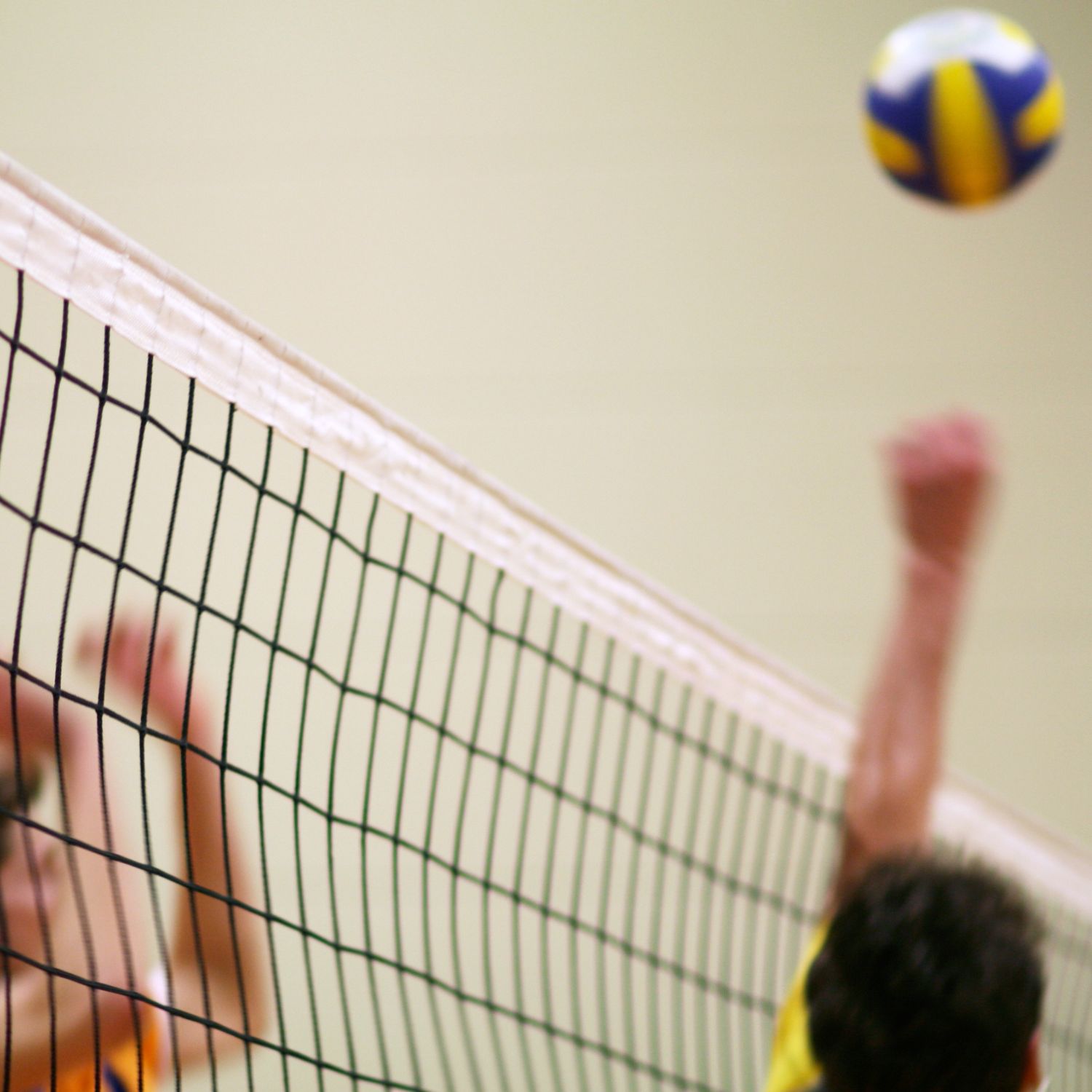
For a long time, playing volleyball meant finding a court. Nets hung between fixed posts in a sports hall, or stood on a permanent beach court.
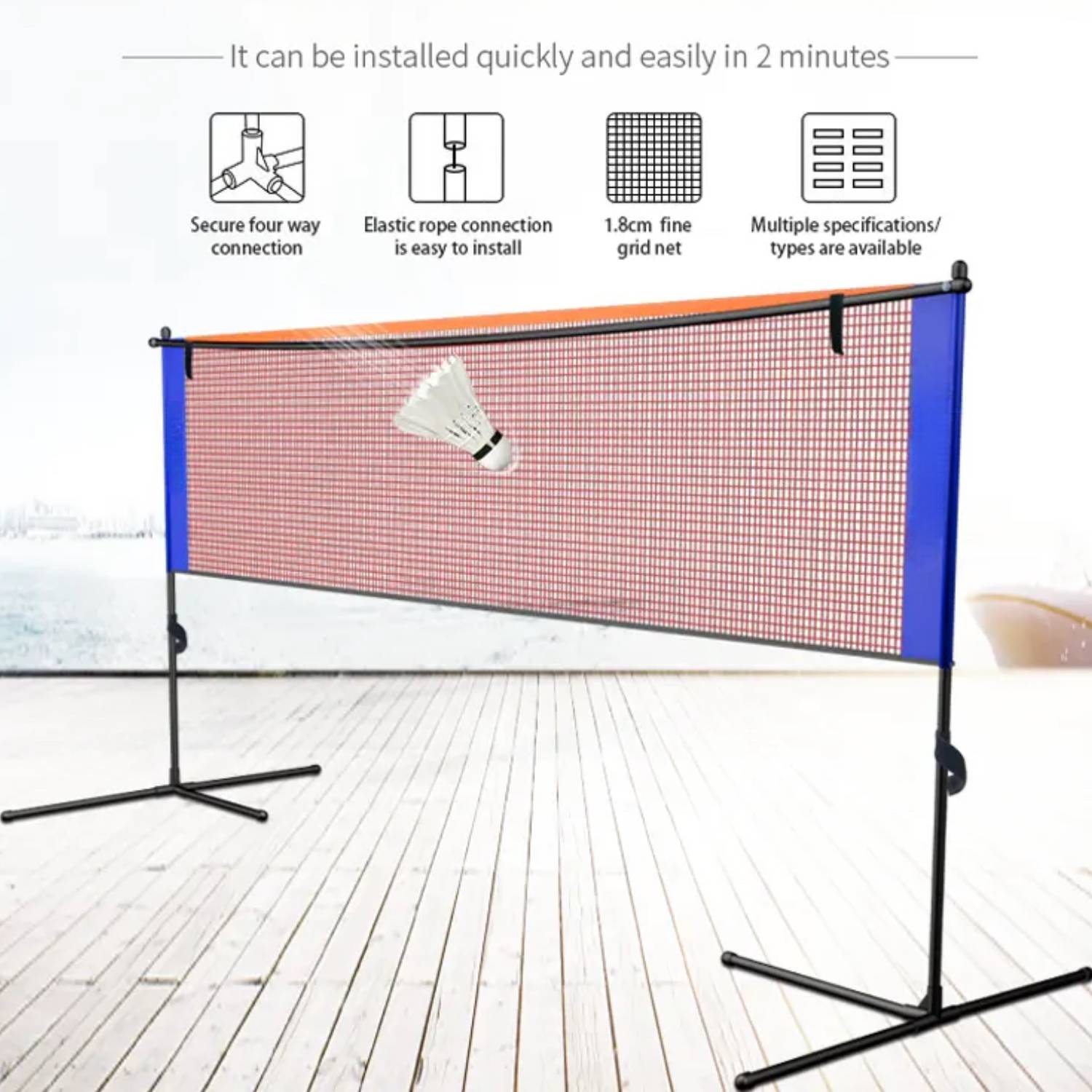
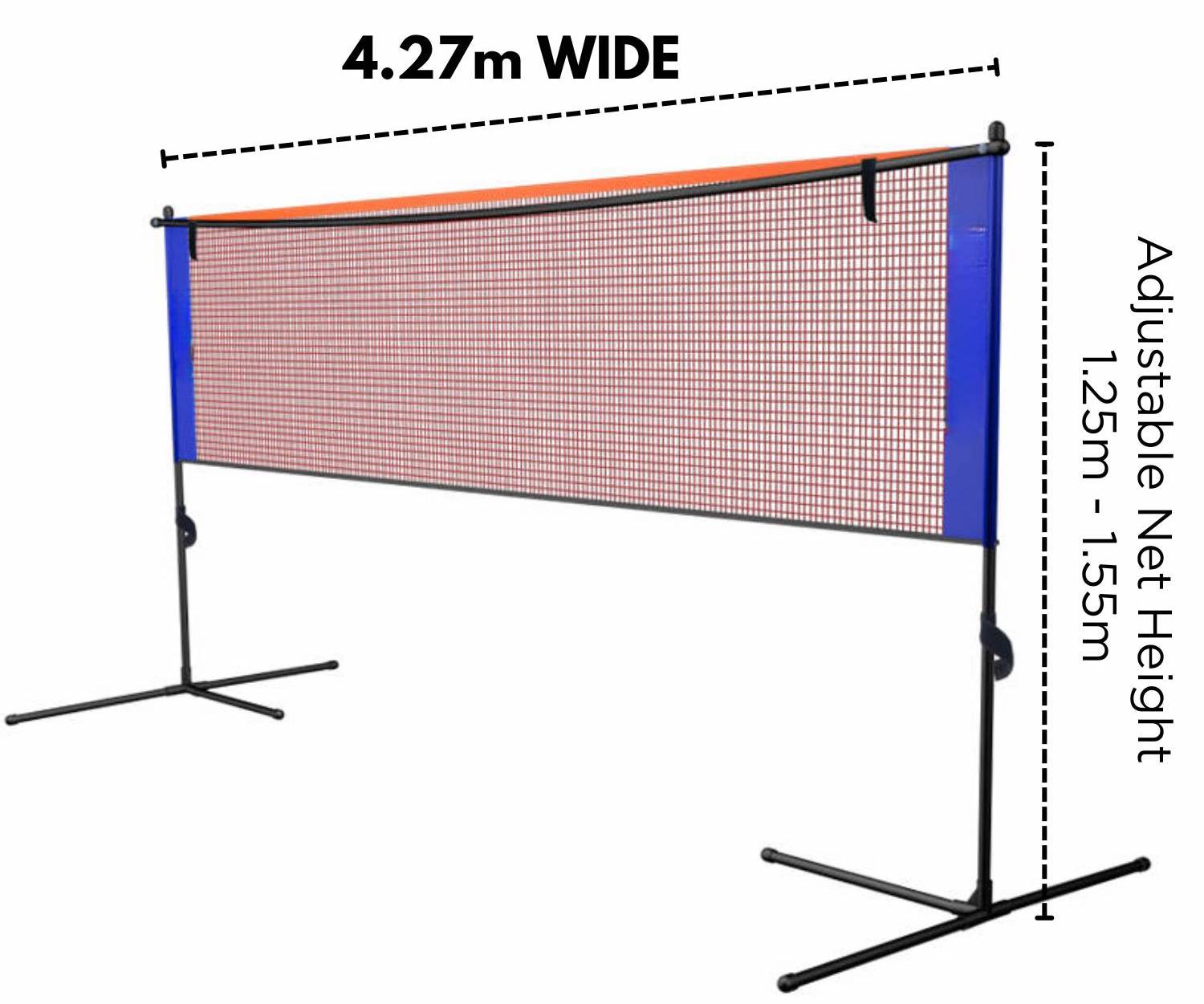
A portable net changes where the game can happen. This one is 4.27m wide, stands on its own poles and packs into a carry case. It will go up on a beach, a lawn, a driveway, a campsite or a hall floor.
What to look for in a portable volleyball net
Four things decide whether a portable net gets used all summer or sits in the garage.
Materials
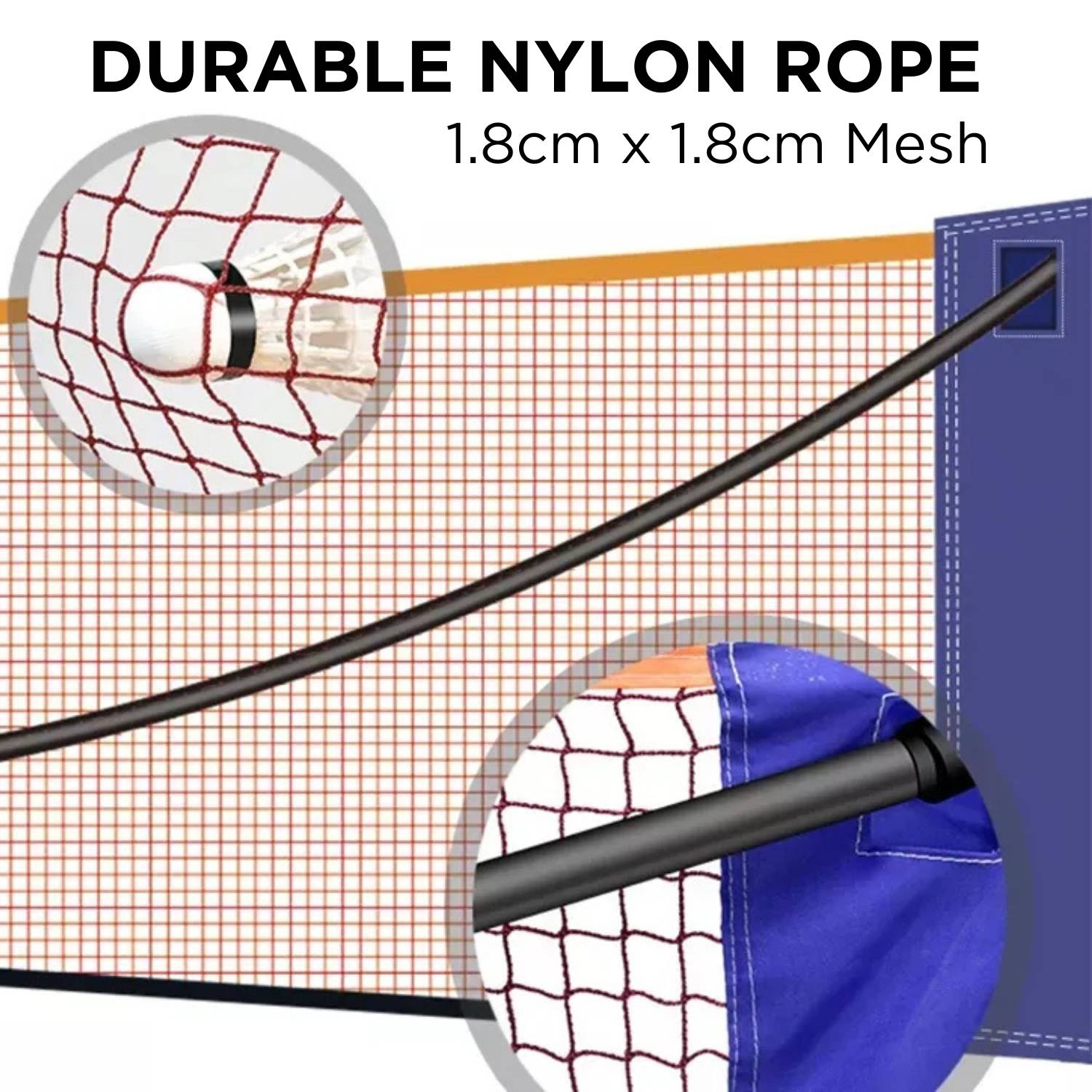
The net should shrug off damp and sand. This one is nylon, on painted steel poles.
How it stands up
Most beach sets rely on stakes. Stakes hold in damp, packed sand near the water, then pull out of the dry sand higher up the beach, which is where people actually set up.
This net uses no stakes at all. It is free standing, so the surface matters much less than whether the ground is flat.
Height settings
The poles have three marked settings, with 155cm at the top. Being able to change height lets a mixed group of adults and children play the same game. If you need the exact lower heights before you order, email theteam@customersupport.care and we will confirm them.
Carrying and storage
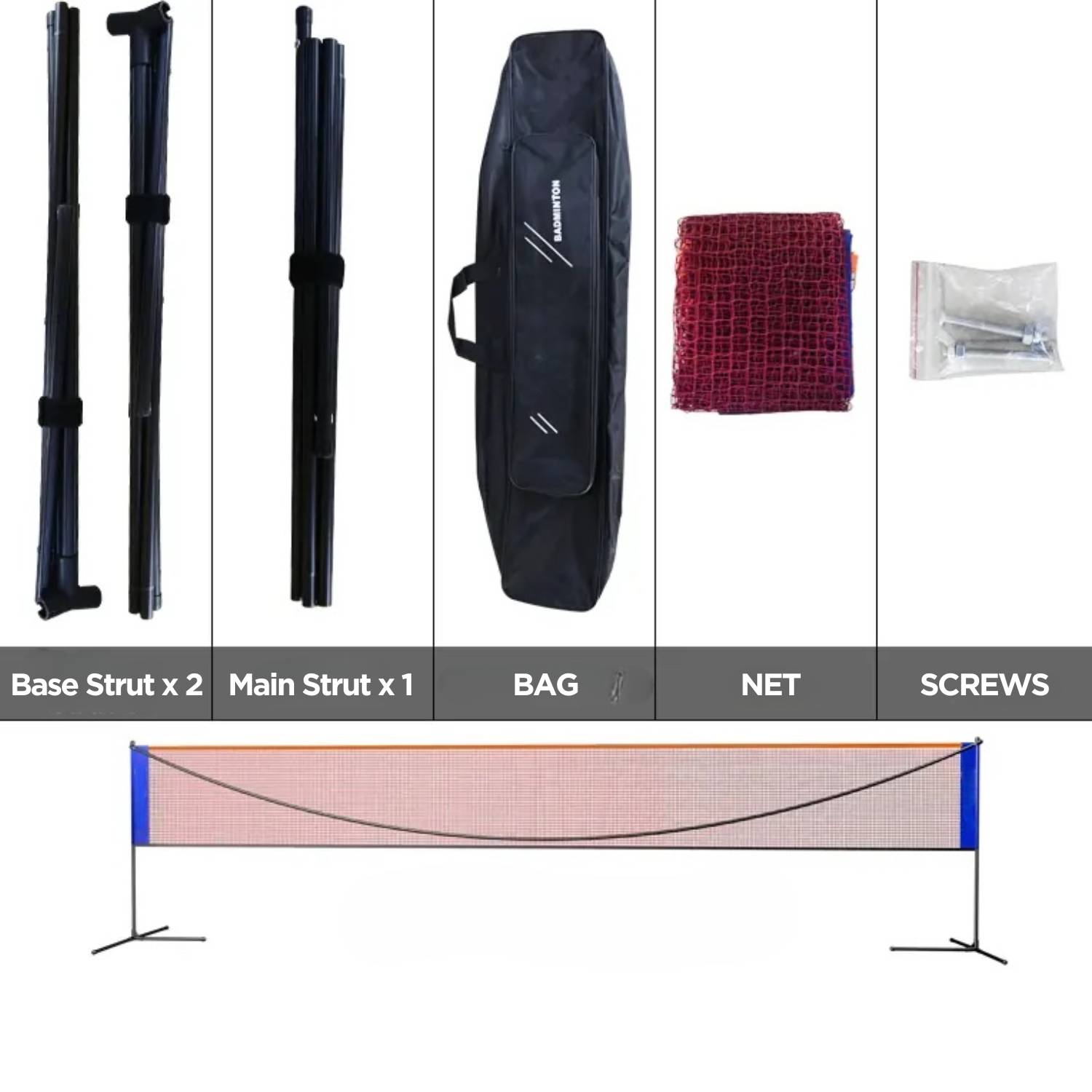
A net that is a chore to move stays at home. This one folds into its own carry case, and the pole sections are joined by a bungee cord so none go missing.
Be clear about the height
Full indoor volleyball is played with the top of the net at 2.43m for men and 2.24m for women. No portable garden net reaches those heights, and this one tops out at 155cm.
So treat this as a recreational volleyball net. That is not a weakness for the way most people play. At 155cm the ball still comes over with pace and adults have to work for it. Lower down, children can get the ball back over and stay in the rally.
For a club, the net is useful for skills work and youth sessions, not for matches.
Setting up on a beach
A few habits make the difference between an afternoon of play and an afternoon of fixing the net.
- Choose your spot before you unpack. Flat ground, away from the main path, and far enough up the beach that the tide will not reach you.
- Stand the poles and fit the net. The bungee cord pulls the pole sections into place.
- Set both poles to the same height mark so the net sits level.
- If it is breezy, weigh down each foot with a bag or a stone. Any free standing net can move in wind.
- Check the net after the first few rallies and adjust if it has settled.
On grass, tarmac or a hall floor, the same steps apply. Allow about two minutes once you have done it once.
What is in the box, and what is not
The store calls this a beach volleyball set, and it is worth being clear about what that means here.
You get the net, the poles and a carry case. There is no ball and there are no boundary lines, so bring your own ball and mark the court with cones, bags or a line drawn in the sand.
Looking after it
Beaches are hard on any kit: salt, sand and packing up in a hurry.
- Shake sand out of the net and off the poles before packing.
- Rinse off salt with fresh water when you get home.
- Let the net dry fully before it goes into the case, or it will smell.
- Keep grit out of the pole sections so they slide together cleanly.
Pack it away after play rather than leaving it up all season. That is what the case is for.
Other games on the same net
This is the same net the store sells for badminton and football tennis, with casual tennis and pickleball also possible. Only the height setting changes. If you own it for the beach, you also have a garden badminton net.
For schools and clubs
For PE lessons, summer camps and youth sessions, a net that goes up and comes down between uses saves a lot of hassle.
For several nets, use our /wholesale/ page to ask for a quote.