


The complete guide
How to choose, place and look after a full-size folding table tennis table
Table tennis or ping pong?
They are the same game on the same table. "Ping pong" tends to be what people call a game in the garage, and "table tennis" what a club calls it, but the table, the net and the rules are the same.
Measure the room, not just the table
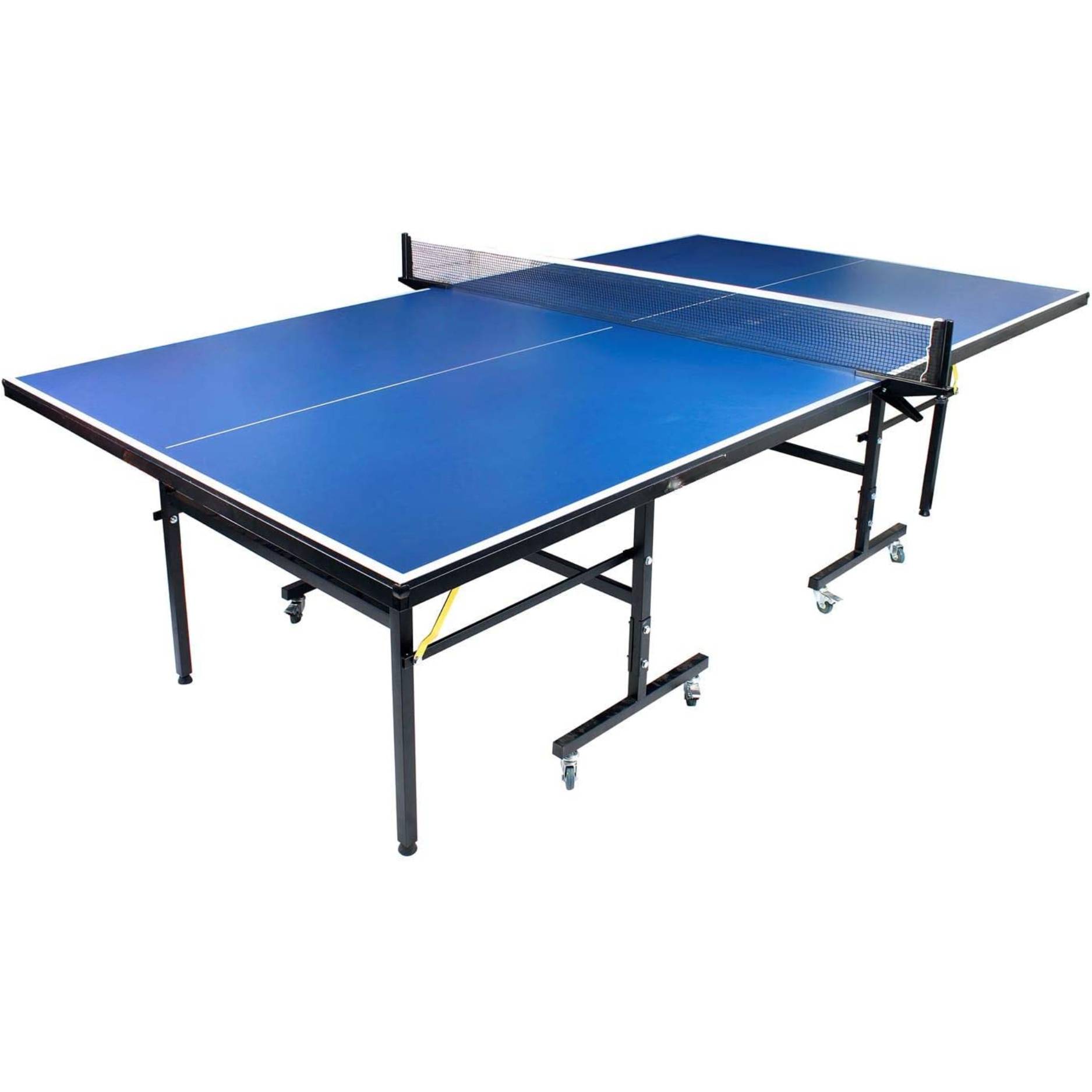
The table itself is 274cm long and 153cm wide. That is only part of the space you need.
Behind each end
Allow about two metres of clear floor behind each end. With less than that, long rallies end at a wall and players stand closer than they would like.
At the sides
Around a metre each side keeps wide shots playable and stops elbows meeting furniture.
In total
Something close to 7m by 4m gives comfortable play. A smaller room still works, but play changes: shorter rallies and more play close to the table, which some families prefer anyway.
Where a folding table lives
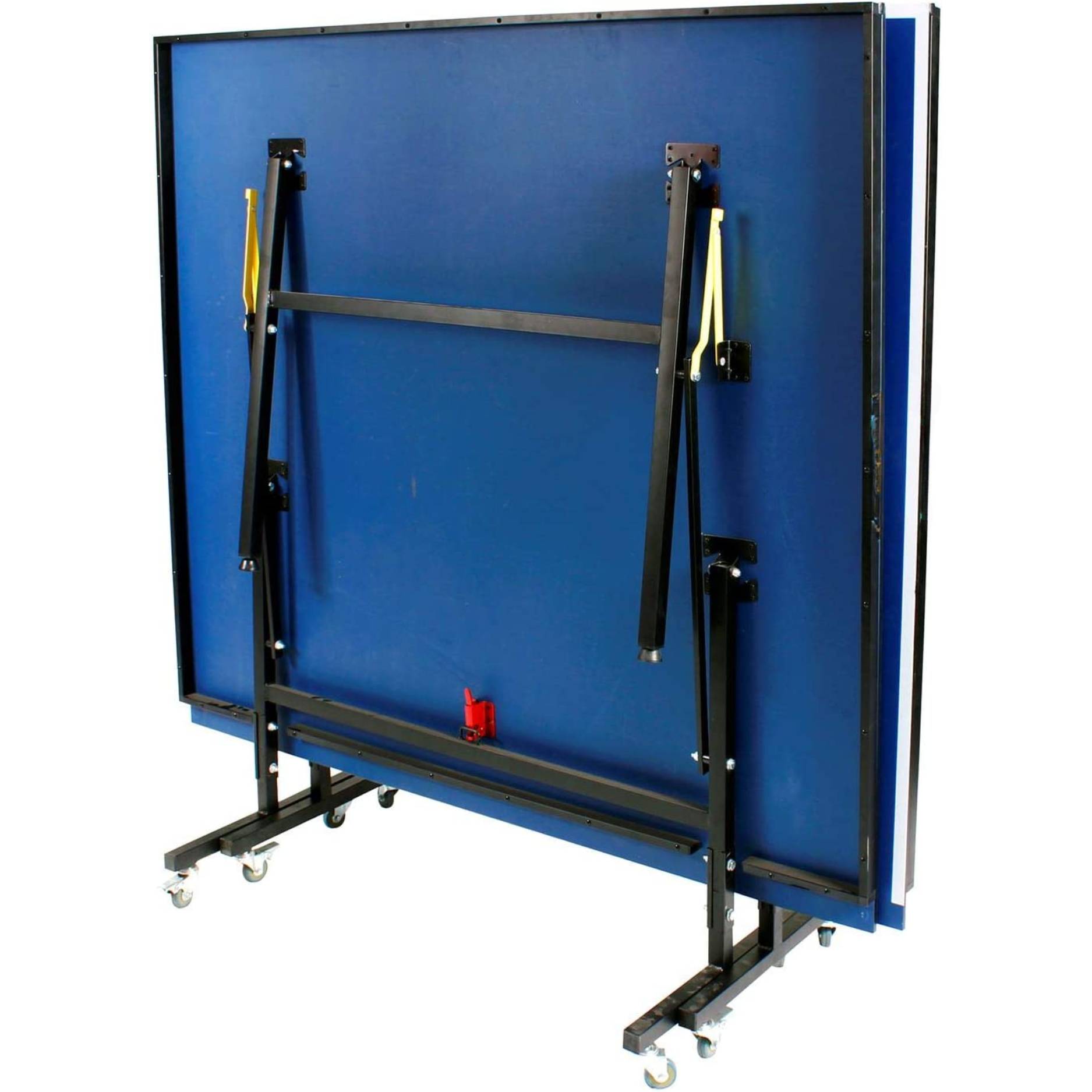
The folding system is what makes a full-size table workable in a house or a school. The table separates into two halves, folds for storage and rolls on eight wheels.
A garage
The most common home for a table, with one big condition: it must be dry. A garage that gets condensation on the walls will get it on the table, and the MDF top will not forgive that.
A spare room, games room or garden room
Ideal if you can get the table there. Measure doorways and stairs before delivery day, and check the ceiling height, because the table stands tall when folded.
A school hall or sports centre
The wheels and wheel locks make it practical to roll out for a session and put away after, which is why this style suits shared spaces.
Top thickness and what it means
The playing surface is 12mm MDF. Thickness affects how evenly the ball bounces across the table.
Tops of 19mm to 25mm are the usual recommendation for competition play. A 12mm top suits home, school and social games, where players want a full-size table at a sensible price rather than a match table.
If you are buying for a club that plays in leagues, talk to the club first about what they need.
Playback: practising on your own
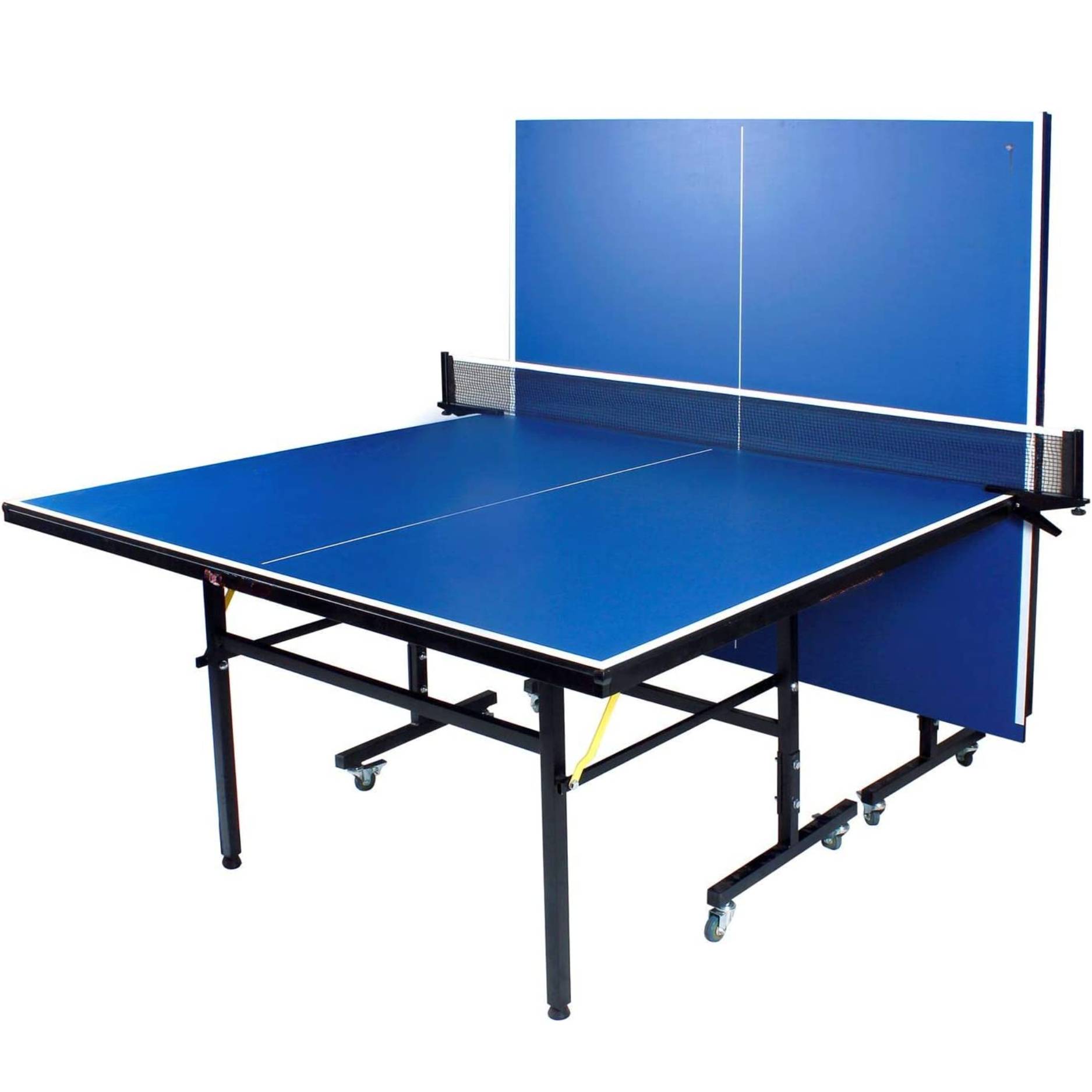
Fold one half of the table upright and leave the other half down. Now the ball comes back off the raised half, and one player can practise alone.
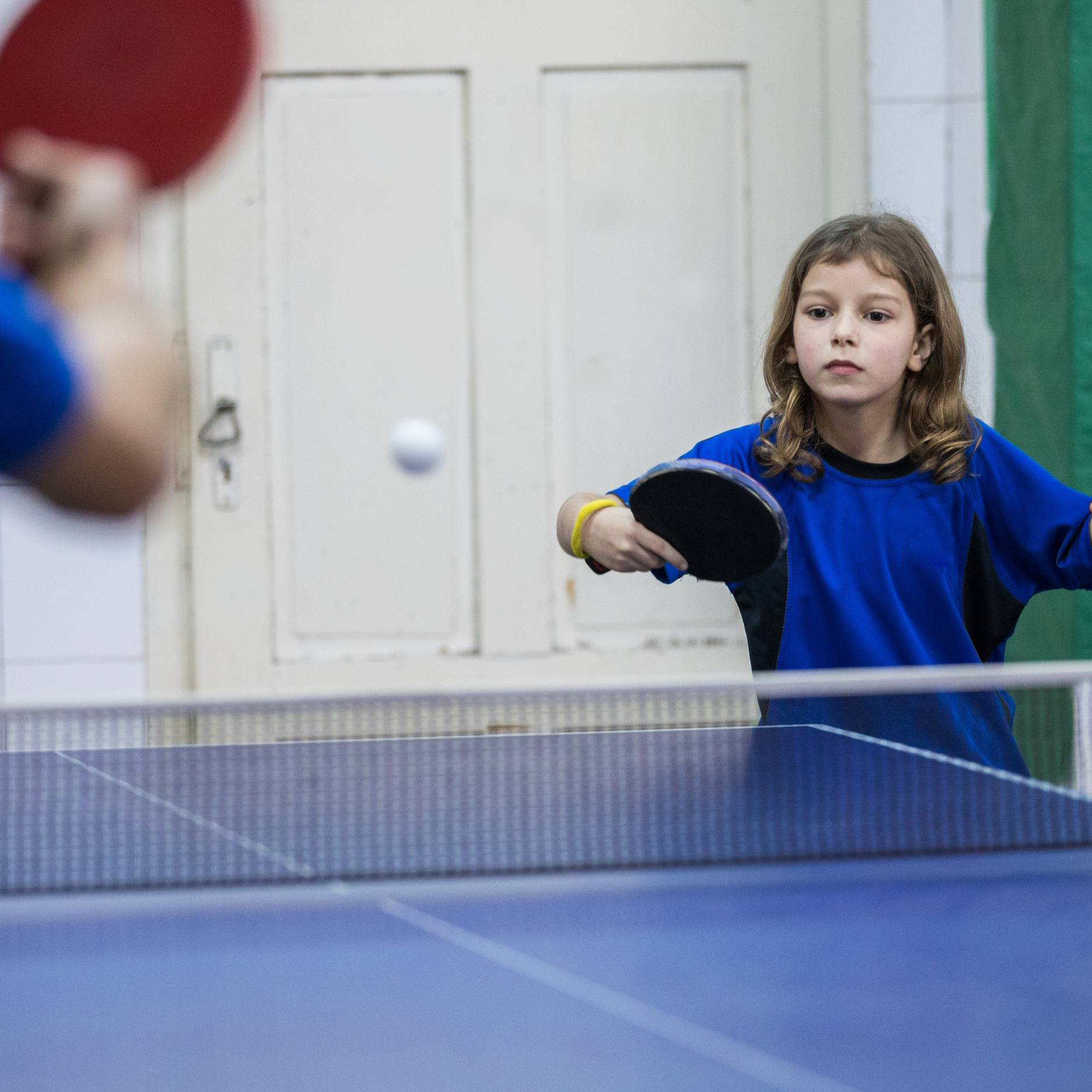
For a young player this is one of the most useful features the table has. Ten minutes of solo practice at a time is a good way to build consistency, and nobody else has to be free. Adults can use it to warm up or to work on serves and returns.
Setting up and folding
Use two adults to set the table up, and two adults every time it folds or unfolds. It is a full-size table, and a folding table is heavy while it is moving.
Once it is in place, lock all eight wheels before anyone plays. Then use the adjustable feet to take out any wobble on an uneven floor. Clip on the net and posts, and you are ready.
Keep children clear while the table is being folded or moved, and check that the locking mechanisms engage on both halves before you let go.
Keeping an MDF top in good shape
One rule covers almost everything: keep it dry.
Wipe the top with a barely damp cloth and dry it straight away. Never leave a wet glass, a damp coat or an open window above it.
Use the storage cover between games, especially in a garage or over winter.
You can wheel the table outside for a game on a dry day, but bring it back in as soon as you finish. It is an indoor table, and Irish weather changes quickly. A swollen MDF top cannot be repaired.
What comes in the box, and what to add later
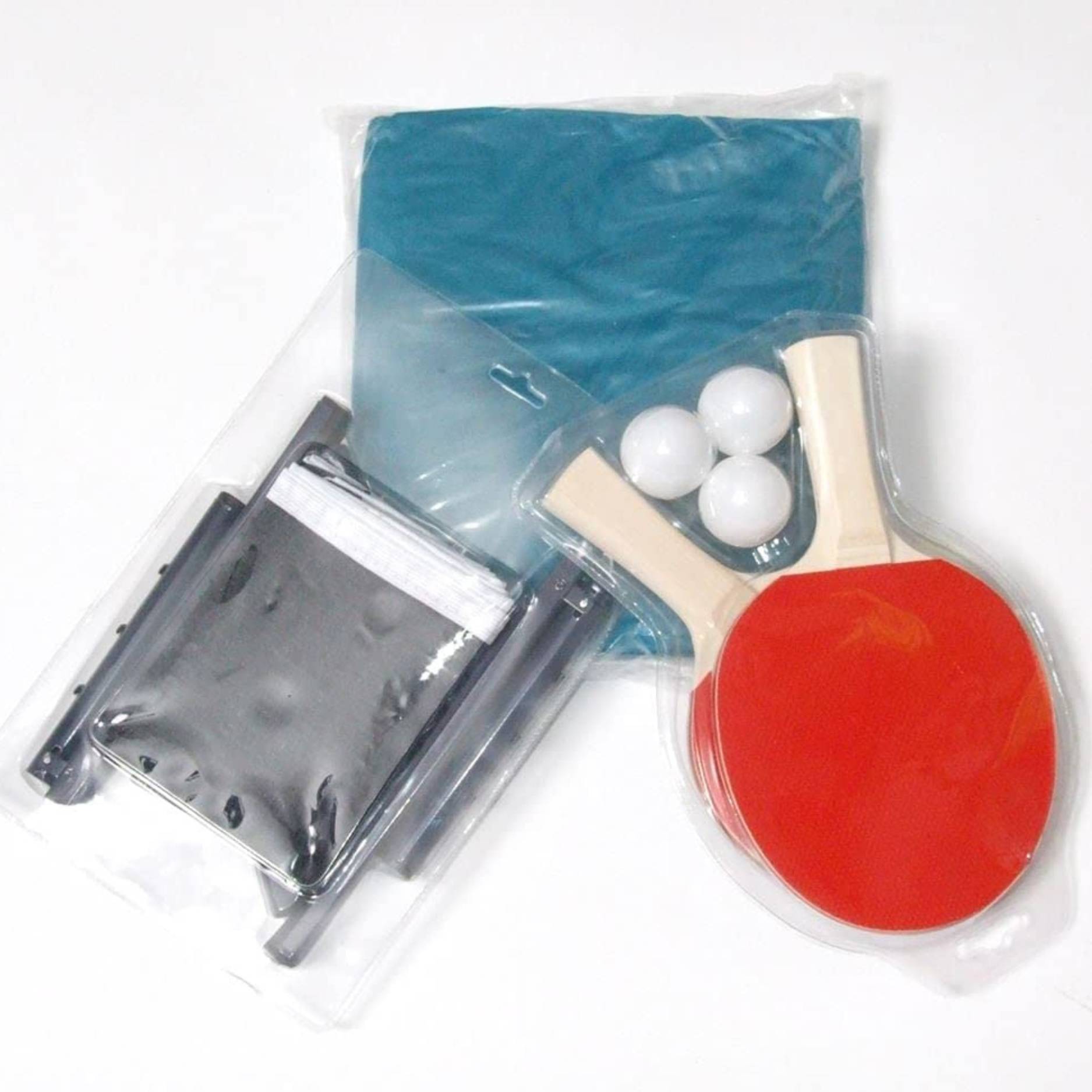
The table comes with two bats, three balls, a net and post set and a storage cover, which is enough to start playing on day one.
Spare balls are worth buying early, since they get lost and stood on. Anyone who starts playing regularly will want a better bat of their own in time.
Buying for a school or club
If you need more than one table for a school, club or community centre, ask for a quote through our wholesale page.