

The complete guide
How to choose and size MMA gloves for training
What MMA gloves do
MMA gloves have two jobs that pull against each other. They need padding over the knuckles for striking, and they need to leave the fingers free enough to grip, clinch and grapple. Every MMA glove is a balance between the two.
Compared with boxing gloves, MMA gloves are lighter, carry less padding and have open fingers. That is what makes takedowns, collar ties and ground work possible with gloves on.
Training, sparring and competition gloves
It helps to know the three broad types before you buy.
Competition gloves are the lightest, with the least padding. Their weight and construction are set by whoever runs the event.
Training gloves carry more padding and are built for everyday bag work, pad work and drilling.
Sparring gloves put more padding between you and your partner, so both of you get through the round in one piece.
These gloves are for training and sparring. If you are entering a competition, check the event's glove rules first and use what the organiser specifies.
What these gloves are made of
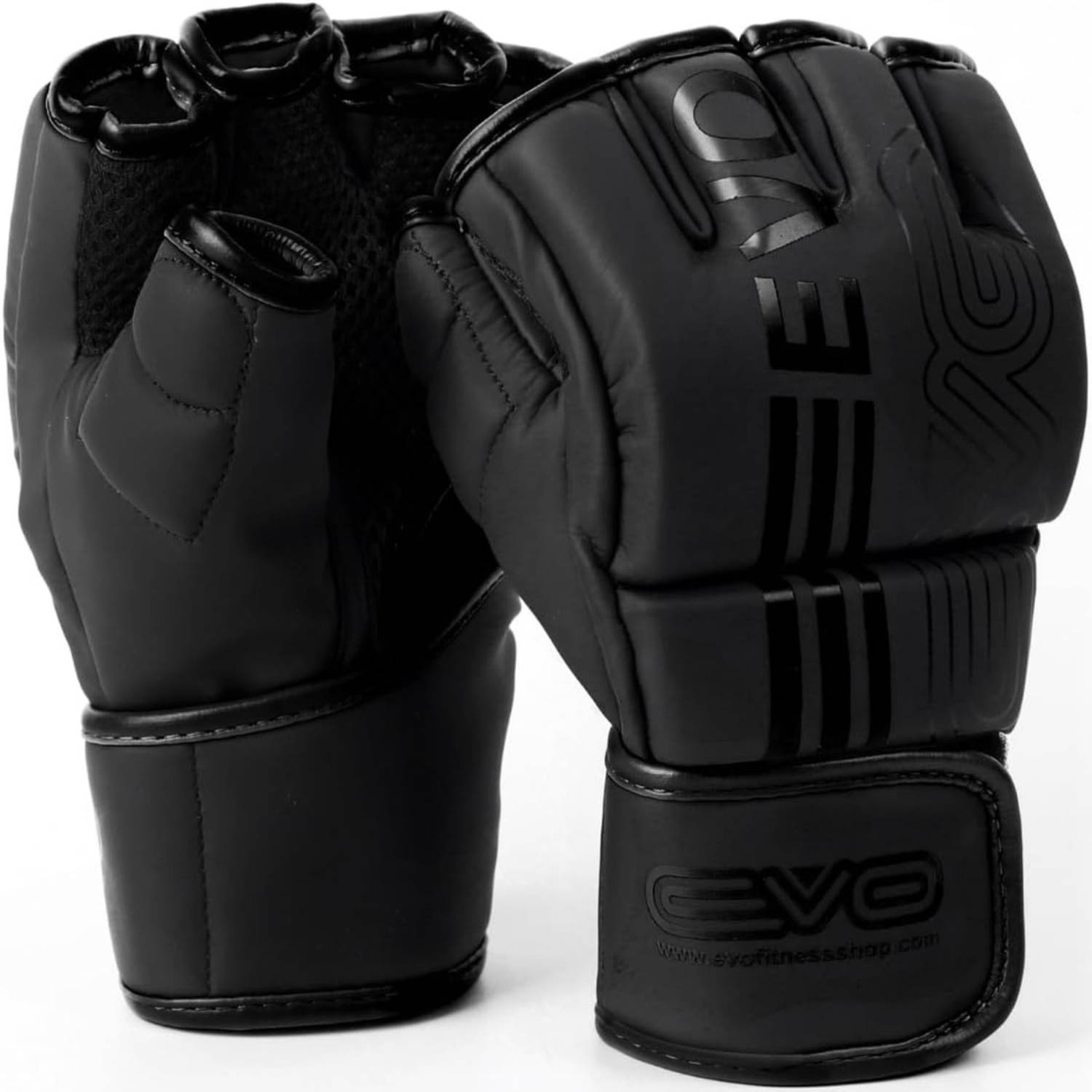
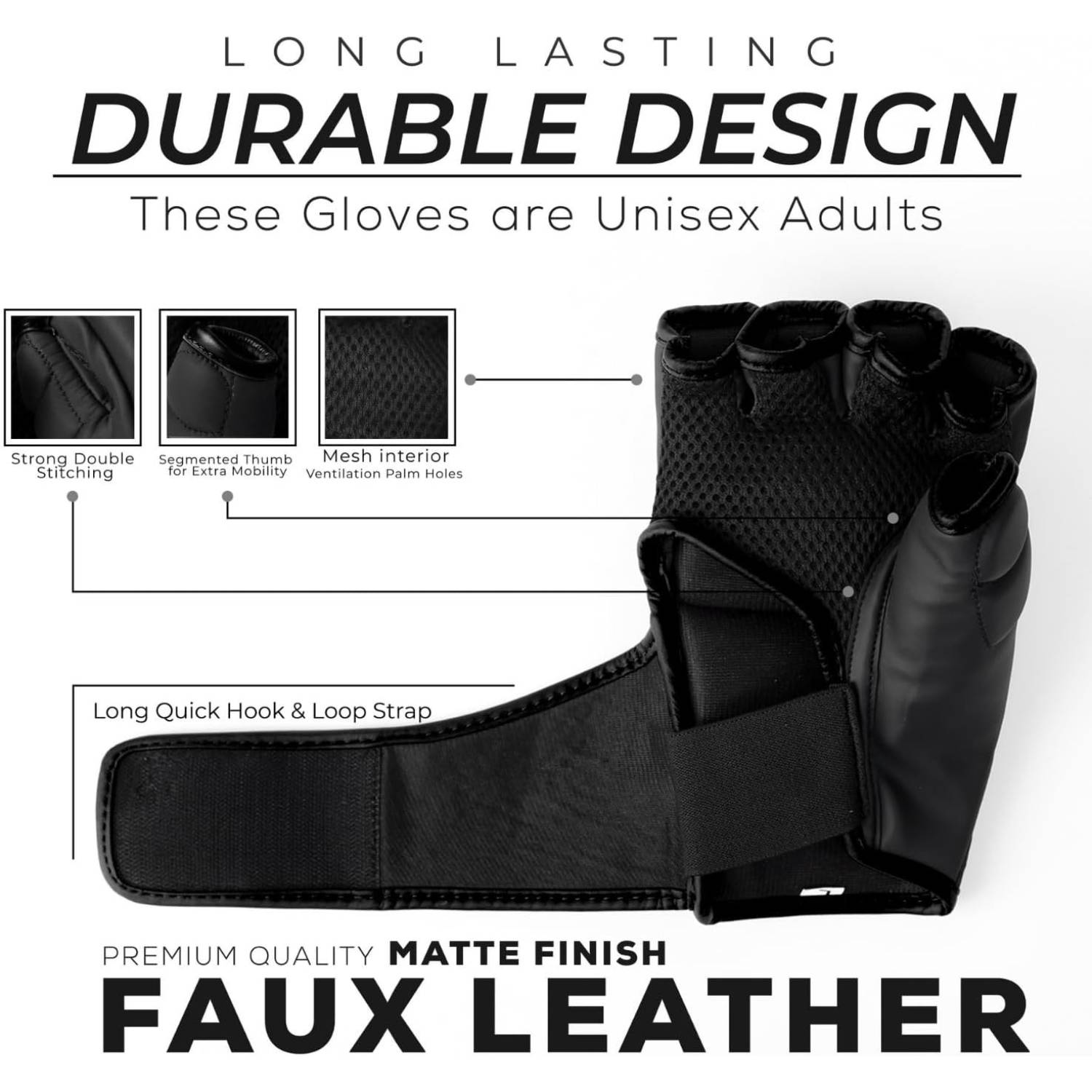
The outer is a matte finish faux leather that wipes clean and does not go slick with use.
Over the knuckles sits a high-density, multi-layer injection-moulded EVA foam core with added gel. A moulded core keeps its shape through repeated impacts, where a stuffed pad tends to pack down in the middle, right where you keep landing.
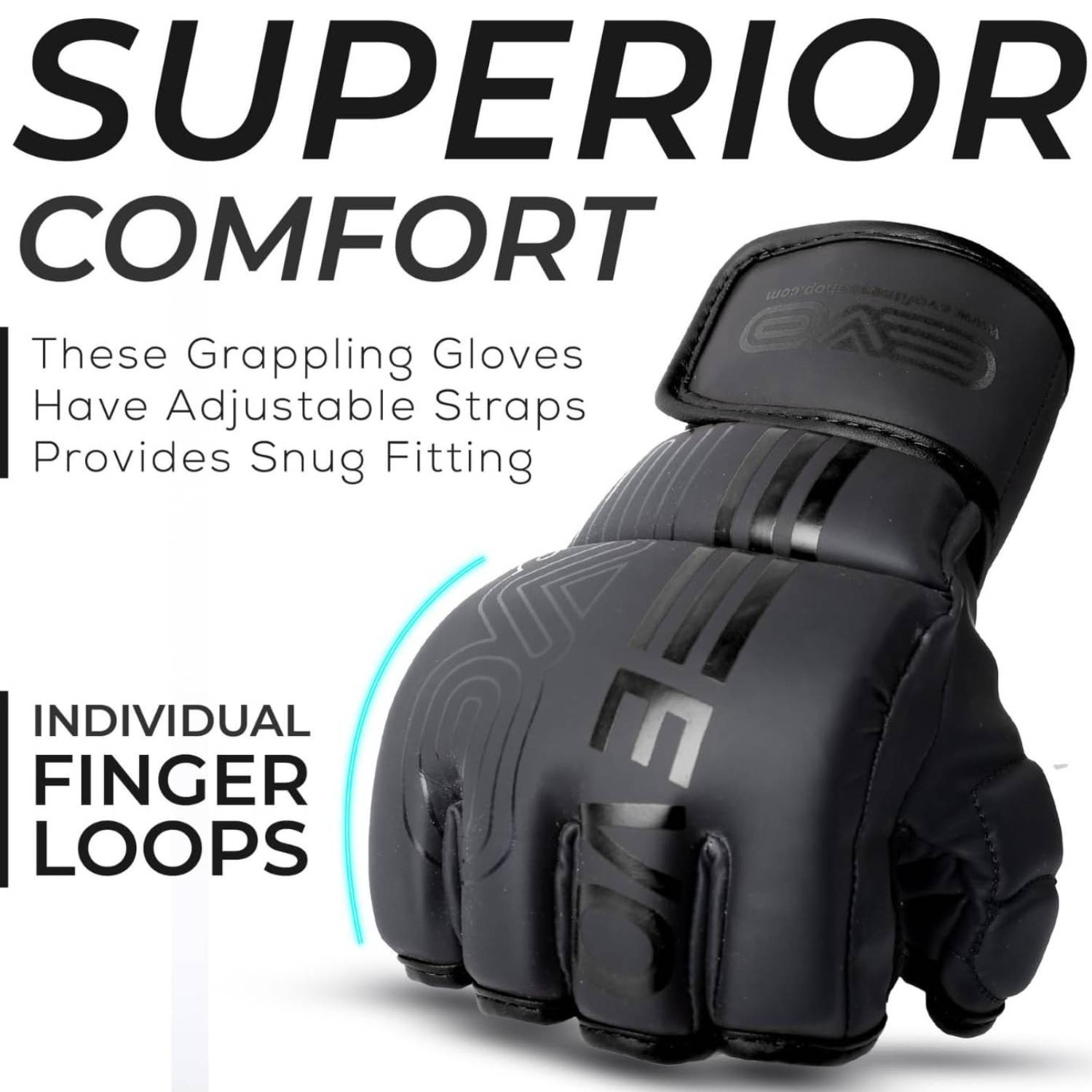
The inside has a mesh lining, and there are ventilation holes in the palm to let air through during long sessions. Adjustable straps close the glove around the wrist.
Getting the size right
Fit matters more than any other feature. A glove that is too big lets the padding slide off the knuckles when you land, so you hit with the edge of the pad or past it. A glove that is too small will not close properly over the wrist.
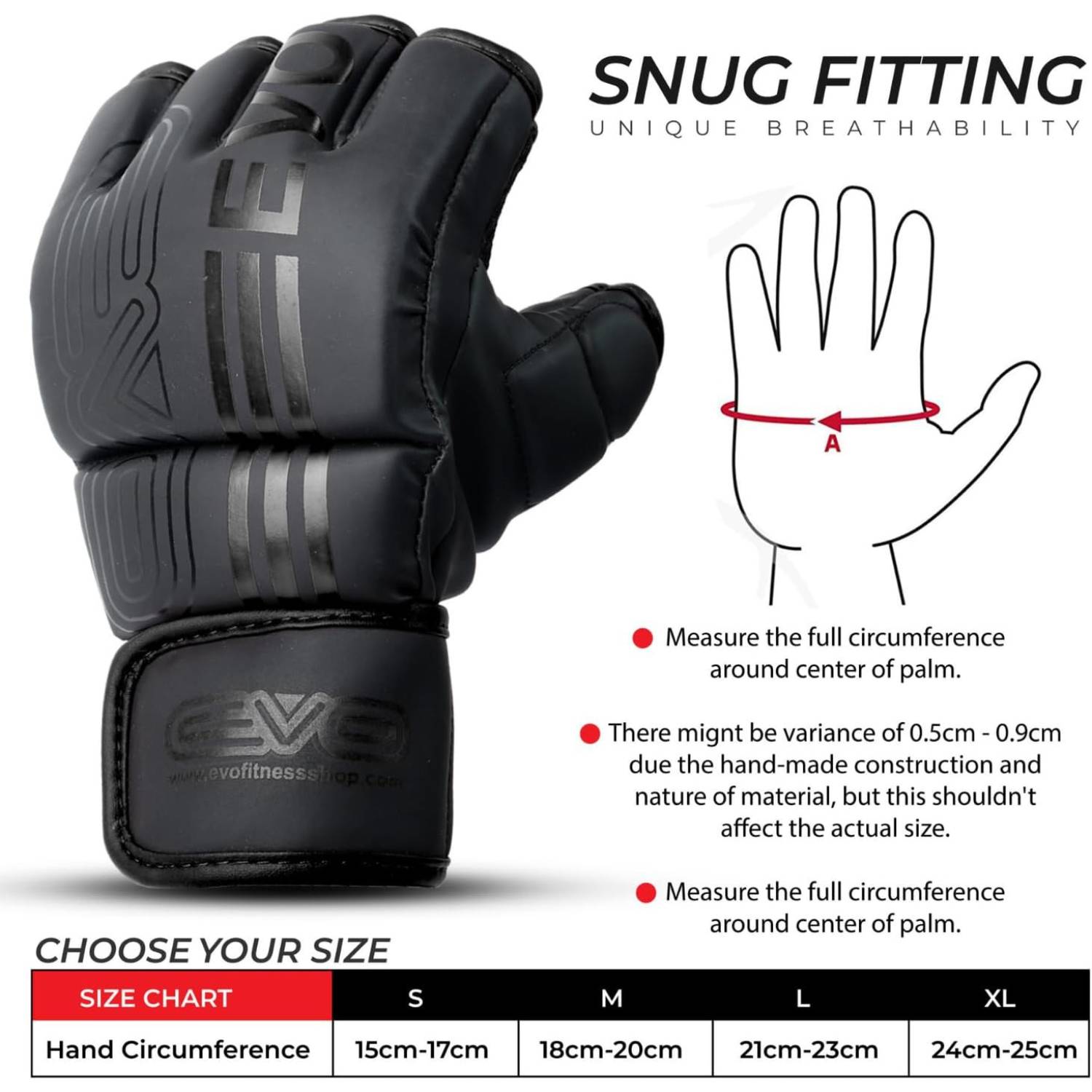
These come in four sizes: Small, Medium, Large and Extra Large.
How to measure
Wrap a soft tape around your palm at the widest point, across the knuckles, leaving the thumb out. Compare that number with the size chart shown with the product images.
If you wear hand wraps, measure over them. Wraps add real bulk, and a glove sized to a bare hand may not close over them.
Between sizes? Go up if you wrap for every session. Go down if you mostly drill without wraps.
Check the strap. On day one the strap should close with some adjustment left, not at the very end of its travel.
Open fingers and what they mean
Open fingers are the reason MMA gloves exist.
You can grip. Clinch, underhooks and ground work all rely on it, and none of that works in a closed boxing glove.
You also get less padding. That is the trade, so do not use MMA gloves as a replacement for boxing gloves in hard boxing sparring.
Your fingers are more exposed. Control and good technique matter more here than the equipment does.
Hand wraps
For bag and pad work, wear hand wraps under the gloves. The padding covers the knuckles, but it does not support the small bones and joints of the hand the way wraps do.
For light technical drilling and grappling rounds, many people train without wraps. That is a decision for you and your coach.
Breaking them in
New gloves feel stiff. Use them for light bag and pad work for the first few sessions, then build up to harder work as the faux leather and strap settle to your hand.
Looking after them
This is what decides whether a pair lasts a few months or several years.
Air them after every session. Open the straps, spread the palm and leave them out to dry. Gloves packed away wet are the ones that smell.
Wipe the outside. A damp cloth, with an antibacterial wipe or spray now and then, is enough.
Never machine wash or soak them. Water gets into the padding and stays there.
Keep them away from radiators. Direct heat dries faux leather too fast and makes it crack.
Store them somewhere cool, dry and ventilated, out of direct sunlight.
Buying for a club
Kitting out a club or gym across several sizes? Ask for a quote through our /wholesale/ page.