


The complete guide
How to set up and use a golf hitting mat at home
Why practise on a mat at all
Golf rewards repetition. Grooving a swing takes hundreds of balls, and hundreds of balls at a driving range add up quickly. A mat at home lets you hit those balls on a wet Tuesday evening, in the garage or the back garden, without booking a bay.
A good mat gives you a steady, repeatable surface. That is the point. You can work on one thing, such as ball position or the low point of your swing, and know that any change you feel comes from you and not from a bad lie.
What a mat cannot do
Every shot from a mat is from a flat, even lie. The course is not like that. Golfers who only practise on mats often find the first few holes harder than the range.
So use the mat for technique and repetition, and still get some practice on real grass when you can. The two work well together.
What to look for in a golf mat
Turf depth and feel
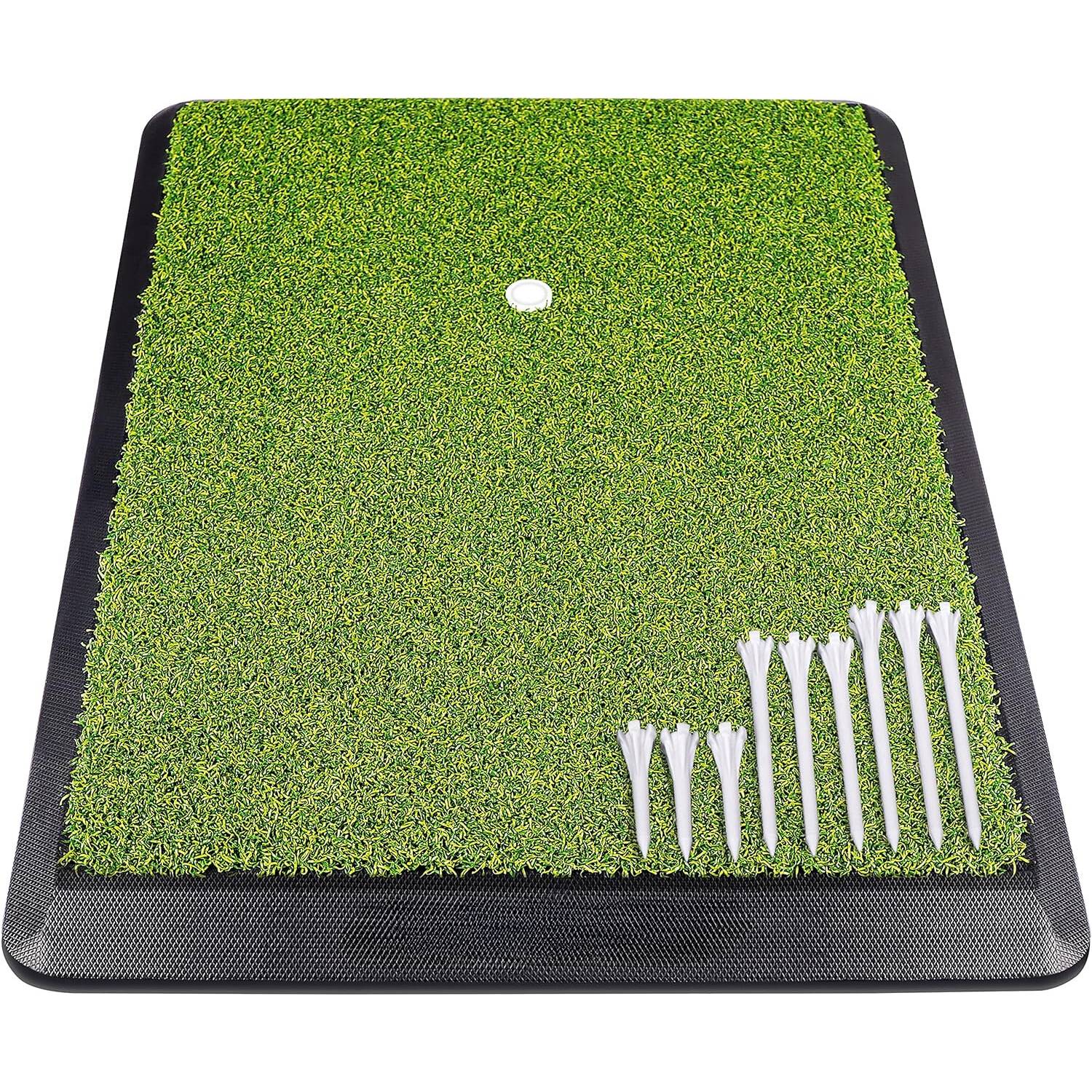
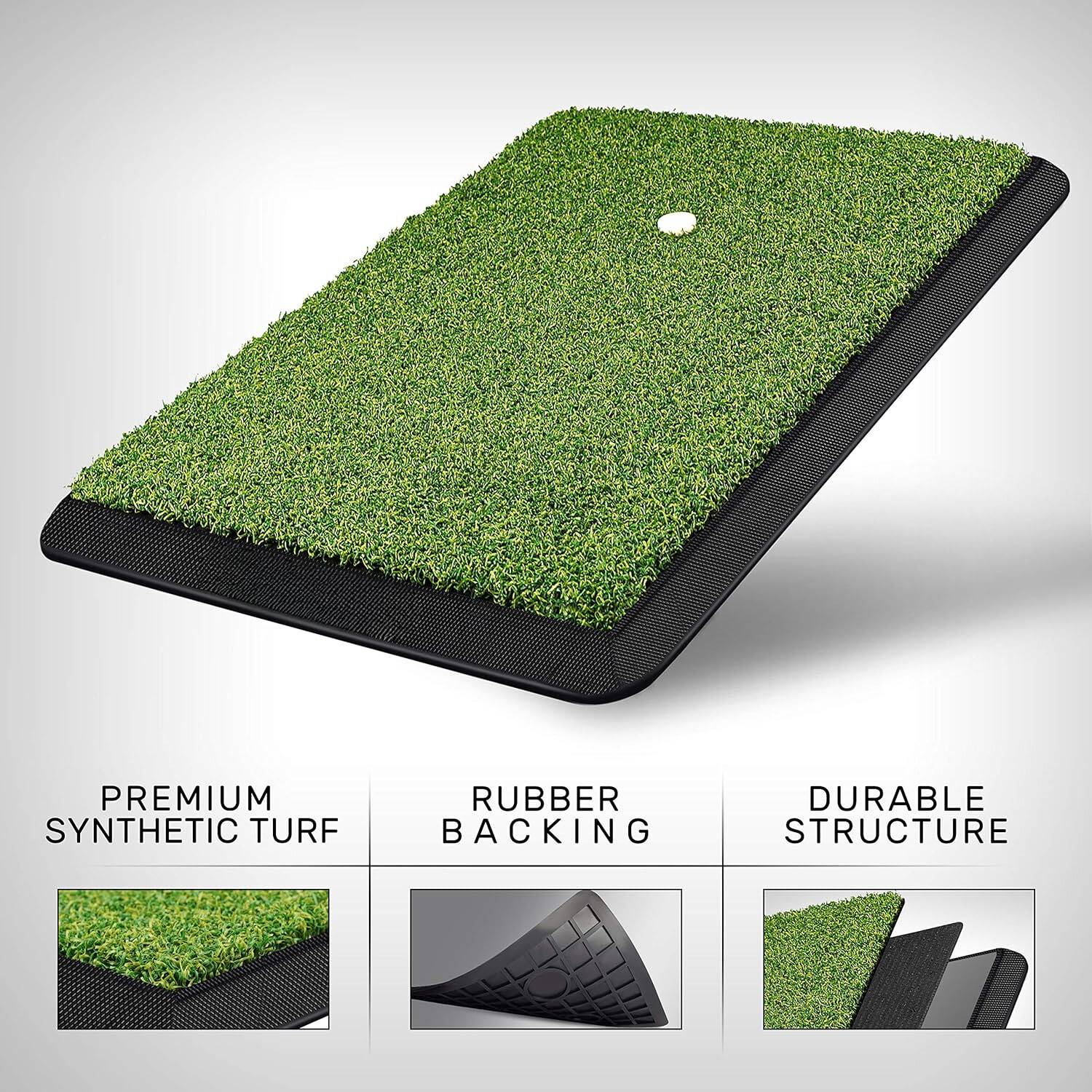
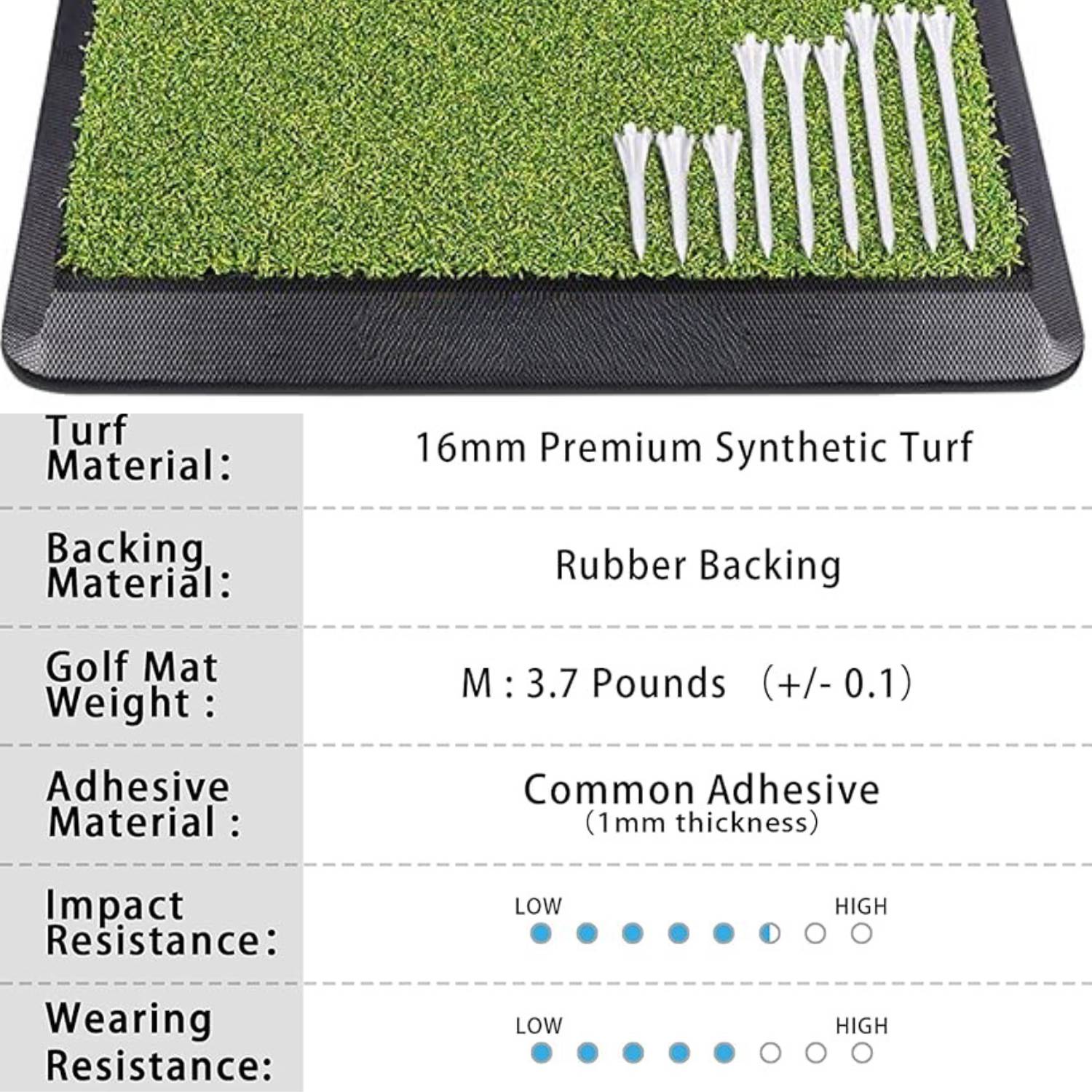
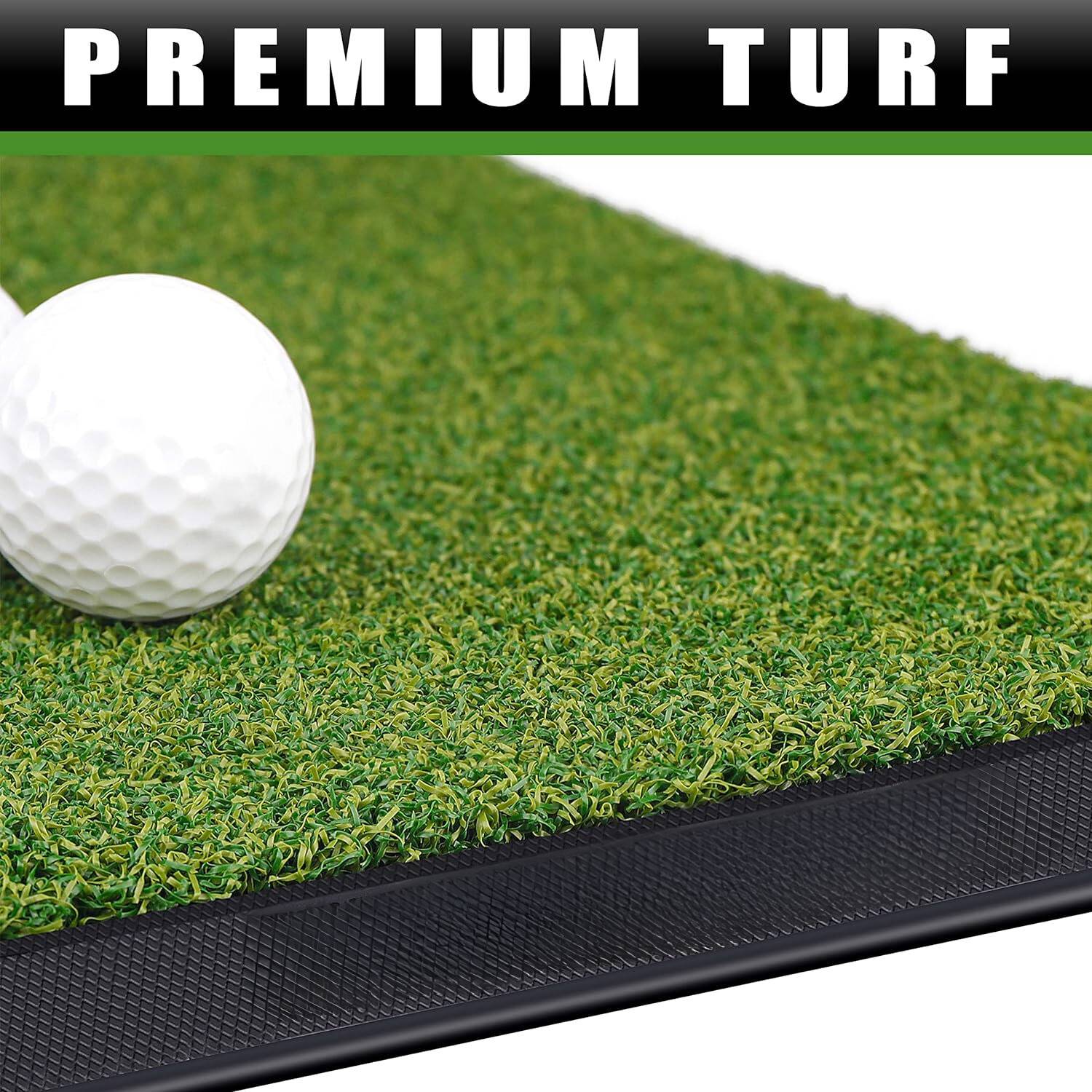
The turf should be close to the texture and resistance of fairway grass. Too thin and the club bounces. This mat uses a 16mm synthetic turf, which is deep enough for the club to work through the ball when you hit down on it.
What sits underneath
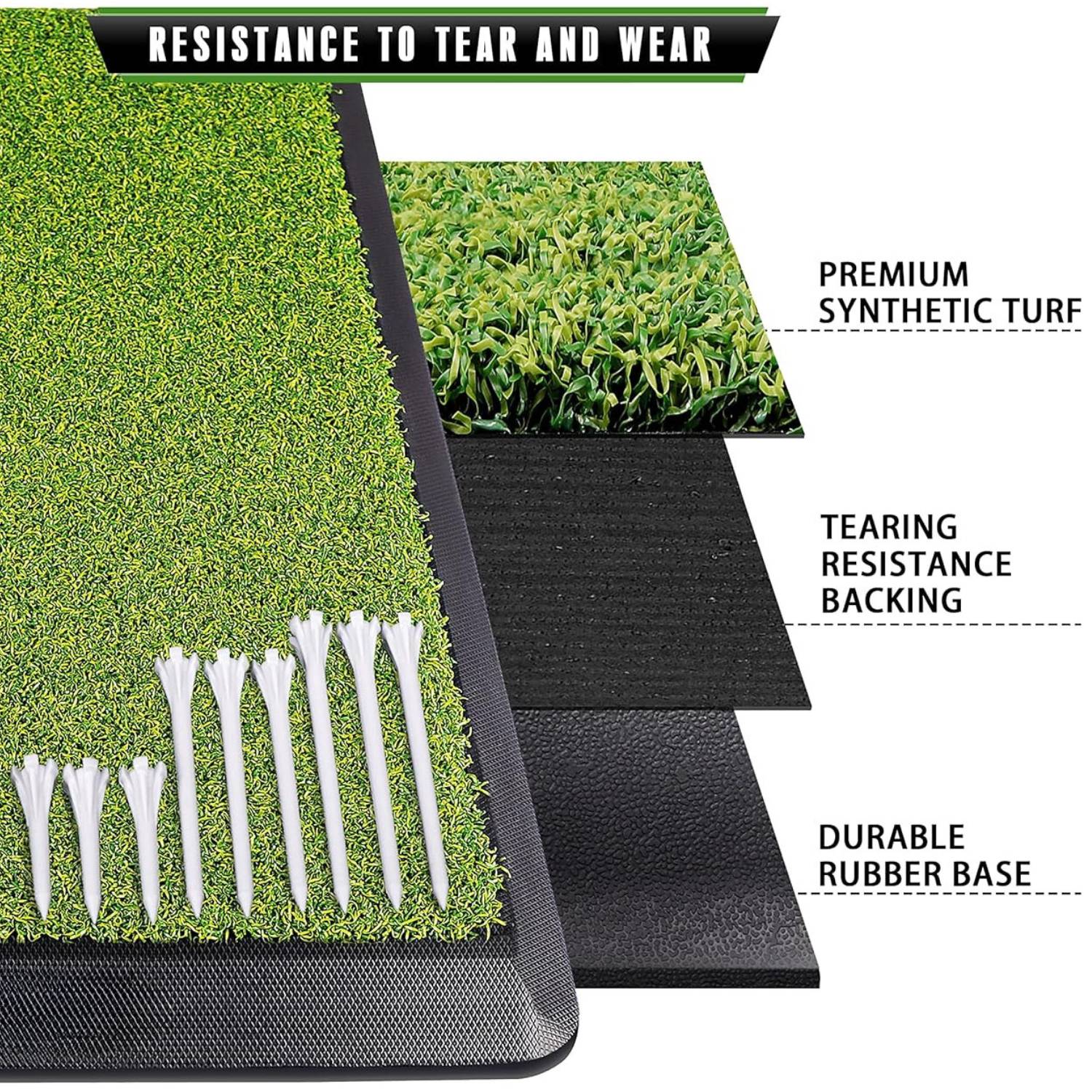
The base matters more than most people think. Hit down on thin turf over concrete and the club stops, which jars the hands and wrists. A rubber backing absorbs that shock and grips the floor so the mat stays put between shots.
Tees that match your clubs
Practice is more useful when you can tee the ball at the height you use on the course. This set includes a rubber tee and nine plastic tees in three heights:
- 38mm for irons and low profile woods, with the ball barely above the turf.
- 70mm for mid range woods, where you want the ball sitting up but still swept away.
- 83mm for the driver, to catch the ball on the way up.
The rubber tee is the one to use for long sessions of driving practice.
Size and space
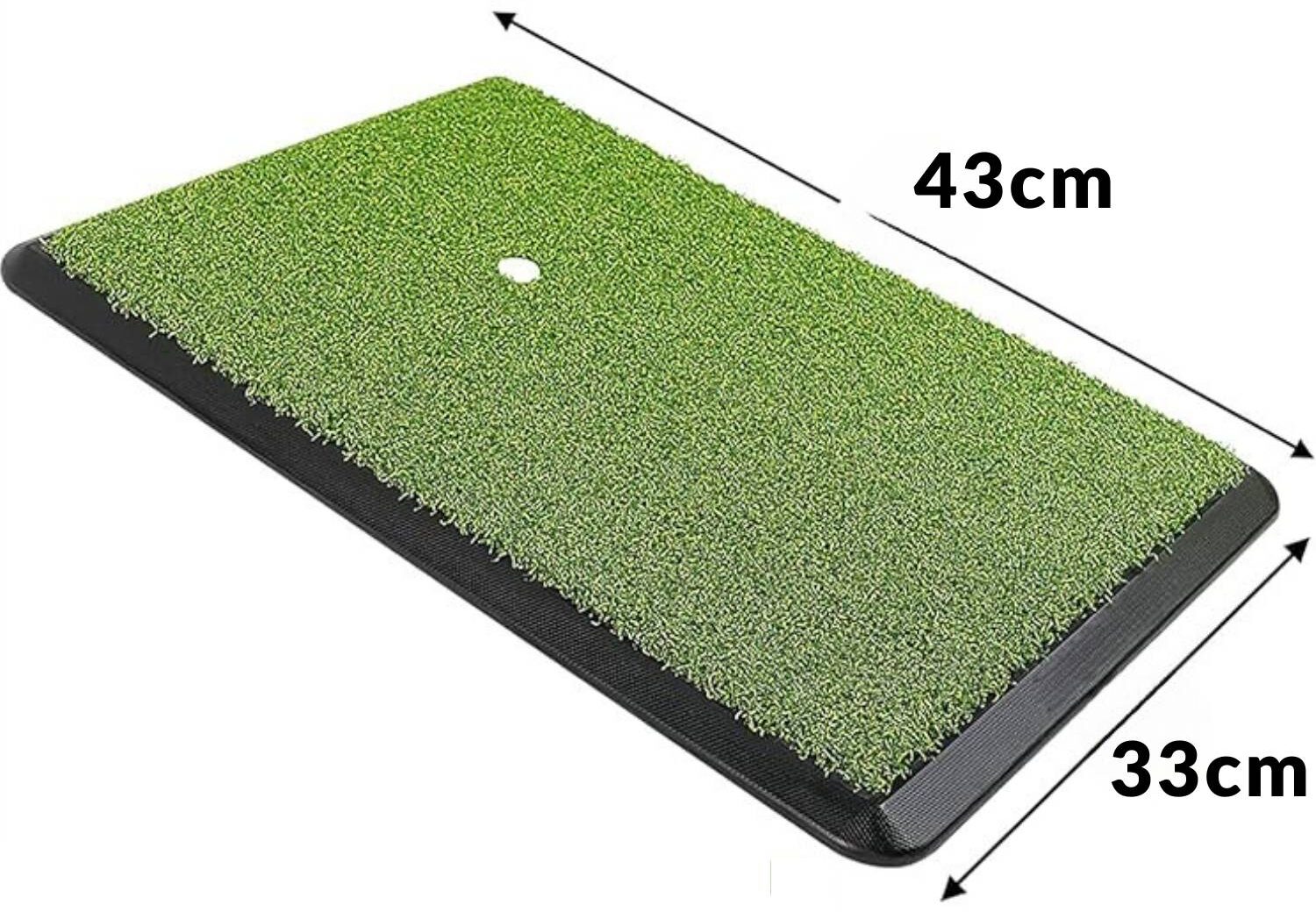
Measure the space before you buy. Check the mat size in the product photos, and if the fit is tight, email us and we will confirm it.
Setting up your practice space
Check the height first
A full swing indoors needs more ceiling height than most garages have. Take a slow practice swing with your longest club before you set anything up. If the club gets close to the ceiling, stick to wedges and short irons indoors.
Give the ball somewhere to go
Full shots in a garden need a net. Pointing the mat away from the house, the neighbours and the windows sounds obvious, and it is still where most home setups go wrong. For short game work, a mat paired with a chipping net is the setup most people end up using.
Pick a flat, firm spot
Lay the mat on flat, firm ground. On concrete the rubber base does the work. On grass the mat beds in and stays still.
Getting more from each session
- Practise little and often. Twenty focused minutes three times a week does more than one long session a month.
- Work on one thing at a time. Pick a single goal for the session, such as a steady tempo or a cleaner strike.
- Change clubs and tee heights. Move from wedge to mid iron to driver so the mat covers your whole bag.
- Pay attention to the feel. A heavy shot should feel heavy. Use that feedback rather than hitting on autopilot.
Looking after the mat
Every mat wears where you tee up most, because that is where every ball sits.
Move your tee position around by a few centimetres, and turn the mat end for end every few weeks. Those two habits spread the wear and keep the surface even for longer.
Brush the pile back up when it looks flat. Hose off mud and let the mat dry flat. Store it flat, or rolled with the turf facing out. Never fold it, because the rubber backing will keep the crease.
If you are leaving it outside, bring it in for the worst of the Irish winter. Cold, wet weather is hard on any mat, and a dry garage or shed will keep it in better shape for next season.
For clubs, coaches and schools
A mat and a set of tees make a simple practice station for group sessions. If you need several mats for a club, school or coaching programme, ask for a quote on our wholesale page.