

The complete guide
Why a floor beam is the right first beam
Why the width matters more than the height
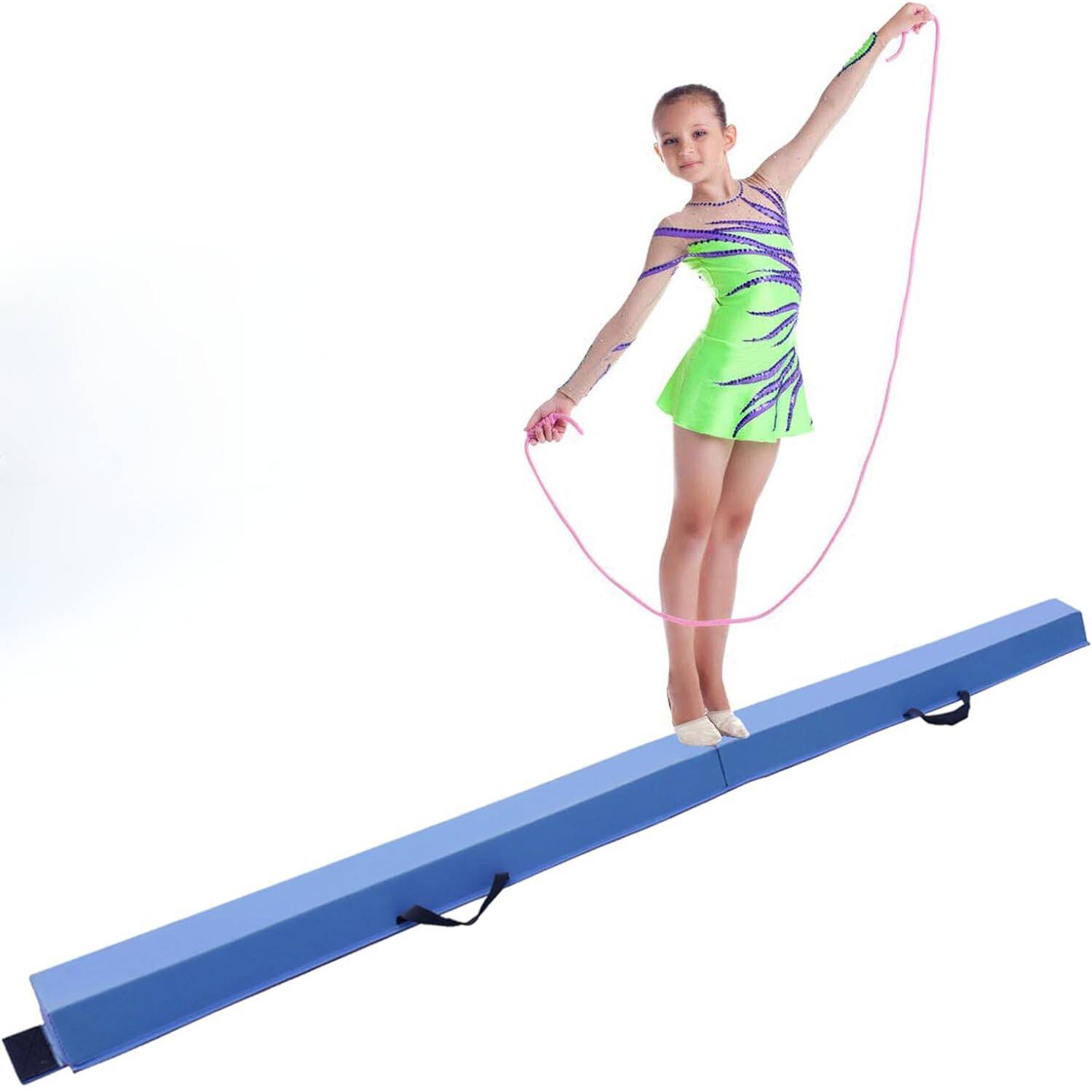
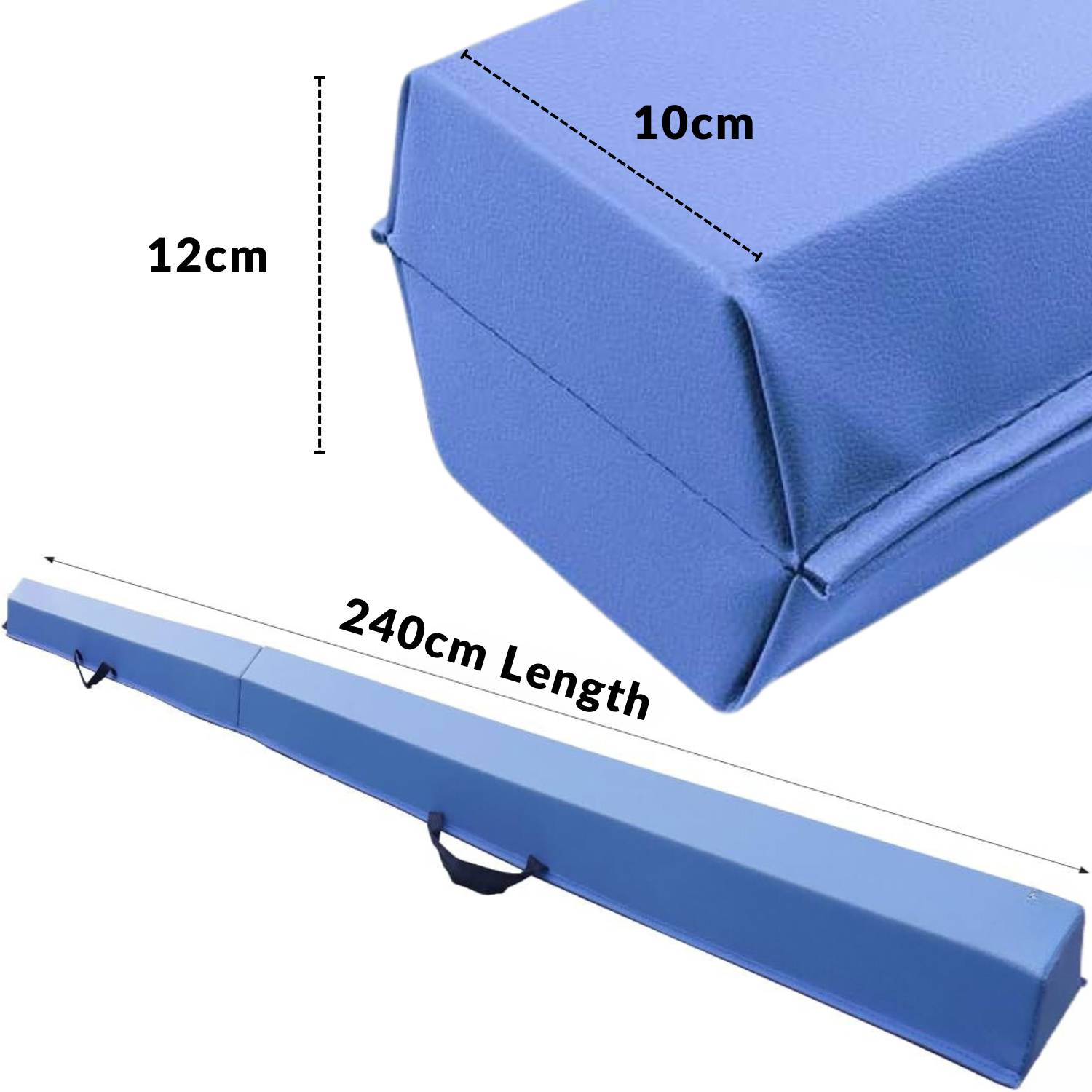
A competition beam is 10cm wide, about 5 metres long, and stands around 1.2 metres off the floor.
Most beam skills come down to that narrow top. A gymnast has to learn foot placement, a steady gaze, a straight line and a clean turn. The height adds nothing to those lessons for a beginner, but it adds a lot of fear.
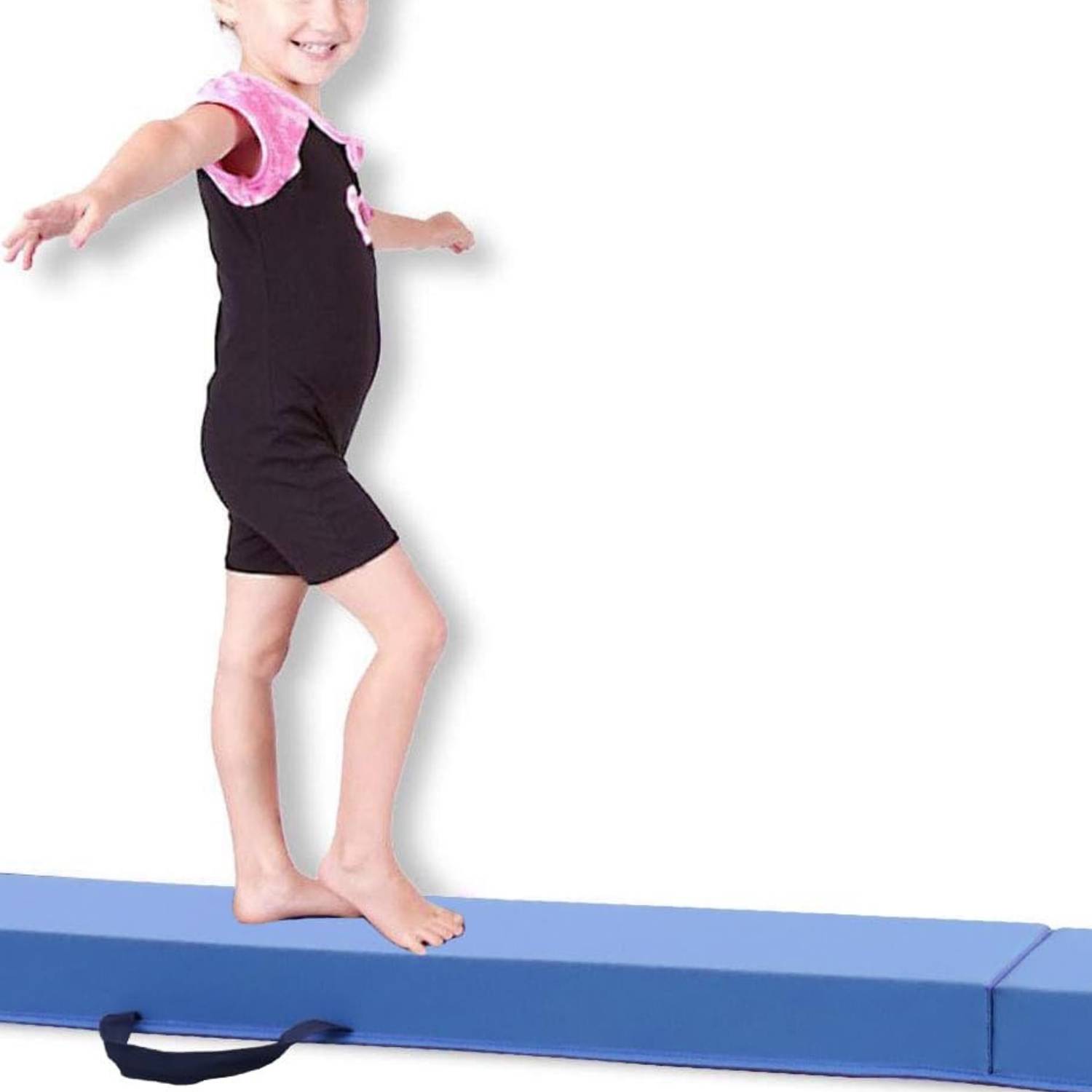
This is why clubs start young gymnasts on low and floor beams. The top is just as narrow, but a step off is a step, not a fall.
Why 240cm matters
A short beam runs out quickly. A child gets a couple of steps in, turns, and has to start again.
With 240cm to work with, a child can join a walk, a turn and a hold into one short run. Linking moves is how single drills start to become a routine. The extra length also gives a child time to notice they are drifting off line and fix it before the end.
What makes a floor beam grip
Look underneath a floor beam before you judge it. Two features matter.
A flat base. A beam that rocks makes a child correct for the beam, when the point is to learn to correct themselves.
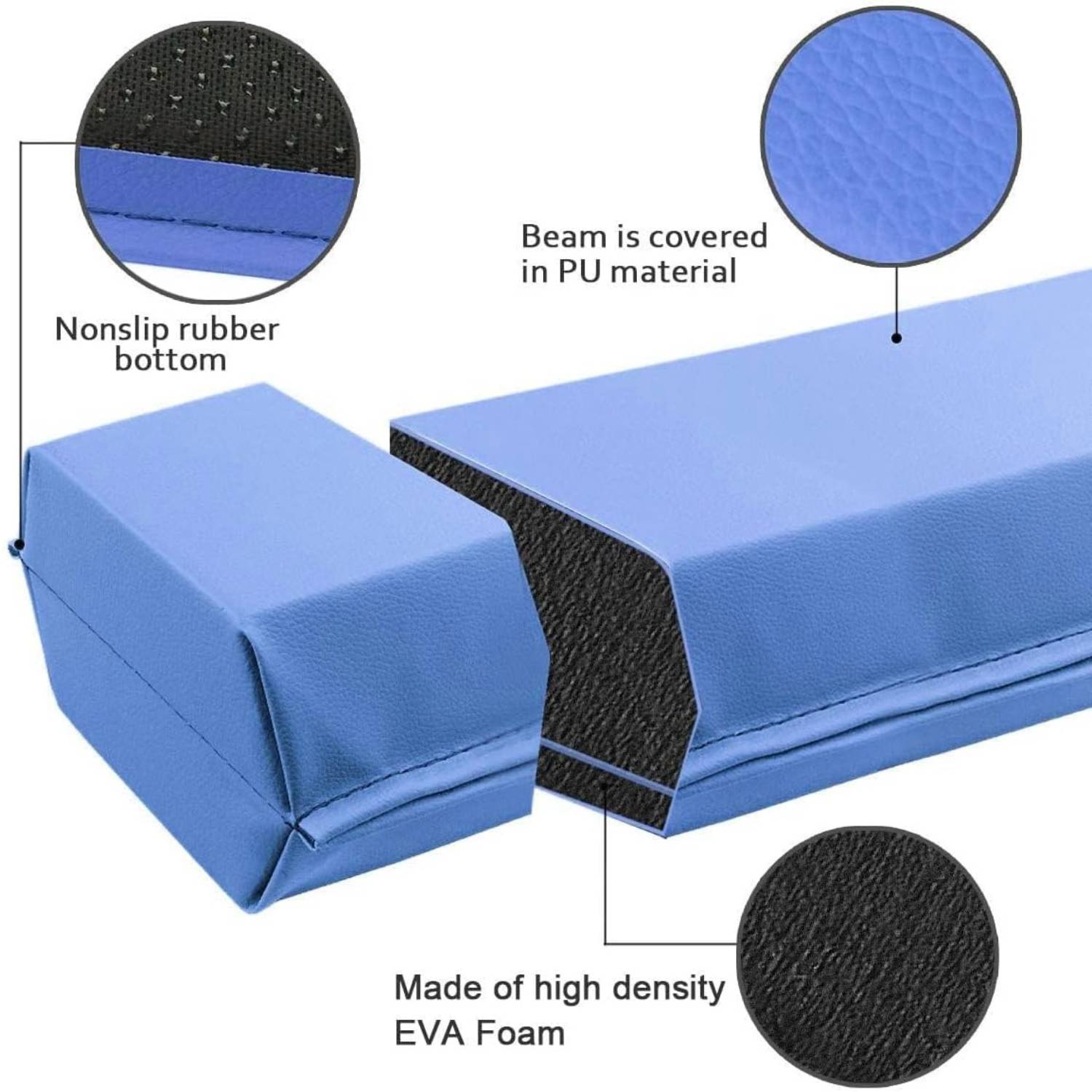
Grip. This beam has anti slip granules on its flat underside. They grip wood, laminate and carpet, which helps the beam stay put during a turn. On very polished floors, a gymnastics mat underneath adds more grip.
What it is made of
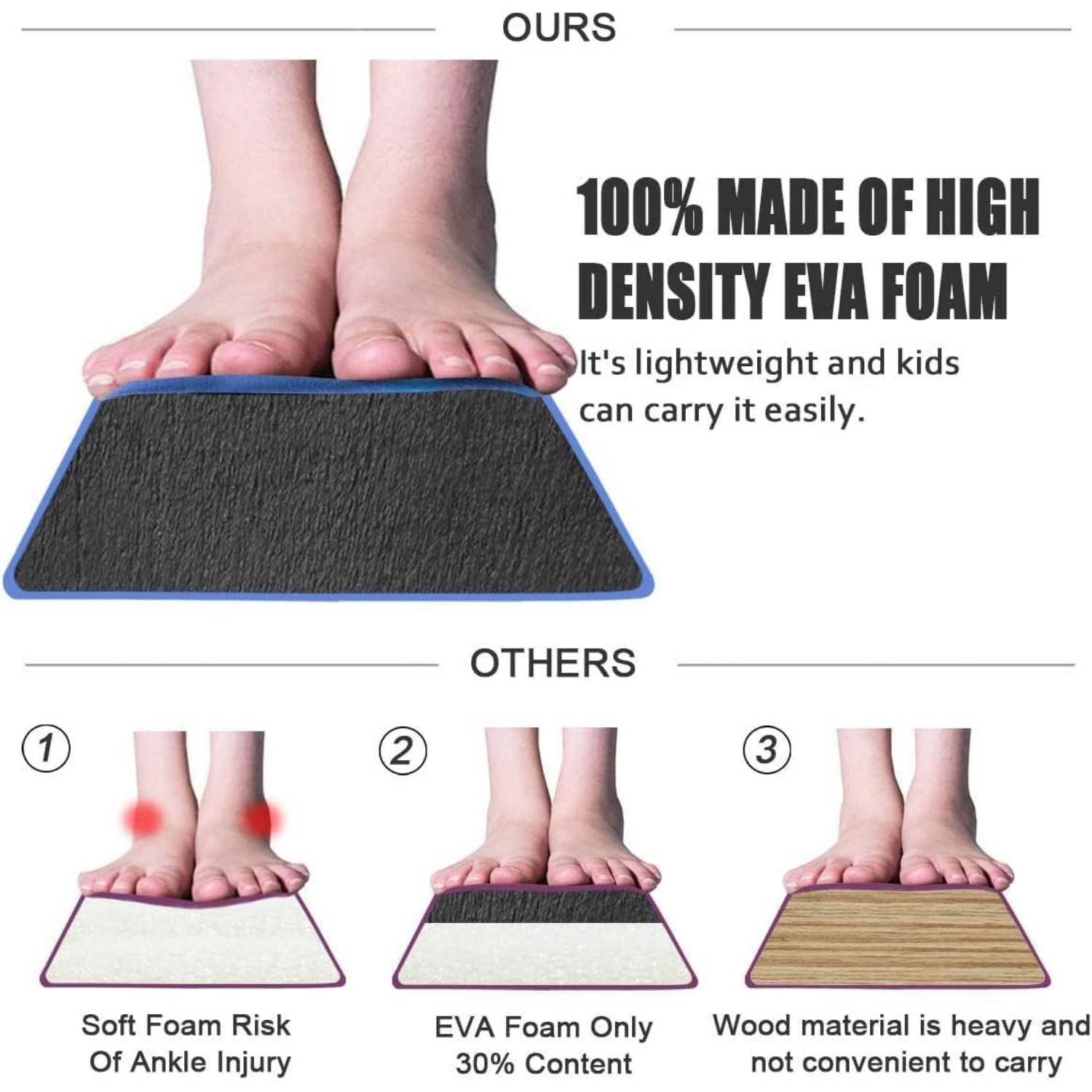
Inside is a 100% high density EVA core. Dense EVA keeps its form under repeated steps, so the centre stays level.
Outside is a PU leather cover. A damp cloth cleans it, and it is gentler on bare feet and bumped shins than a hard surface.
Velcro holds the beam closed in place of metal latches. There are no latches to pinch small fingers when it is opened or packed away, and no hard edges to scratch the floor.
What to practise on it
Good work for a floor beam:
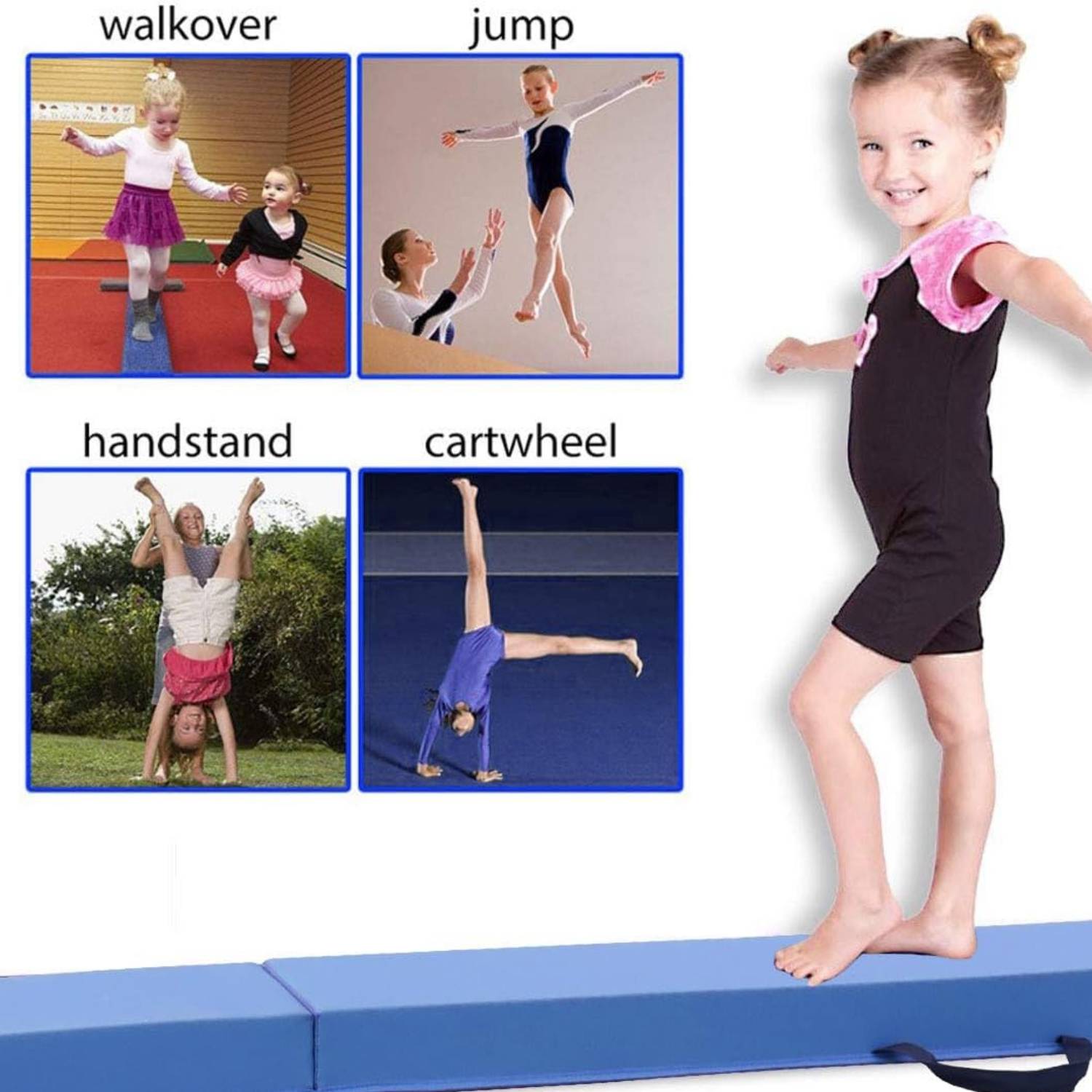
- Walks forwards, backwards and sideways
- Toe rises and balances
- Turns on both feet, then one
- Holds and simple poses
- Small jumps landing on the beam or off to the side
Anything with rotation, such as cartwheels and flips, belongs with a coach at the club.
Supervision
You will see floor beams sold as a way to practise walks, turns and flips safely. Walks and turns, yes. Flips need a coach and proper matting wherever they happen, and a low beam does not remove that need.
Being close to the floor means a wobble ends in a step down rather than a drop. That lowers the fall height, which helps while a child learns the basics. It does not make any skill safe, so keep an adult present for every session.
Setting it up at home
Find about three metres of open floor: the 240cm beam, plus room to step off at both ends. Keep furniture, radiators and toys well back from both sides.
Lay it flat and check it is not twisted before anyone steps on. It supports up to 75kg, so it suits children and lighter teenagers.
It weighs 2.5kg and comes with a carry handle and a bag. A child can help set it up, and it goes back in the bag under a bed or in a wardrobe afterwards.
Using it outdoors
It can go out on a flat patio or firm, dry grass for a session. Bring it back in afterwards. PU leather does not like long hours in strong sun or being left out in the rain.
Care
- Clean the cover with a damp cloth, then dry it.
- Store it away from radiators and strong sun; heat cracks PU over time.
- Clear carpet fluff and hair out of the velcro so it still closes firmly.
- Store it in its bag, not under heavy boxes.
Clubs and schools
Floor beams are a staple for junior groups and PE lessons. For several beams, ask for a quote on our wholesale page.