

The complete guide
How to choose and use an adjustable dumbbell set
Start with the exercises you will actually do
Before you look at the weight on the box, write down the movements you plan to train. The right set follows from that list.
Curls, lateral raises and light shoulder presses use modest loads. Rows, chest presses on a bench and goblet squats use more. Most people starting out spend months in the lower range, even when they bought a heavy set.
Why adjustable rather than fixed
A full rack of fixed dumbbells covers every weight, but it needs a wall to itself and costs a lot. An adjustable set swaps that for two bars and a stack of plates that fit under a bench or a desk.
You also get small steps. With plates of different sizes you can add a little load at a time instead of jumping in big blocks, and steady small increases are how strength builds over a training block.
The two kinds of adjustable dumbbell
Selectorised
These use a dial or a pin. You pick a number and the handle lifts the matching plates. Changes are quick and the length stays the same, but they cost far more, and the mechanism is one more part that can wear.
Plate-loaded
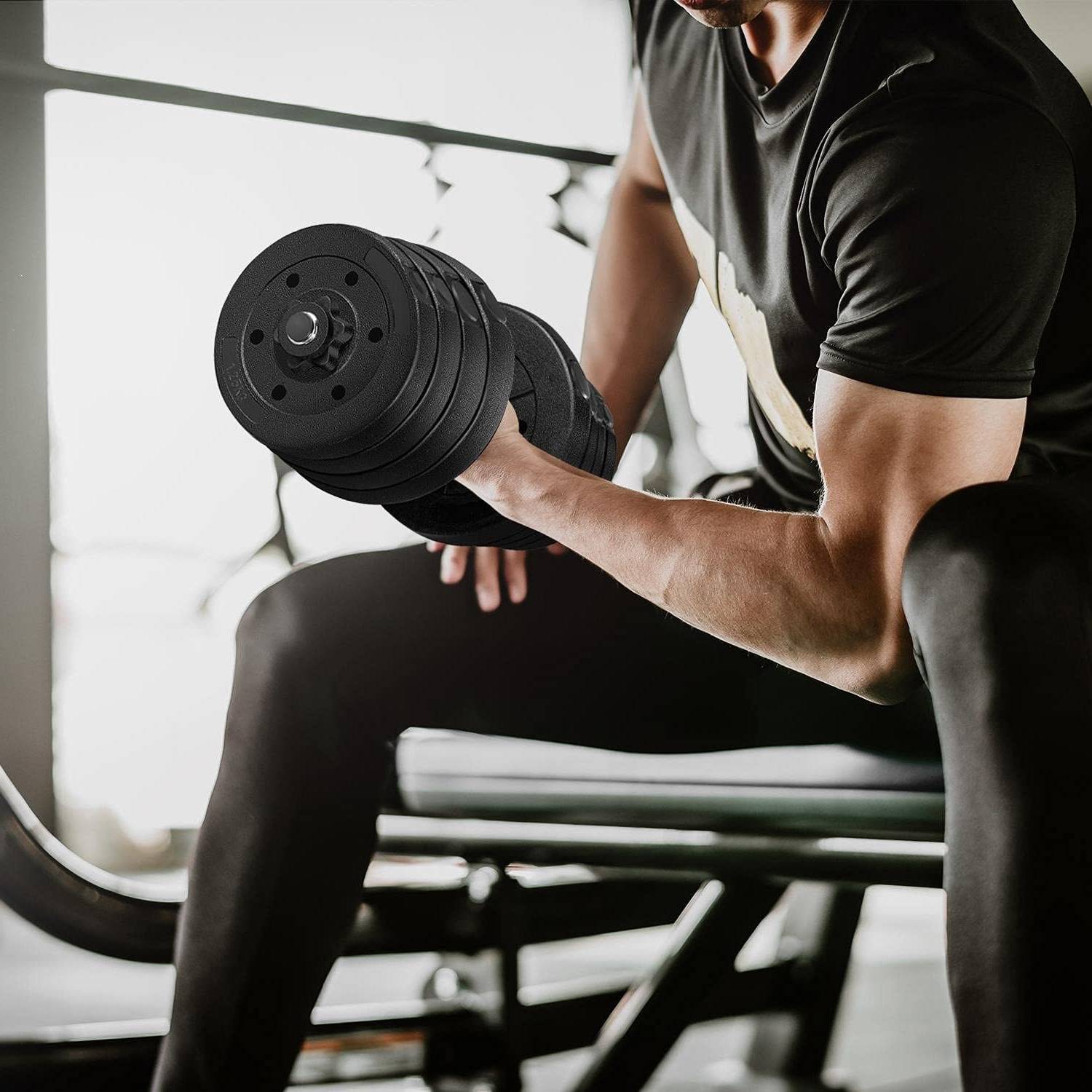
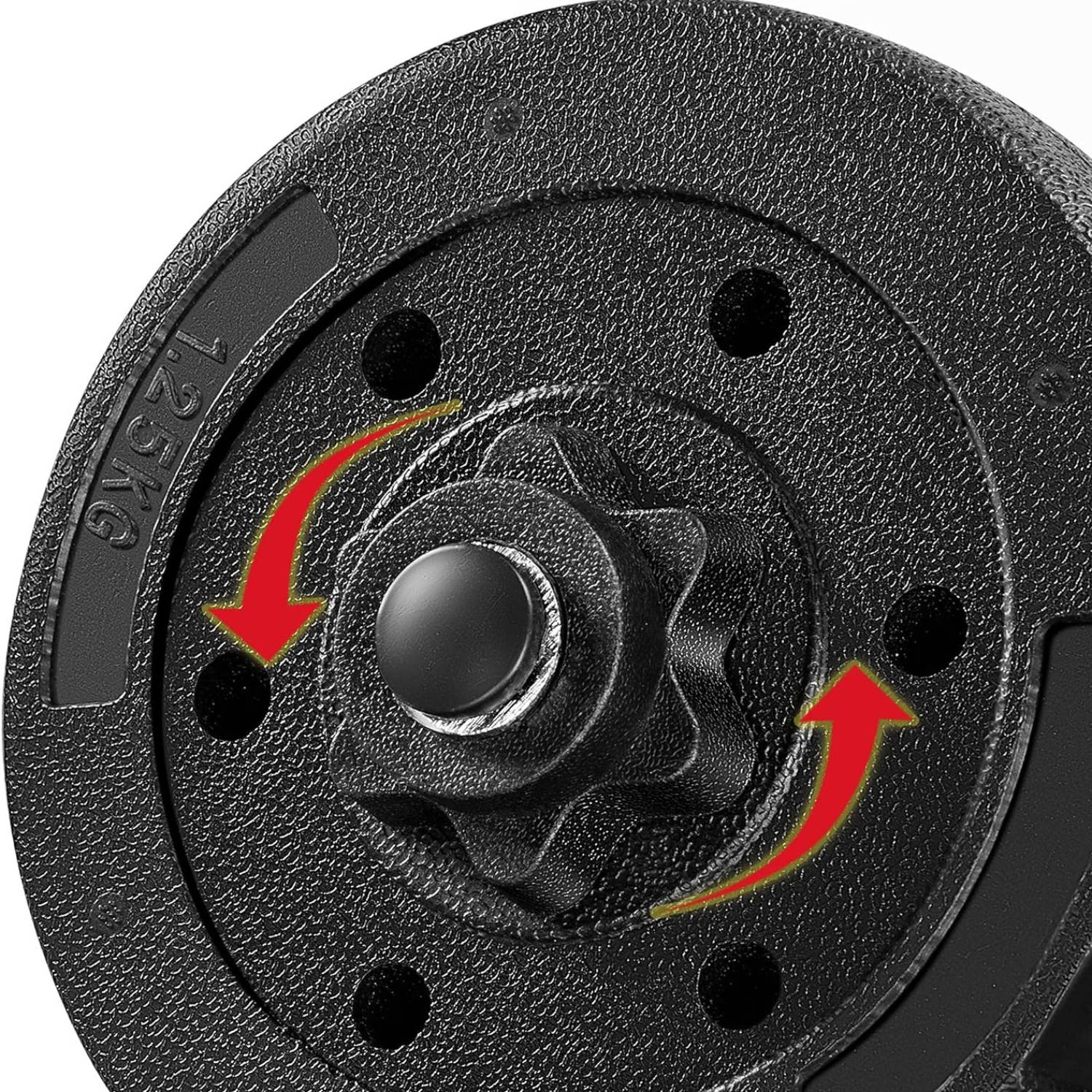
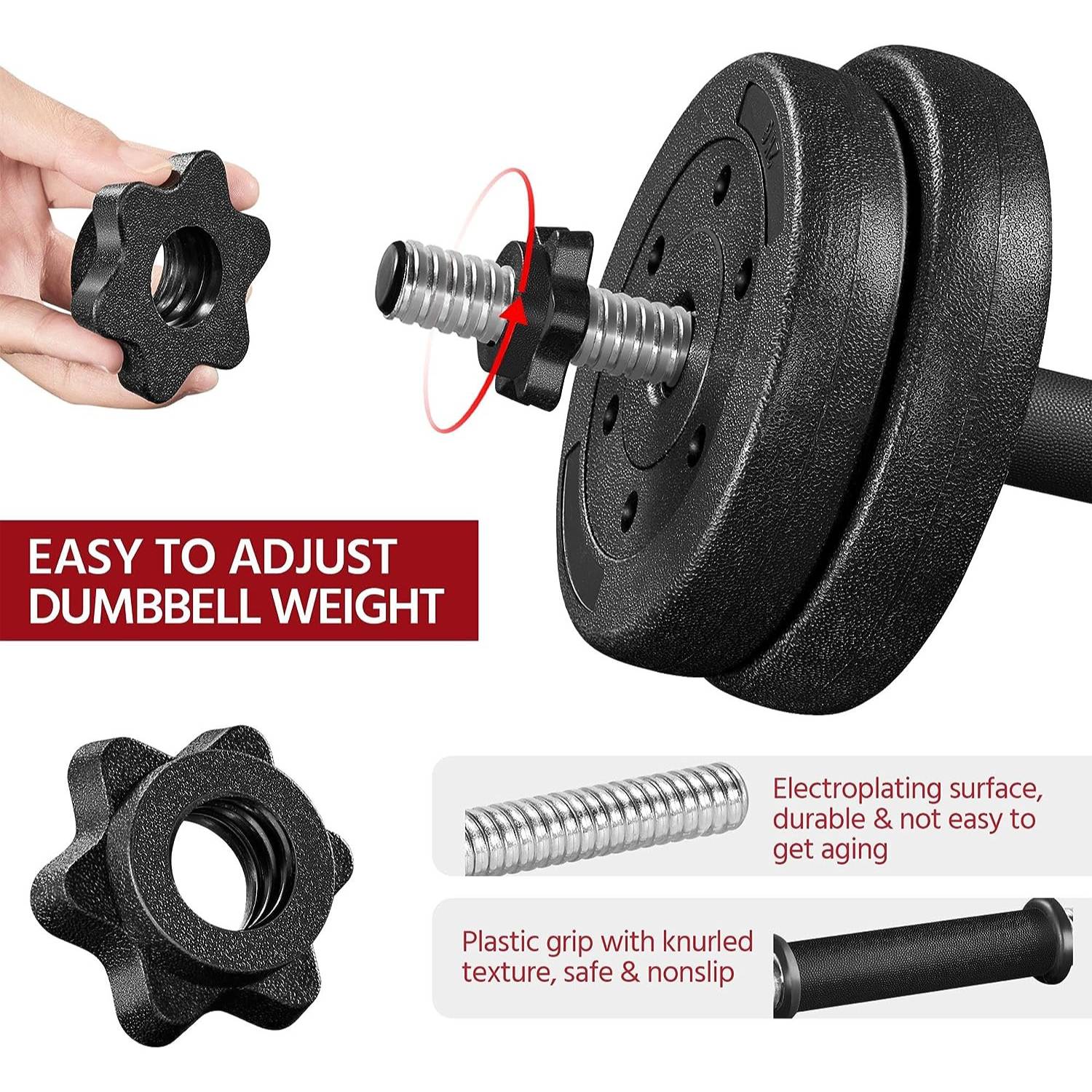
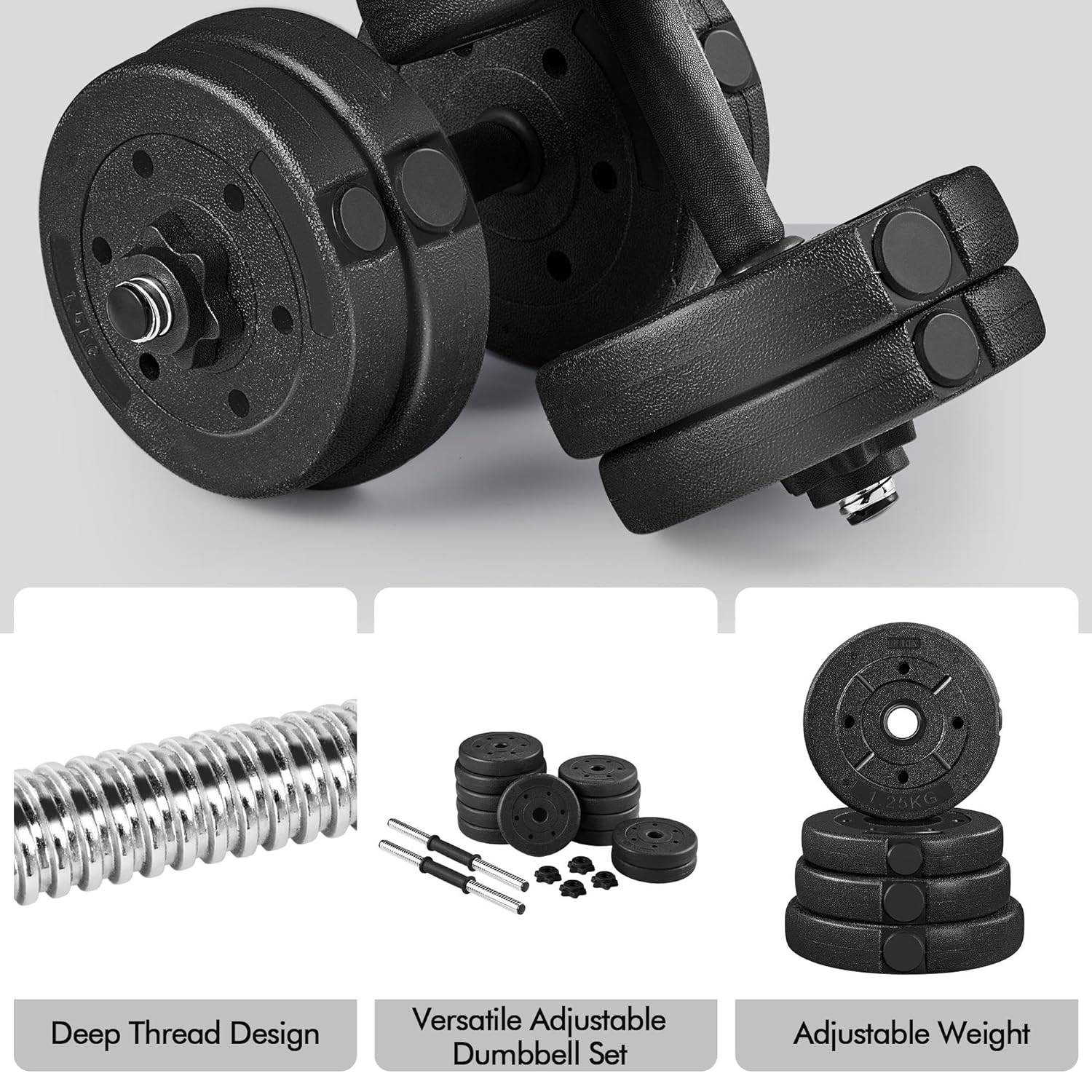
This set is plate-loaded. You slide plates onto a threaded bar and screw a spin-lock collar down against them. It takes longer to change, and the bar gets longer as you load it. In return the parts are simple, and there is very little to go wrong.
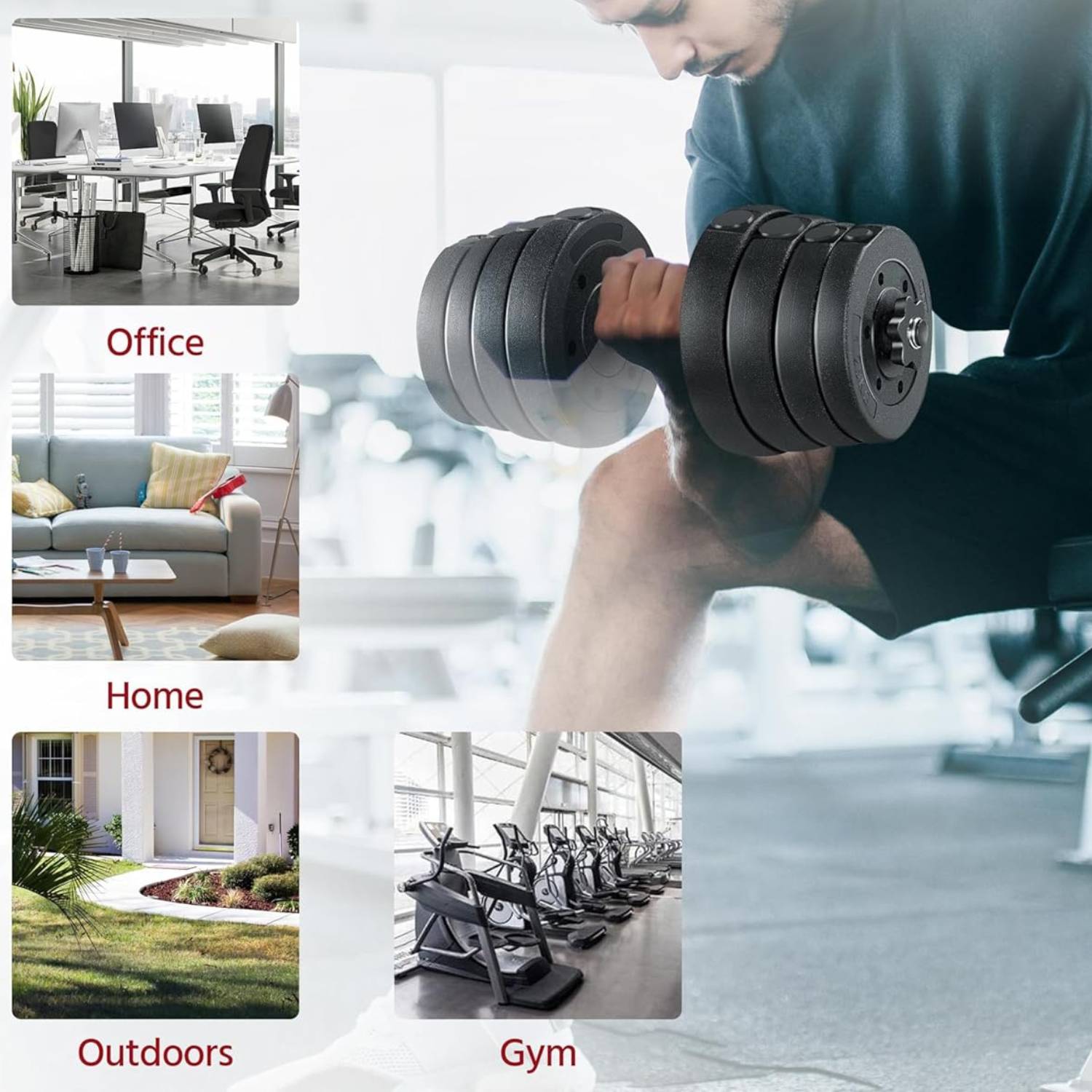
For home training the slower change matters less than people expect. You change weight between exercises, and most sessions only need a few changes.
Picking a set weight
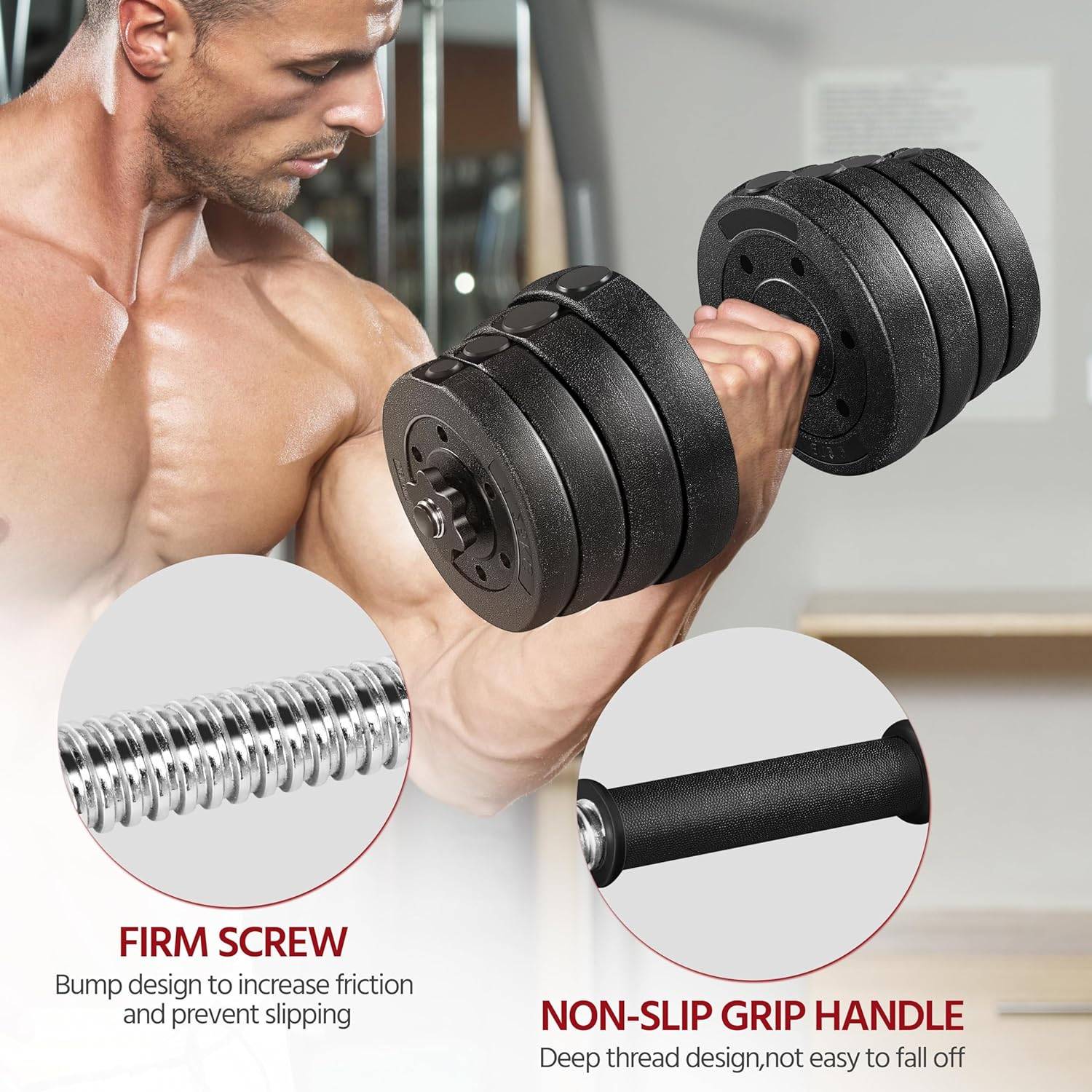
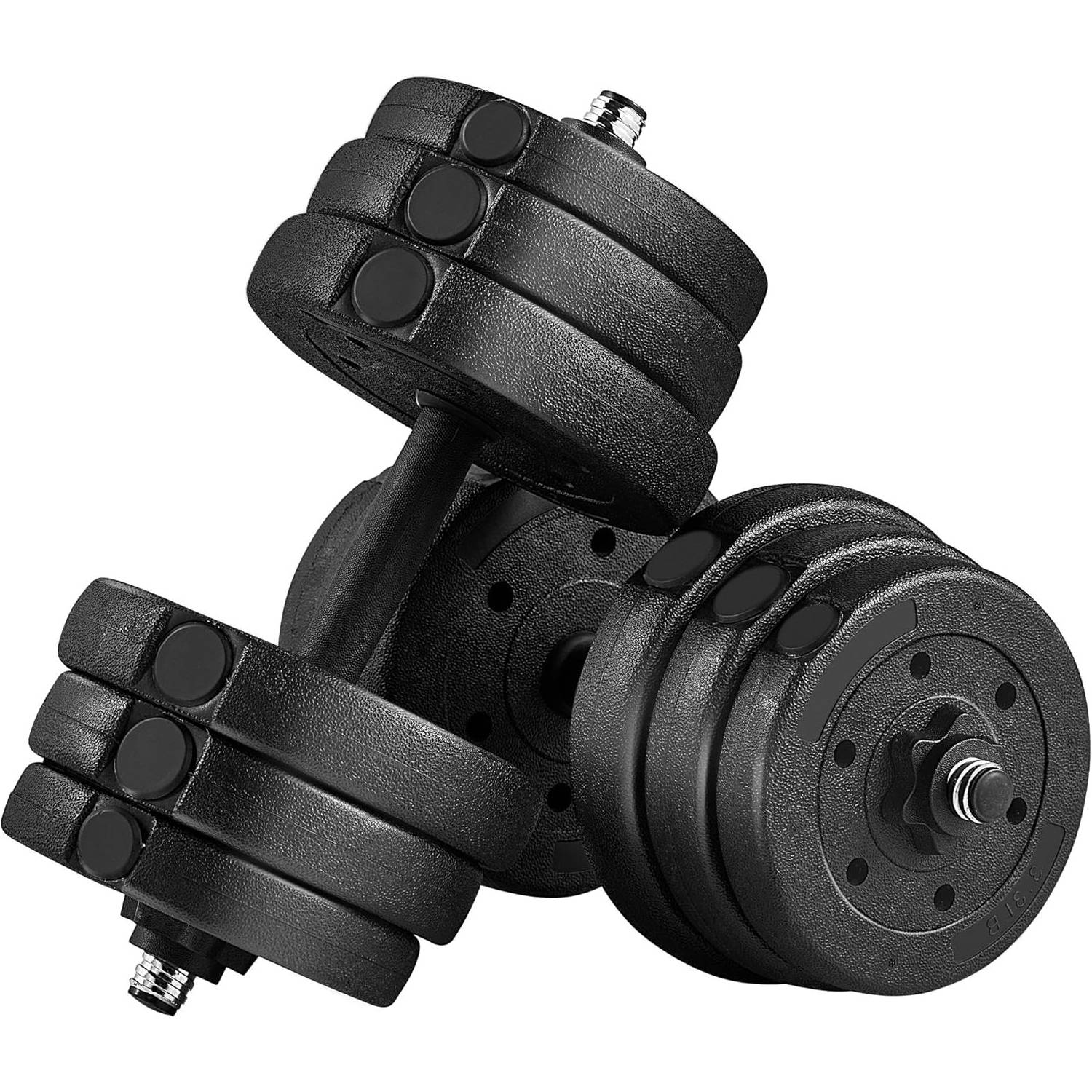
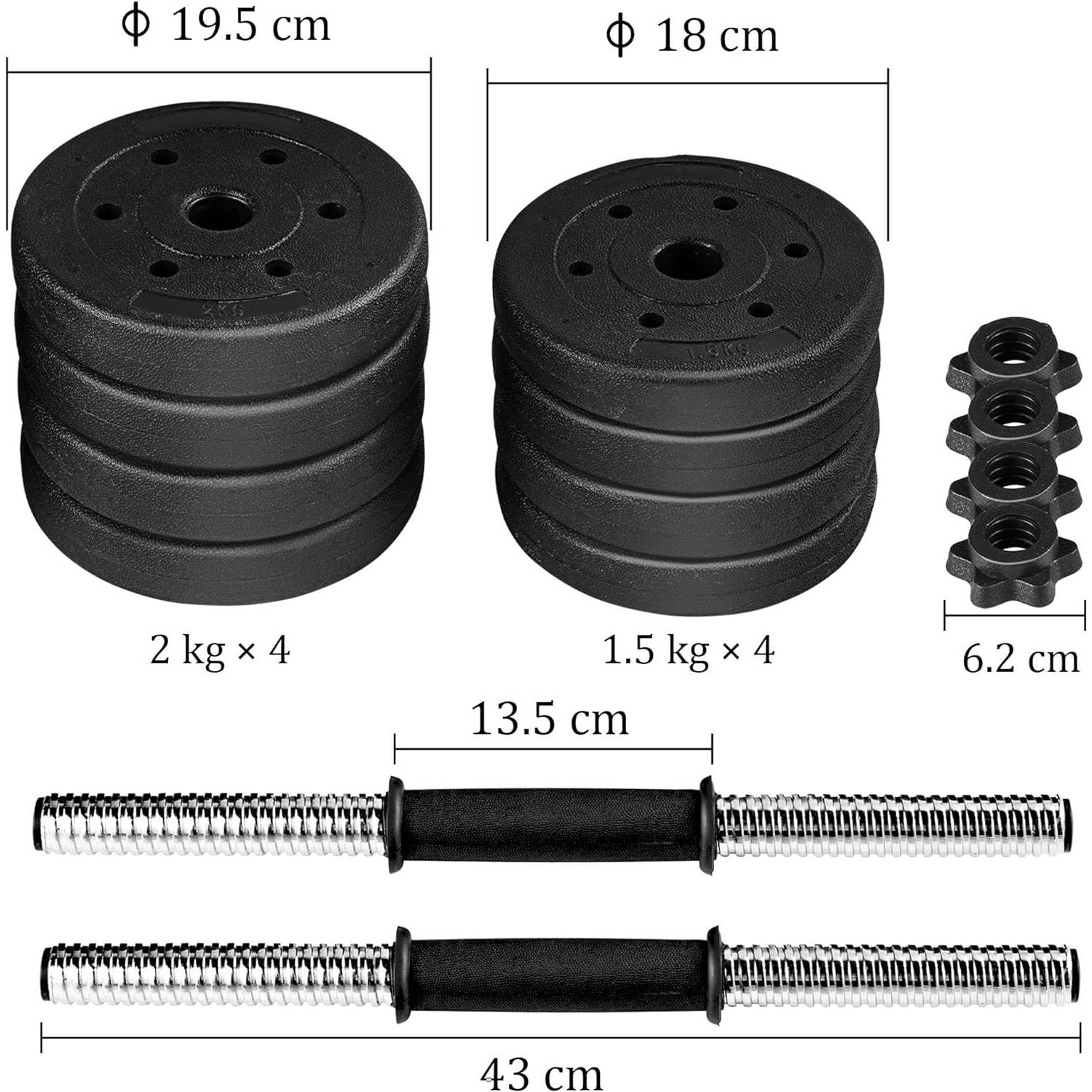
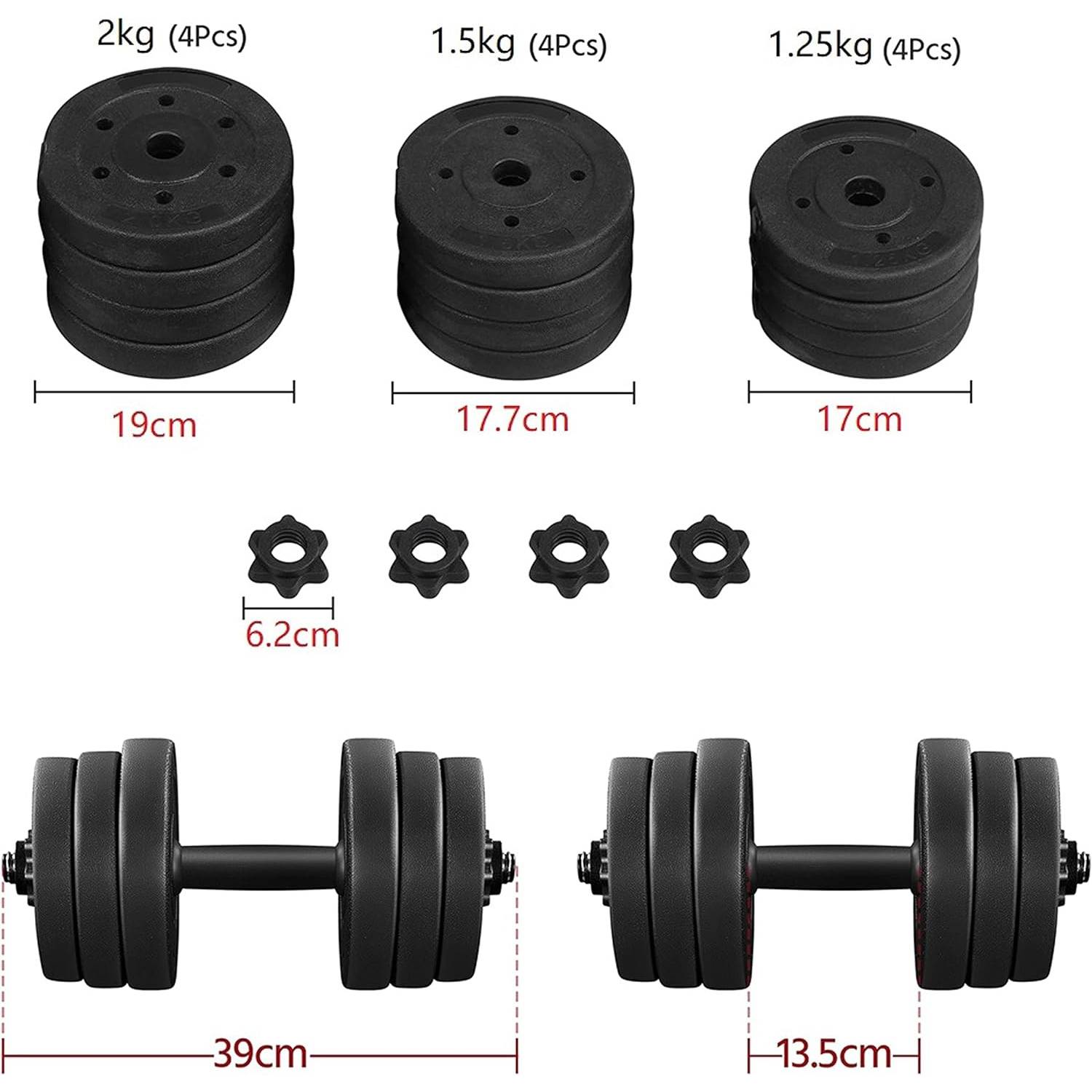
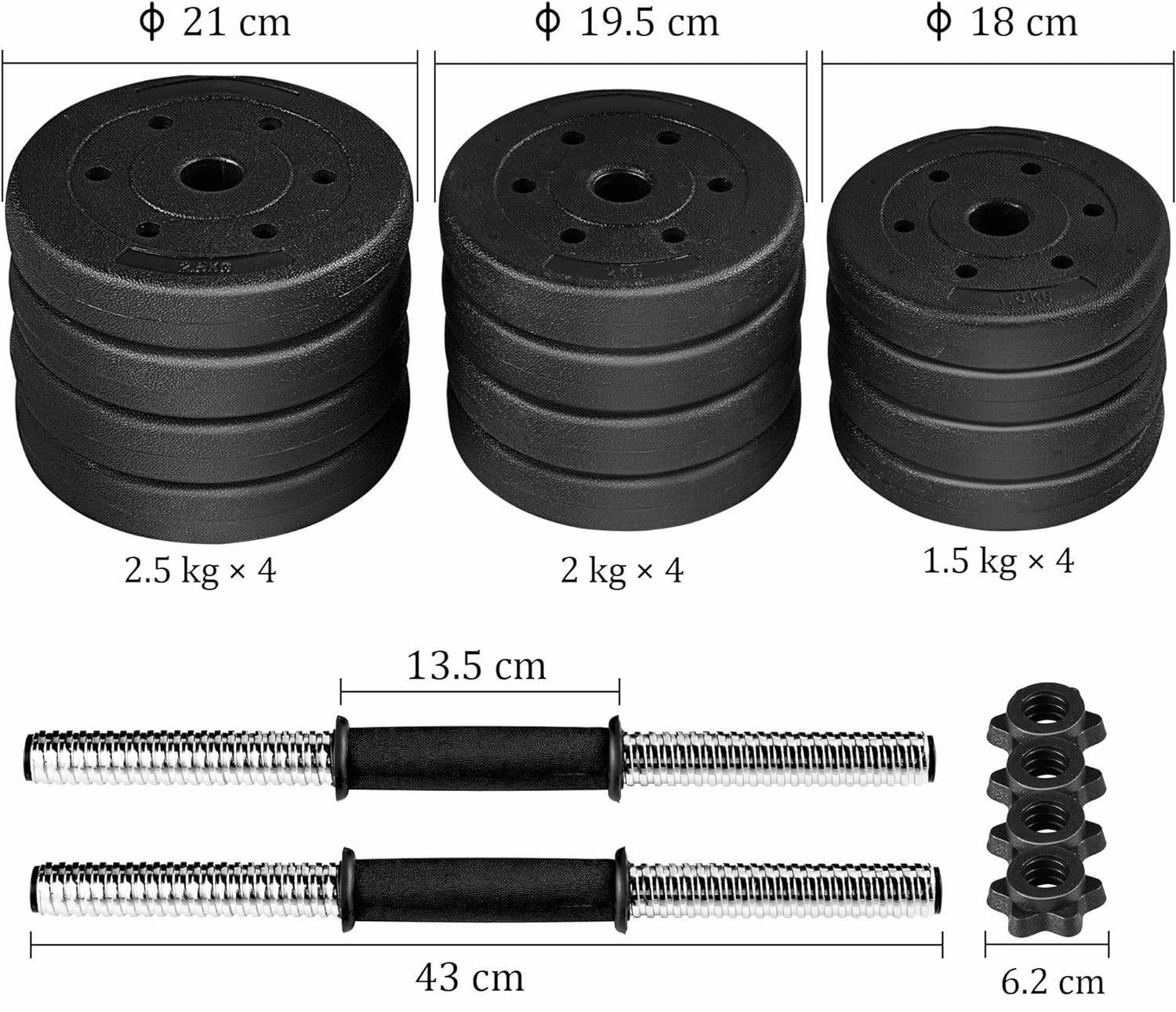
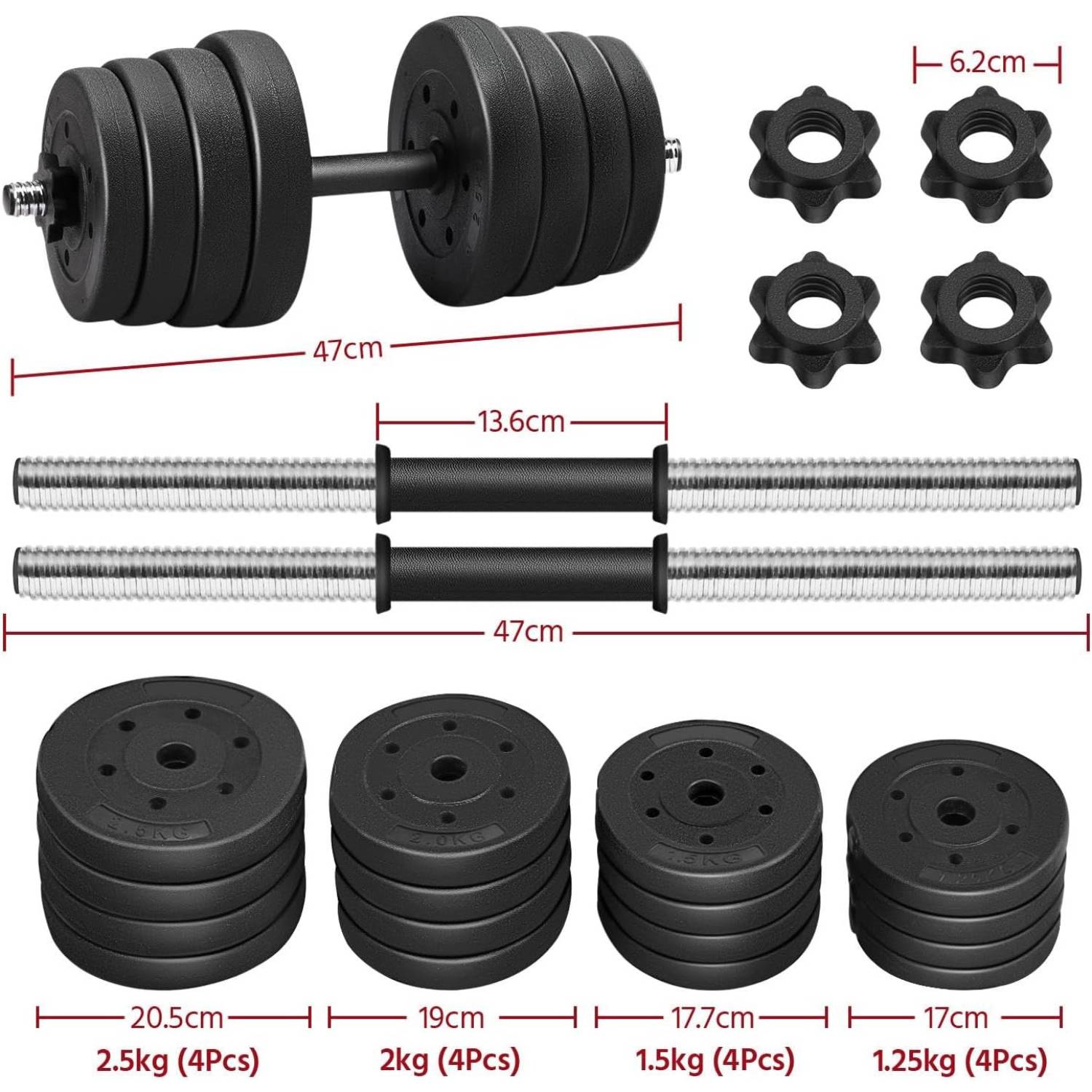
The option you choose is the total weight of the set: plates, bars and collars together. Every set has chrome-finish bars with knurled grips, concrete plates with a plastic cover, and four spin-lock collars.
15kg or 20kg
A good fit for arm and shoulder work, newer lifters and small spaces. The 15kg set has eight plates (four of 2kg and four of 1.5kg) on two 43cm bars, for €69. The 20kg set adds four 1.25kg plates, for €79.
25kg or 30kg
More room for rows, presses and lower body work such as goblet squats and lunges. The 25kg set uses four 2.5kg, four 2kg and four 1.5kg plates on 43cm bars, for €89. The 30kg set adds four 1.25kg plates and comes with longer 47cm bars, for €99.
Legs outgrow any small dumbbell set in time, so if lower body strength is your main aim, plan for that.
What to look for in the parts
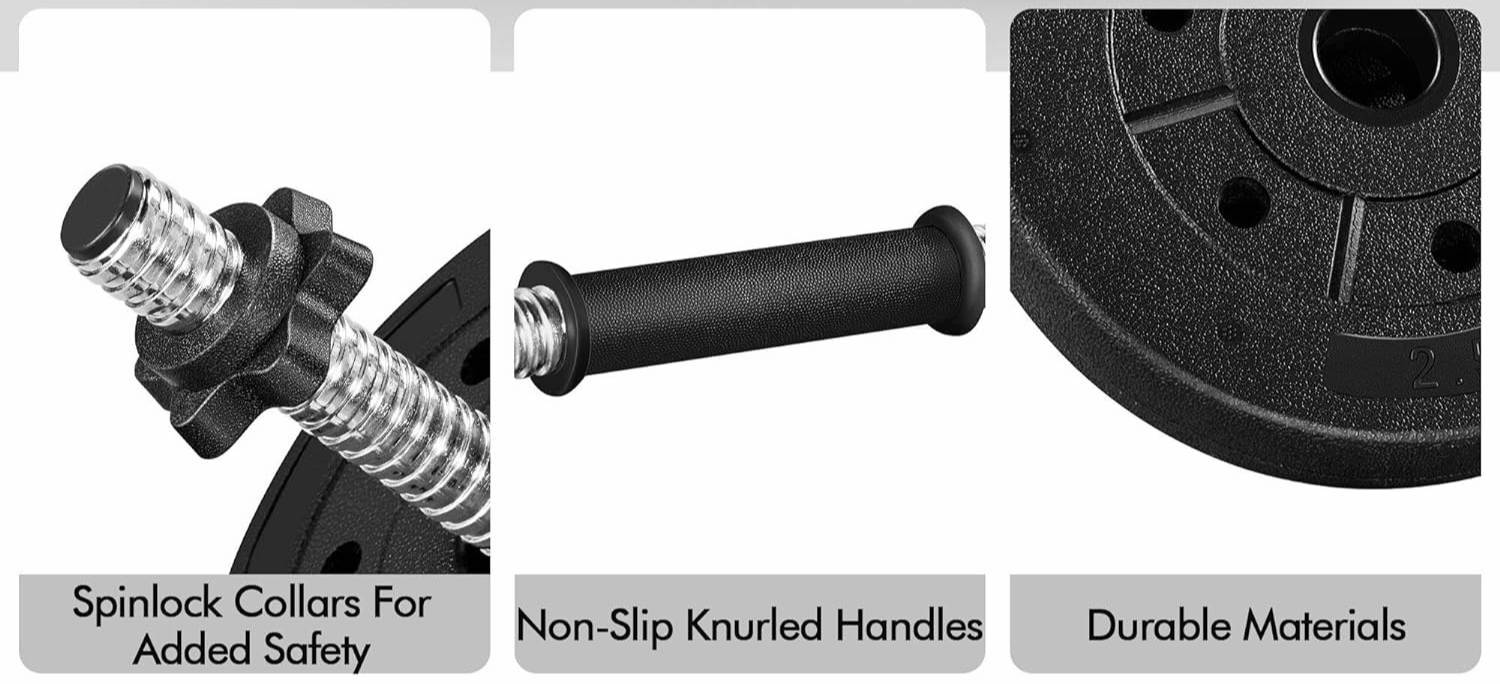
Grip comes first. A handle that turns in a damp hand is hard to control, which is why the handles here are knurled to add friction.
Next, the plates. Concrete plates are bulkier than cast iron for the same weight, and they need to be set down rather than dropped. The plastic cover helps protect the floor, but a mat under your training space is still worth having.
Then the collars. Spin-lock collars are simple, cheap to replace and hold well when screwed down tight against the plates.
Habits that keep a spin-lock set working
Check both collars before every set. A collar that has worked loose is the most common problem with any plate-loaded dumbbell.
Load the plates evenly on each side, and watch the bar length as you add weight. A long, heavily loaded bar can catch a bench, a door frame or your own leg.
Keep the threads clean and dry. Grit and damp are what make a collar stiff, so wipe the bars down after a sweaty session.
Store the plates on the floor or a strong shelf, with the bars unloaded. A loaded bar left leaning against a wall is the one that rolls.
Getting more from a small set
When a weight starts to feel easy, you do not always need more plates. Slow the lowering phase, add a pause at the hardest point, or add reps before you add load. One-arm rows and presses let a single bar carry most of the plates.
A lighter set used with good form will take you further than a heavier one used carelessly.
Buying for a gym, club or school
If you are kitting out a club gym, a school or a workplace fitness room, ask for a quote through our wholesale page.